TSA Expands Face as ID Programs Across 50 Major U.S. Airports
The Department of Homeland Security’s airport screening future is moving fast, but Digital Travel Credentials remain security-screening tools, not replacements for physical passports at international borders.

WASHINGTON, DC
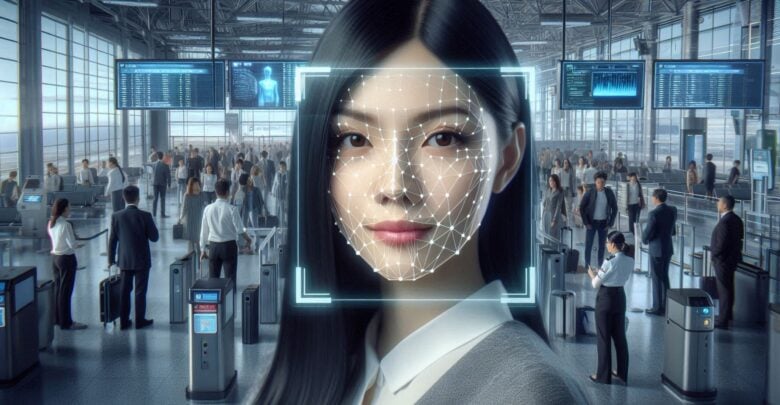
The airport identity check is moving from the wallet to the face, as the Transportation Security Administration expands biometric screening programs that allow eligible travelers to verify themselves by looking into a camera instead of handing over a physical ID.
For millions of passengers, the change marks a turning point in domestic air travel because airport security is no longer built entirely around paper documents, plastic cards, boarding passes, and manual inspection at the checkpoint.
TSA’s growing use of Digital Identity and Facial Comparison Technology shows how quickly the United States is moving toward a travel environment where mobile credentials, airline profiles, passport data, facial comparison, and TSA PreCheck enrollment work together.
The phrase “Face as ID” now describes a real airport experience.
The most visible program is TSA PreCheck Touchless ID, which allows eligible passengers to use facial comparison technology at dedicated lanes after opting in through participating airline profiles and meeting program requirements.
The traveler does not simply walk through the checkpoint anonymously, because the system matches the live face against trusted identity data already linked to the traveler’s passport, TSA PreCheck profile, airline account, and boarding information.
For eligible travelers, the experience can feel dramatically faster because they may avoid repeatedly pulling out their wallet, boarding pass, or physical identity document at certain stages of the security process.
The government’s objective is not only convenience, as facial comparison can also reduce the risk of document swapping, improve identity confidence, and allow officers to focus on travelers whose records require manual review.
The expansion is broad, but not universal.
Reports on TSA’s 2026 rollout describe Touchless ID expanding from a smaller group of major airports to dozens more locations, with the broader goal of making biometric PreCheck lanes available at roughly 65 airports after adding about 50 more sites.
That does not mean every traveler at every airport can use the system immediately, because participation depends on TSA PreCheck status, airline integration, airport infrastructure, passport data, opt-in consent, and whether the specific lane is operating when the traveler arrives.
Digital identity acceptance is broader than Touchless ID, as TSA also supports mobile driver’s licenses, state-issued digital IDs, and passport-based wallet credentials at select checkpoints via platforms such as Apple Wallet and Google Wallet.
The Associated Press reported that Apple’s Digital ID allows U.S. passport information to be added to Apple Wallet for in-person identity verification at TSA checkpoints, while still making clear that it does not replace a physical passport for international travel or border crossing.
Digital ID is valid for screening, not for crossing borders.
The most important distinction for travelers is that a Digital ID accepted by TSA is not the same thing as a passport accepted by a foreign government, an immigration officer, or a border authority.
A phone-based passport credential may help verify identity at domestic airport security checkpoints, but it does not authorize international entry, replace a visa, satisfy foreign border requirements, or eliminate the need to carry a physical passport on international journeys.
That distinction is critical because many travelers hear “passport in a wallet” and assume the booklet is becoming optional, even though current programs remain limited to selected identity-verification use cases at security checkpoints.
The physical passport remains essential for international travel, consular emergencies, visa processing, foreign hotel registration, immigration inspection, and any situation where the traveler must prove citizenship or nationality outside the TSA screening environment.
The technology is built around consent, but consent must remain meaningful.
TSA and airline partners describe Touchless ID as voluntary, meaning eligible passengers can opt in and may still choose traditional identity verification if they prefer not to use facial comparison.
In practice, privacy advocates worry that optional systems can become socially mandatory if the biometric lane becomes much faster, more convenient, and increasingly expected for frequent flyers.
That concern is not theoretical, as airport behavior changes quickly when travelers see others moving through faster lanes, especially during peak travel periods, when a slower manual check can feel like a penalty for choosing privacy.
The future credibility of Face as ID will depend on whether TSA preserves genuine alternatives, clear signage, simple opt-out options, and equal dignity for travelers who choose to present traditional documents.
Airlines are becoming identity partners at the checkpoint.
TSA PreCheck Touchless ID does not operate in isolation because participating airlines help connect passenger profiles, Known Traveler Numbers, passport data, opt-in status, and boarding records before the traveler reaches security.
Delta describes its TSA PreCheck Touchless ID option as a feature for eligible SkyMiles members who have TSA PreCheck, a Known Traveler Number, a valid passport, and stored travel information in their airline profile.
That airline role is important because the future airport checkpoint is no longer a purely government-facing moment; it is increasingly a shared identity workflow involving government systems, airline apps, mobile credentials, and biometric readers.
For travelers, the practical message is simple: keeping airline profiles accurate has become part of identity readiness, not merely a convenience for seat preferences, loyalty points, and boarding notifications.
The checkpoint is becoming a data handoff, not just a document inspection.
In the traditional process, the traveler presents a document, the officer compares faces, and the checkpoint decision is made visibly in front of the passenger.
In the digital process, much of the identity work begins earlier because the airline profile, mobile credential, passport record, TSA PreCheck enrollment, and boarding information may already be connected before arrival.
That creates speed because the live face scan can serve as final confirmation, rather than as the first time the system learns who the traveler claims to be.
It also raises a deeper privacy question: travelers should understand what information is shared, which systems receive it, how long images are retained, and whether logs of identity presentation are created.
The privacy debate is moving from cameras to data retention.
Many travelers focus on the camera because facial comparison is the visible part of the process, but the more important privacy issue may be what happens after the face is scanned.
Travelers want to know whether images are deleted, whether biometric templates are created, whether airlines receive confirmation data, whether identity events are logged, and whether information can be shared beyond the immediate purpose of travel.
TSA has repeatedly said its biometric programs are designed with privacy safeguards, but trust depends on public clarity because passengers cannot easily inspect the systems that process their faces.
A successful national rollout will need more than fast lanes; it will need plain-language explanations, strong deletion policies, independent oversight, and meaningful limits on how identity data can be reused.
The program rewards travelers with clean, consistent records.
Face as ID works best when the traveler’s passport data, airline profile, Known Traveler Number, ticket name, mobile credential, and biometric record all match cleanly.
That makes the system efficient for frequent travelers with stable documents, accurate profiles, and straightforward identity histories, because the automated comparison can move quickly without manual intervention.
Travelers with name changes, dual citizenship, transliteration differences, expired passport records, adoption histories, changed nationality, or unresolved identity issues may face extra review if systems detect a mismatch.
Amicus International Consulting’s work around legal identity solutions fits this new environment because lawful identity restructuring now depends on documented continuity that can survive automated comparison across airports, airlines, banks, borders, and government systems.
Second passports must be managed carefully in biometric systems.
For travelers with lawful second citizenship, the Face as ID era creates both opportunity and complexity because multiple passports may improve mobility while also adding more records for systems to compare.
A passenger must know which passport is connected to the airline profile, which document was used for TSA PreCheck enrollment, which name appears on the ticket, and whether the biometric match is tied to the correct identity record.
Amicus International Consulting’s second passport planning sits directly inside this changing mobility landscape because passport diversification is most valuable when records remain coherent, consistent, and recognized by official systems.
The second passport advantage can weaken if travelers casually mix documents, fail to update airline profiles, or create mismatches between travel records and identity credentials.
The security advantage is speed with stronger identity assurance.
TSA’s challenge is to process huge passenger volumes while detecting identity fraud, suspicious activity, document problems, and travelers who should not access sterile airport areas.
Facial comparison helps address part of that challenge by quickly verifying identity against trusted documents and records, reducing reliance on manual visual checks that can vary with officer fatigue, lighting, crowd pressure, or document condition.
The strongest argument for the program is that it can be both faster and more secure if the system accurately verifies identity while keeping alternatives available for passengers who cannot or do not want to use it.
The weakest point is public trust, because even effective security technology can lose support if passengers believe the system is opaque, coercive, or too closely tied to broader surveillance.
The domestic screening use case will shape international expectations.
Although TSA’s digital identity systems are primarily screening tools, they are helping normalize the public’s relationship with mobile credentials and biometric checkpoints.
That matters because international aviation is also moving toward Digital Travel Credentials, biometric boarding, paperless visas, airline pre-clearance, and digital identity wallets that connect travel documents to smartphones.
A traveler who becomes comfortable using facial recognition and a phone at a U.S. checkpoint may be more willing to use similar systems at border gates, airline counters, hotel check-ins, and foreign immigration corridors.
The domestic airport is therefore becoming a training ground for a broader digital identity culture that will affect how people think about passports, visas, boarding passes, and proof of status.
The physical ID is becoming a backup, not a relic.
Travelers should still carry physical identification because digital systems can fail, lanes can close, phones can die, accounts can be locked, and officers may still request traditional documents when verification is required.
The transition period will be especially uneven because one airport may offer a smooth biometric lane while another airport on the same itinerary may require standard ID presentation.
That means the smart traveler uses Face as ID for speed where available, but still carries a passport, REAL ID-compliant driver’s license, or other acceptable physical document as a fallback.
The physical card or booklet may appear less often, but it remains the legal safety net when the digital layer fails.
Cybersecurity is now part of travel security.
As identity moves into mobile wallets and airline apps, travelers must treat phone security as part of airport readiness.
A compromised email account, weak passcode, stolen phone, SIM swap, phishing message, or fraudulent support request can become more serious when the device stores or presents identity credentials.
The future traveler needs strong device authentication, up-to-date software, secure recovery settings, careful app use, and awareness that fake airline or TSA messages may exploit confusion around digital identity programs.
The airport checkpoint may become faster, but the preparation before travel becomes more important because identity security begins long before the passenger reaches the lane.
The biggest concern is the centralization of identity.
Privacy advocates are not simply worried about a single face scan at a checkpoint; they are worried about identity functions becoming centralized across phones, airlines, government systems, payment platforms, loyalty programs, and border processes.
When a single device or account becomes the primary gateway for travel, banking, age verification, hotel access, and government services, a technical failure or account issue can affect far more than a single flight.
That concentration creates efficiency, but it also creates dependency on platforms, vendors, and systems that travelers may not fully understand or control.
The challenge for DHS and TSA is to modernize identity verification without making every traveler’s movement depend on a fragile chain of private apps, commercial accounts, and biometric infrastructure.
The new checkpoint will be faster, but less visible.
The traveler using Face as ID may experience the process as almost frictionless: walk into the lane, look at the camera, receive confirmation, and continue.
Behind that simple moment is a complex chain of identities involving airline data, federal systems, document records, biometric comparison, consent management, privacy rules, and checkpoint equipment.
That hidden complexity is why public education matters: travelers should not be asked to trust a system they only understand as a green light or a red light at the lane.
The best version of the future is one where the technology becomes smoother while the rules become clearer, not one where the checkpoint feels easy because the decisions have become invisible.
The rollout marks a permanent shift in how Americans fly.
TSA’s Face as ID expansion is not just a technology upgrade; it is a cultural shift in which identity becomes something verified through a live face, a stored record, a mobile credential, and a connected travel profile.
For frequent flyers, the benefit will be speed, predictability, fewer document checks, and a smoother path through crowded airports.
For privacy-conscious travelers, the concern will be retention, consent, opt-out rights, biometric accuracy, and whether the faster lane eventually becomes the expected lane.
For everyone else, the practical lesson is clear: digital identity is no longer experimental, and the airport checkpoint is where many Americans will first experience the future of official ID.
The face is becoming the boarding-era passport, but the passport still matters.
The expansion of TSA’s biometric screening programs shows that the United States is moving quickly toward a checkpoint model in which identity can be confirmed without physically presenting a document each time.
That does not end the need for passports, REAL ID cards, or traditional identification, especially for international travel, border crossing, emergencies, and routes where digital systems are unavailable.
It does mean the airport experience is entering a new phase, where prepared travelers may move faster because their identities have already been verified before the officer ever asks for a card.
The face is becoming a travel credential at the checkpoint, but the strongest traveler will still carry the paper, protect the phone, maintain consistent records, and understand exactly when digital identity helps and when the old document still controls the journey.