Biometric Fast Lanes Roll Out: Major Hubs Scrap Physical Checks for DTC
From Heathrow-linked trials to Changi’s passport-free clearance, airports are installing walk-through identity systems that verify travelers without forcing them to slow down

WASHINGTON, DC
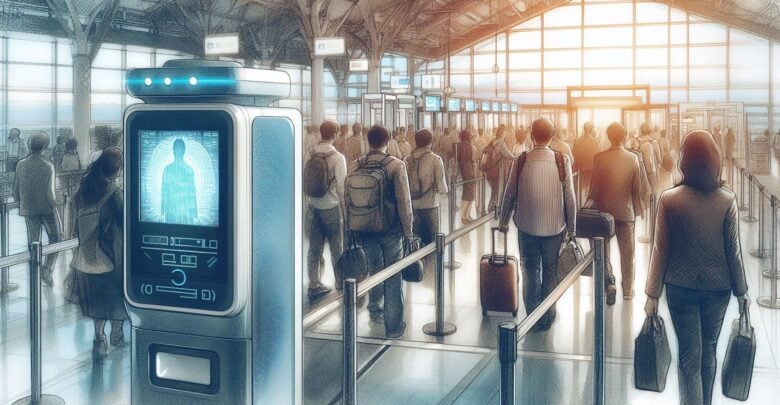
The airport checkpoint is changing from a place where travelers stop, search for documents, and wait for a human inspection into a biometric corridor where identity can be confirmed while passengers keep moving.
For decades, the international airport experience was defined by the same ritual: passport out, boarding pass ready, face compared, document checked, gate opened, and the traveler waved forward only after a visible act of permission.
That ritual is now being rewritten by Digital Travel Credentials, biometric gates, mobile identity wallets, facial verification systems, and aviation industry trials designed to remove repeated physical checks from the passenger journey.
The fast lane is becoming a no-stop identity lane
The new model does not ask travelers to prove themselves repeatedly at every touchpoint, because identity verification increasingly begins before arrival at the airport through a digital credential linked to passport data and biometric confirmation.
In practical terms, a passenger may share verified travel identity data ahead of the trip, receive clearance or confirmation through airline systems, and then move through airport touchpoints using facial comparison instead of repeatedly presenting a passport.
A recent news report on the air travel shake-up described how boarding passes and traditional check-in could be replaced by smartphone-based journey passes and facial recognition as the industry moves toward paperless processing.
The promise is obvious because airport operators want faster queues, airlines want fewer manual document failures, governments want stronger identity assurance, and passengers want fewer moments of friction between booking and boarding.
DTC is not a photo of a passport stored on a phone
A Digital Travel Credential is not simply a passport scan saved in a mobile wallet, because the concept depends on cryptographic trust, government-issued identity data, biometric binding, and systems capable of verifying that the credential is authentic.
The passenger may experience it as a phone-based identity tool, but behind the screen is a technical framework designed to connect the physical passport world with a digital record that border and airline systems can trust.
That distinction matters because travel identity cannot function like an ordinary app, since a boarding delay may be inconvenient, but a weak identity system can create fraud, trafficking, illegal entry, or national security exposure.
The airport of the future, therefore, needs more than cameras and gates, because it needs trusted issuing authorities, secure credential storage, strong consent rules, reliable fallback processes, and clear accountability when technology fails.
Changi shows how passport-free clearance becomes normal
Singapore’s Changi Airport has become one of the clearest examples of the shift, with passport-free biometric clearance demonstrating how automated identity checks can move from limited pilot projects into everyday airport operations.
For travelers, the visible change is speed, because biometric gates reduce the need to handle a physical passport at every step and create a more fluid experience through immigration and airport processing.
For governments, the bigger change is control, because biometric confirmation can reduce document fraud, improve identity matching, and create a more consistent record of who entered and exited the country.
For airports, the operational value is enormous because faster clearance can reduce congestion, increase terminal capacity, and make major hubs more competitive as passenger volumes rise across Asia, Europe, and North America.
Heathrow’s role is about trials, pressure, and the future of high-volume travel
Heathrow has long been a testing ground for biometric boarding, digital identity trials, and passenger-processing technology because the airport handles enormous international volume and faces constant pressure to reduce friction without weakening border integrity.
The London aviation market is especially important because it sits at the intersection of airline innovation, U.K. border modernization, European travel disruption, and passenger expectations shaped by mobile-first services.
Heathrow’s experience also shows that biometric fast lanes are not simply about convenience, because high-volume airports need tools that can move people efficiently while satisfying government requirements around security, immigration control, and admissibility.
The real future is likely not one sudden switch from paper to digital, but a layered period where trials, limited gates, airline programs, and government identity systems slowly expand until the physical document appears less often.
The walk-through gate changes the psychology of travel
Traditional airport processing makes identity feel like a checkpoint, because the traveler stops, presents documents, waits for approval, and physically experiences the authority of the border or airline gate.
Biometric corridors change that psychology by making identity verification feel almost invisible, because the traveler may keep walking while a camera, credential system, and database comparison complete the check in the background.
That seamlessness is powerful, but it also raises questions because the less visible a system becomes, the harder it may be for passengers to understand what data was used, who received it, and how long it remains stored.
The airport experience may become smoother, yet the legal and privacy stakes become higher because convenience often depends on expanding the number of systems that can read, compare, and act on personal identity data.
Governments want speed, but they also want certainty
Border agencies are not interested in biometric fast lanes only because passengers dislike queues, but also because governments also want stronger identity certainty in an era of forged documents, synthetic identities, overstays, trafficking, and transnational crime.
The United States already describes its biometric facial comparison process as a way to confirm that a traveler is the person linked to the travel document, showing how border authorities view biometrics as an identity-assurance tool.
That model is likely to expand as digital credentials make it easier to confirm identity before travel, verify travelers at airport touchpoints, and compare the live person with trusted records already in the system.
The challenge is ensuring that speed does not become a substitute for rights, because travelers still need transparent rules, accessible alternatives, correction procedures, and meaningful protection against errors or misuse.
The paper passport is becoming the backup, not the centerpiece
The paper passport will not disappear immediately, because many borders, airlines, visa systems, and emergency processes still depend on the physical booklet as the legal anchor of international travel.
Yet the role of the booklet is changing, because the passport may increasingly support the creation of a digital credential that does much of the routine identity work before the traveler reaches the counter.
That means the passport could remain essential while becoming less visible, carried as a fallback while the smartphone and biometric systems handle most of the airport journey.
For travelers, that transition will feel strange because the document that once defined international movement may spend more time in a pocket while the face and phone become the active travel interface.
Privacy concerns will decide whether passengers trust the system
The future of biometric fast lanes depends on trust because passengers may accept facial verification for speed, but they will resist systems that feel like permanent surveillance or unclear data harvesting.
Travelers will want to know whether biometric templates are stored, whether images are deleted, whether data is shared with airlines, governments, vendors, or law enforcement, and whether refusal creates delays or penalties.
Airports and governments will therefore need to prove that biometric processing is narrow, consent-based where possible, secure, auditable, and limited to the specific travel purpose rather than expanded quietly into unrelated monitoring.
A fast lane that saves ten minutes but creates lifelong uncertainty about identity data may not be viewed as progress by travelers who already worry about data brokers, facial recognition, and government overreach.
Digital identity will reward clean records and punish inconsistency
As airport systems become more connected, travelers with consistent names, valid documents, clean biometric records, accurate visa information, and stable identity histories may benefit from faster processing and fewer manual interventions.
Travelers with name changes, dual nationality, inconsistent records, prior refusals, damaged documents, or unresolved immigration issues may experience more questions as automated systems compare information that once remained separated.
This does not mean lawful name changes or new nationalities are a problem, but it does mean the supporting paperwork must be accurate, complete, and ready for review when systems flag a mismatch.
Amicus International Consulting’s work around legal identity solutions reflects this growing need for documented continuity, because digital border systems increasingly demand that every part of a traveler’s identity record tell the same story.
Second passports enter a more technical era
Second passport planning has traditionally focused on mobility, visa-free access, political risk, tax residence, family protection, and contingency planning, but biometric travel systems add a new layer to the analysis.
A second passport must now be understood not only as a booklet issued by a government, but as a record connected to biometric enrollment, digital credential compatibility, airline systems, and border databases.
Amicus International Consulting’s work in second passport planning fits into this new mobility environment, where lawful issuance, source-of-funds clarity, and identity consistency matter more as travel becomes more automated.
A traveler with multiple passports must ensure that names, birthdates, biometric records, visa histories, and travel patterns remain properly managed because digital systems are increasingly designed to detect discrepancies.
The fraud fight will move from forged booklets to compromised devices
Digital Travel Credentials may make some forms of passport forgery harder, but criminals will adapt by targeting phones, digital wallets, enrollment systems, account recovery processes, corrupted insiders, and biometric spoofing attempts.
The old fraudster tried to alter a page of a document, while the new fraudster may try to compromise the credential chain, steal a device, manipulate identity proofing, or exploit weak recovery procedures.
That shift means cybersecurity becomes border security, because the safety of the airport fast lane depends on secure phones, strong authentication, protected issuing systems, trusted apps, and rapid revocation when a credential is lost or compromised.
The travel industry must therefore treat digital identity as critical infrastructure, not convenience software, because one weak link can undermine confidence across airlines, airports, and border agencies.
The digital divide could become an airport divide
Biometric fast lanes may benefit frequent travelers, smartphone users, and passengers comfortable with digital wallets, but they may disadvantage people without modern devices, stable internet access, digital literacy, or trust in biometric systems.
Older travelers, children, refugees, people with disabilities, low-income passengers, and travelers from countries with weaker digital infrastructure may need alternative processes that remain dignified, reliable, and legally recognized.
Airports must avoid creating a two-tier border where the digitally equipped glide through and everyone else faces slower, more confusing, or more suspicious treatment.
The paper passport may therefore remain important not only as a backup document, but as a fairness tool in a world where digital convenience is not evenly distributed.
The biggest change is invisible pre-clearance
The most important part of the DTC future may happen before the airport, when travelers share verified identity information and admissibility data before departure, so airlines know whether the passenger is ready to fly.
That pre-clearance model could reduce denied boarding, manual document errors, last-minute visa confusion, and long queues caused by passengers discovering problems only at the counter.
It also shifts responsibility earlier in the journey, because mistakes in digital identity, visa status, or credential sharing may need to be corrected before the traveler arrives at the airport.
For passengers, the airport may feel simpler, but the travel planning process may become more identity-driven, requiring careful document management long before the suitcase is packed.
Walk-through travel will not eliminate human judgment
Even the most advanced biometric corridors will still need officers, supervisors, exception handling, fraud investigators, customer service staff, and manual processes for travelers whose cases do not fit neatly into automated systems.
People age, lose phones, change names, renew passports, travel with children, hold multiple citizenships, experience medical changes, and face document damage, meaning automation must be backed by humans capable of resolving complex cases.
The danger of a fully automated culture is that travelers may assume the machine is always right, when identity errors can have serious consequences if not corrected quickly and fairly.
The best fast lane will therefore be one where ordinary travelers move smoothly while unusual cases receive intelligent human review rather than automatic rejection or endless delay.
The boarding pass may become a live journey credential
One of the most practical changes will be the move from static boarding passes to dynamic journey credentials that update when gates change, flights are delayed, connections shift, or rebooking becomes necessary.
That creates a more flexible travel experience because identity, itinerary, and permission to proceed can be integrated into a single mobile environment rather than scattered across paper, airline apps, and manual checks.
It also deepens dependence on the phone because the device becomes the traveler’s identity wallet, journey manager, gate pass, notification center, and recovery tool when travel plans change.
The convenience is undeniable, but the traveler must treat device security as part of travel readiness because a weak phone setup could become the new version of losing a passport at the airport.
Biometric travel will redefine what it means to be ready to fly
The old definition of ready to fly meant holding a valid passport, ticket, visa if required, and a boarding pass, then arriving early enough to survive queues and document checks.
The new definition will include digital identity readiness, device security, credential sharing, biometric consistency, visa confirmation, admissibility validation, and the ability to recover quickly if the phone or credential fails.
Frequent travelers will adapt quickly because they already manage airline apps, mobile wallets, loyalty accounts, and electronic travel authorizations, but occasional travelers may need clearer guidance as the system changes.
The industry’s responsibility will be education, because passengers cannot be expected to trust a digital passport environment they do not understand.
The fast lane is coming, but the border is not disappearing
Biometric corridors may remove the feeling of repeated inspection, but they do not remove the legal authority behind travel control, because governments still decide who may enter, transit, remain, or be refused.
The faster process may actually make border screening more data-rich because identity and admissibility checks occur earlier, more quietly, and across more connected systems than the old counter-based model allowed.
That means travelers should not confuse a smoother airport with a weaker border, because visible friction may decline while invisible verification strengthens.
The walk-through gate does not end the border; it moves the border into the digital systems that operate before, during, and after the physical journey.
The next airport revolution will be judged by trust
Biometric fast lanes promise a future where travelers move through major hubs with fewer stops, fewer physical checks, fewer document presentations, and less anxiety about boarding passes and counters.
The same systems also raise serious questions about privacy, cybersecurity, fairness, biometric accuracy, data retention, and the right to travel without surrendering more information than necessary.
The airports that succeed will be the ones that combine speed with transparency, convenience with consent, automation with human review, and digital identity with meaningful alternatives.
From Changi’s passport-free clearance to Heathrow-linked trials and the wider DTC framework, the direction is clear: the airport is becoming a biometric identity environment where the face, phone, and credential increasingly replace the handoff of paper.
The physical passport is not gone, but the era of pulling it out at every checkpoint is fading, and the next generation of travelers may cross the world by walking through gates that already know them.