Investigations in Poland and Spain expose different models of counterfeit document production, revealing how workshops, online marketplaces, brokers and international distribution services can support organized identity fraud.
WASHINGTON, DC, November 11, 2026 — Two major European document-forgery investigations show why authorities increasingly examine entire criminal networks rather than focusing exclusively on individual counterfeit passport workshops, as online advertising and international distribution expand the reach of suspected suppliers.
In Poland, a multiyear investigation led to 42 arrests and the recovery of more than 12,000 fraudulent documents, while a separate operation in Alicante, Spain, uncovered 795 counterfeit credentials linked to a suspected online marketplace.
The contrasting cases demonstrate that document-fraud operations can differ significantly in size and organization, with some suspected enterprises operating through multiple production locations while others use comparatively small facilities to supply customers across national borders.
Investigators consequently face a broader challenge involving manufacturers, customer-service intermediaries, distributors and financial relationships, because seizing equipment or arresting one suspected producer does not automatically establish whether related criminal activities have been completely disrupted.
Poland’s 12,000-Document Seizure Reveals a Wider Organization
Polish Border Guards began investigating an alleged international forgery organization in 2020 after officers discovered a counterfeit driver’s license at the Korczowa border crossing, triggering inquiries that eventually revealed suspected production and distribution activity in several Polish cities.
Europol announced in February 2025 that authorities had recovered more than 12,000 fraudulent documents, secured approximately 250,000 euros in assets and arrested 42 suspects across the investigation, demonstrating cumulative enforcement results rather than the output of a single factory.
Multiple Workshops Supported the Polish Operation
Polish investigators discovered an illegal document-production facility in Katowice in 2021, where suspects allegedly manufactured fraudulent credentials and arranged deliveries using international postal services, establishing an early connection between physical production and commercial distribution beyond the immediate locality.
Officers discovered a second suspected production facility in Katowice in 2023, when they recovered about 7,000 counterfeit documents, printing equipment, official-style stamps, and cash, showing the alleged organization maintained additional manufacturing capacity after earlier enforcement activity.
Gdańsk Became Another Important Investigative Location
Polish authorities also identified premises associated with the suspected criminal organization in Gdańsk and recovered approximately 2,000 fraudulent documents reportedly prepared for distribution, adding another significant seizure to the evidence collected throughout the multiyear investigation.
The discovery illustrated why investigators cannot assume that documents belonging to one suspected enterprise originate from the same building, especially when evidence connects separate production, storage or distribution locations through common participants and commercial relationships.
Distributors Extended the Network Across Europe
During 2024, Polish investigators arrested another suspect in Kraków who was allegedly responsible for sending counterfeit documents to recipients across Europe, showing that distribution responsibilities could be separated from production activities within the suspected organization.
That arrangement matters because a manufacturing facility can become only one component of a broader commercial operation, while separate intermediaries may manage customer relationships, transport arrangements or the movement of products beyond national borders.
Online Advertising Created a Customer-Facing Business
Europol reported that the Polish organization advertised counterfeit passports, visas, identity cards, residence permits and driver’s licenses through websites and social media, presenting its services as legitimate legal assistance while allegedly charging approximately 1,500 euros for individual documents.
Potential customers were reportedly referred to a customer-service operation that explained pricing and deposits, and electronic photographs of completed documents were provided before final payments and delivery, showing how ordinary commercial practices were incorporated into suspected illegal document sales.
Alicante Investigation Shows a Different Production Model
Spanish authorities announced in June 2026 that investigators had dismantled an alleged document-forgery laboratory in Alicante following cooperation with French police and Europol, recovering 795 fraudulent identity and travel documents prepared for personalization or distribution.
Unlike the Polish investigation involving numerous suspects and production locations, the publicly reported Alicante operation centered on one arrested individual believed to oversee both manufacturing and online sales, revealing a comparatively concentrated physical operation with international commercial reach.
Spanish Workshop Served Customers Beyond Alicante
As Euronews reported in its coverage of the Alicante operation, suspected sellers advertised European identity documents and Schengen visa labels through a website, with advertised prices reaching 400 euros and deliveries allegedly arranged through postal channels.
Spanish police searched the suspect’s residence and a separate production location in late May 2026, recovering specialized equipment, mobile telephones, cash, and counterfeit documents while investigating financial accounts allegedly linked to customer payments.
Different Seizure Totals Require Different Interpretations
The Polish figure of more than 12,000 counterfeit documents represented materials recovered throughout an investigation beginning in 2020, whereas the Alicante total of 795 reflected documents seized during a concentrated enforcement operation in May 2026.
Comparing those totals without explaining their different time periods and investigative scopes would risk suggesting that officers measured two factories under equivalent conditions, when the published evidence describes substantially different organizational and enforcement circumstances.
High Production Does Not Necessarily Mean Centralized Manufacturing
A large cumulative seizure can indicate extensive criminal activity without establishing that every fraudulent document was produced in one workshop, since investigators may recover finished credentials, partially prepared materials and stored inventory at different locations over several years.
The Polish findings directly demonstrate that distinction through discoveries in Katowice and Gdańsk, while the Alicante evidence shows how an individually operated production facility could nevertheless support a business reaching customers throughout Europe through digital advertising.
Brokers and Intermediaries Can Separate Business Functions
In suspected criminal enterprises, individuals responsible for advertising or customer communication may operate separately from those manufacturing documents, creating investigative questions about who received payments, handled orders and knew the products were unlawfully produced.
Polish investigators documented customer-service arrangements alongside production and distribution, providing concrete evidence of differentiated responsibilities, although the publicly available reports do not establish an identical organizational structure for every suspected document supplier operating elsewhere.
Online Vendors Can Expand a Workshop’s Commercial Reach
Internet advertising lets a supplier in one city communicate with prospective buyers abroad, so the geographic scale of a suspected document business may be much larger than the premises used for physical manufacturing.
The Alicante investigation illustrates this contrast because officers identified a production location in Spain while describing international online sales, demonstrating how investigators must examine electronic records and postal activity when assessing the reach of alleged criminal operations.
Document Categories Affect How Seizures Are Counted
The Polish investigation involved counterfeit passports, visas, driver’s licenses, residence permits and identity cards, while Spanish authorities primarily described fraudulent European identification documents and Schengen visa labels among the materials recovered in Alicante.
These distinctions matter because a prepared identity-card blank, a visa label and a completed passport booklet represent different products with different manufacturing requirements, security characteristics and potential uses, making aggregate seizure totals an incomplete measure of capability.
Financial Investigations Can Reveal Additional Participants
Spanish investigators requested restrictions on three bank accounts allegedly linked to the Alicante operation, while Polish authorities secured assets valued at approximately 250,000 euros and examined suspected money laundering tied to fraudulent document sales.
Such financial inquiries may help establish relationships among suspected suppliers, recipients and intermediaries, but prosecutors must corroborate individual transactions before concluding that particular funds represent criminal proceeds or that every associated account holder knowingly participated.
The United States Has Investigated Related Online Markets
The U.S. Department of Justice’s August 2025 announcement concerning VerifTools described a marketplace selling fraudulent passports, driver’s licenses and other identification products associated with American states and foreign countries, demonstrating another form of internationally accessible document crime.
Federal investigators identified about $6.4 million in illicit proceeds linked to that operation, although VerifTools largely focused on digitally generated identity products rather than the physical manufacturing facilities uncovered during the Polish and Spanish investigations.
Digital Images and Physical Documents Present Different Risks
A digitally generated identification image may be intended to deceive online verification systems, while a physical counterfeit credential may be presented during a commercial transaction or travel encounter, requiring investigators to distinguish their capabilities and intended uses.
Neither an attractive digital image nor convincing printed identification alone establishes authentic government issuance, so authorities must verify official records and security features when assessing whether suspected credentials could facilitate another offense.
Passport Authentication Adds Another Investigative Layer
Modern electronic passports can contain digitally signed identity information that compatible inspection systems authenticate against trusted issuing-authority certificates, providing a verification method that differs fundamentally from assessing a document’s appearance.
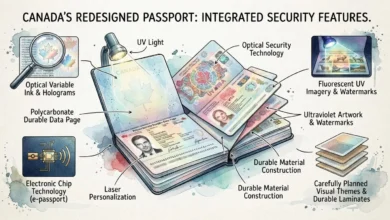
As explained in Amicus International Consulting’s guide to modern passport security, physical examination, electronic authentication and biometric identity comparison provide complementary safeguards, helping qualified personnel identify suspicious credentials without assuming that any single security check resolves every identity question.
Physical Security Features Remain Important
Contemporary passport books may incorporate specialized identity pages, optical security elements and laser personalization, creating features that trained document examiners can evaluate when determining whether a questioned booklet resembles an authentic government-issued credential.
However, older legitimate passports can differ from newer designs, and physical damage or unusual appearance does not automatically establish counterfeiting, making dependable reference materials and professional judgment necessary during consequential identity checks.
Document Fraud Can Support Other Criminal Activity
Europol has linked some counterfeit-document investigations to migrant smuggling and related organized crime, showing why authorities may examine suspected suppliers alongside evidence of transportation arrangements, unlawful residence claims, and financial relationships.
Nevertheless, discovering counterfeit identification does not prove that every associated customer participated in smuggling or another offense, so investigators must distinguish established document production from allegations of additional criminal conduct.
Legitimate Businesses Can Become Part of Investigations
Polish investigators reported that the suspected organization presented counterfeit documentation as legal assistance, demonstrating how professional terminology can be misused to create credibility even when the products offered lack recognized government authorization.
Legal advisers, immigration consultants, and travel agencies serving international customers remain entirely ordinary, however, and investigators must establish specific evidence of deliberate wrongdoing before linking legitimate commercial services to counterfeit-document production.
International Cooperation Connects Separate Seizures
The Alicante investigation began after French authorities found evidence pointing to suspected production in Spain, prompting Europol-supported cooperation before Spanish officers searched and arrested the alleged principal organizer.
Polish Border Guards likewise received Europol support throughout their multiyear inquiry, showing how international information exchange can help national authorities identify connections among suspected manufacturers, distributors, and documents recovered in different jurisdictions.
Recovered Devices Can Support Wider Investigations
Computers and mobile telephones recovered during document-forgery searches may contain records relevant to alleged customer communications, financial activity or distribution, but investigators must establish their evidentiary reliability and individual ownership before drawing conclusions.
Seizing electronic devices also creates responsibilities for handling personal information appropriately, particularly when recovered records may identify legitimate customers, innocent identity theft victims, or people whose participation in suspected criminal transactions remains unproven.
Arrests Alone Do Not Measure Complete Disruption
The arrest of a principal suspect can interrupt production at an identified location, but investigators must still determine whether associated online advertisements, separate participants or financial arrangements remain active before declaring an entire suspected network dismantled.
Conversely, authorities should not assume every seized workshop belongs to a larger organization, since publicly available evidence may establish a localized operation without showing additional suppliers, brokers, or criminal relationships elsewhere.
Seizure Numbers Are Not Measures of Successful Fraud
Recovering thousands of counterfeit documents establishes an important investigative result, but the number seized does not indicate how many individual buyers existed, how many credentials reached customers or whether any document passed official inspection.
Likewise, investigators cannot calculate complete criminal profits simply by multiplying an advertised price by recovered inventory, because seized materials may include unfinished products, unsold stock and items manufactured at different times.
Victims and Customers Require Individual Assessment
Some people whose names appear in fraudulent documents may have knowingly purchased counterfeits, while others may have provided information to deceptive sellers or experienced identity theft without authorizing the use of their personal records.
Distinguishing those circumstances protects legitimate identity holders and strengthens criminal investigations, ensuring that responsibility is based on evidence of actual conduct rather than merely appearing in recovered correspondence, inventory or marketplace databases.
Network Investigations Offer a Broader Security Response
The Polish and Alicante cases show why authorities increasingly examine production, advertising, communications, distribution and finance together, recognizing that a physical workshop may represent only one part of a suspected international document-fraud business.
Effective enforcement requires reliable document authentication, lawful information sharing and financial investigation, while avoiding assumptions that every counterfeit supplier operates identically or that disrupting one location necessarily eliminates all associated criminal activity.
Counterfeit Document Enforcement Must Follow the Evidence
The most important lesson from these contrasting investigations is that production volume alone cannot reveal an organization’s full structure, particularly when a multiyear network investigation is compared with one concentrated laboratory seizure.
Ultimately, protecting genuine passports and identity systems requires investigators to understand how suspected commercial relationships operate beyond the manufacturing site, while preserving accurate reporting, individual legal protections, and the integrity of lawful international travel.