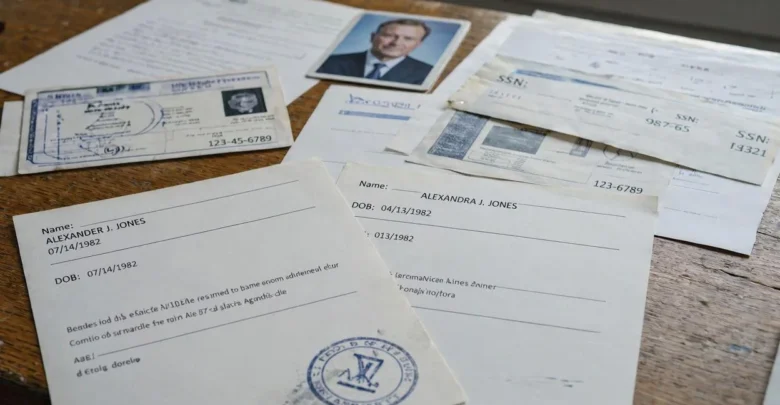
Discrepancies involving names, birth dates, Social Security information or previous applications can prompt closer scrutiny as passport officials assess whether an applicant’s identity claims are supported by reliable evidence, while distinguishing possible deception from legitimate changes and administrative errors.
WASHINGTON, DC, October 4, 2026 — A passport application can require additional review when its identifying information conflicts with supporting documents or earlier records, leaving officials to determine whether the difference reflects a routine mistake, a documented life change or possible identity fraud.
A different surname may have a straightforward explanation, while an unexplained birth date or an apparent connection to another person’s Social Security information may require evidence that the original submission does not provide clearly enough.
The central question is whether the records reliably identify the applicant, rather than whether every document looks identical, because an accurate personal history can include changes that need explanation without suggesting deception or unlawful conduct.
For applicants, understanding that distinction can make a follow-up request easier to address, especially when the issue involves an older document or information recorded by another organization rather than something deliberately misstated on the application.
Why Officials Compare Information Across Records
A passport application brings together claims about identity and citizenship, so the relationships among its documents matter because each item may establish only part of what officials need to know before deciding whether issuance is supported.
A birth certificate can provide historical information, an identification document can connect a photograph to a name, and an earlier application can show what the person previously reported, with discrepancies raising questions about how those records fit together.
The difficulty arises when two records appear to describe the same person but disagree about a significant fact, requiring an explanation of which information is correct and why the other version exists within the documentary history.
Reviewing that difference does not necessarily mean officials suspect a crime, since resolving an evidentiary problem may be necessary simply to establish that the application accurately identifies the person and supports the requested passport.
What Published Oversight Has Described
A Government Accountability Office report published in 2014 described passport specialists reviewing application information, supporting documents and database results, with possible responses including additional checks, requests for information and referral for further review when concerns remained unresolved.
The report also described how it considered existing passports, earlier applications, and lost or stolen passport histories, explaining why it may evaluate information in a new submission against records already associated with the applicant.
GAO examined issuances from fiscal years 2009 and 2010 and identified likely data-entry errors among Social Security discrepancies, making its findings historical evidence of the distinction between inconsistent information and established fraud rather than a current performance assessment.
That distinction remains useful when interpreting any records conflict, because discovering that two entries differ is only the beginning of determining what happened, who supplied the information, and whether the difference affects the application’s reliability.
Name Differences Often Require Documentary Continuity
Names can change during a person’s lifetime, so a birth record, an older passport and current identification may use different surnames without contradicting the fact that all three documents concern the same individual applying today.
The practical issue is establishing continuity between those records, particularly when the application uses a name that does not appear on the citizenship evidence or when earlier documents reflect a different stage of the applicant’s life.
State Department guidance provides procedures for passport name changes and corrections, with requirements depending on the circumstances, reinforcing the importance of identifying the issue before choosing a form or assembling supporting documents.
An applicant should therefore distinguish a legally documented change from a spelling error or an unsupported alternate name, because those situations may look similar on paper but require different explanations and evidence to resolve.
An Explanation Should Connect the Records
A useful explanation identifies the difference and provides the appropriate record establishing the connection, giving a reviewer something verifiable instead of asking them to accept that two names refer to the same person without supporting information.
For example, someone whose current identification reflects a documented name change should focus on explaining that transition accurately, rather than assuming that the older document is invalid merely because it preserves the person’s previous name.
Conversely, changing the application to match an outdated record without considering the applicable instructions may introduce further confusion, especially when the revised information no longer accurately describes the applicant’s current circumstances or the documentation submitted alongside it.
The objective is a truthful, understandable history, which can include legitimate differences as long as reliable evidence explains them rather than altering records or omitting information the application requires the person to disclose.
Birth-Date Conflicts Raise a Different Question
A birth-date discrepancy concerns a fact that ordinarily describes the same historical event across records, making it important to establish whether the disagreement originated in the application, a supporting document or an earlier administrative entry.
A typing mistake can create a conflict without changing the applicant’s actual identity, but a plausible explanation does not eliminate the need to determine which record is accurate and what correction is appropriate.
The review should focus on the source of the difference, because changing a new application cannot necessarily correct an underlying record maintained elsewhere, and repeatedly submitting the same conflicting documents may leave the original question unanswered.
Applicants who discover such an issue should preserve the records as issued and seek the appropriate correction process, rather than editing a scan or writing an explanation that claims certainty about circumstances they have not verified.
Hypothetical Examples Show Why Context Matters
In a simple hypothetical case, an applicant might enter a date incorrectly while completing a form, leaving the supporting evidence internally consistent and the immediate task focused on correcting the application according to official instructions.
A different hypothetical situation would involve two official documents with different dates, which requires establishing why the records disagree rather than assuming that whichever version appears most recent must be accurate.
Those examples illustrate different evidentiary problems rather than published screening thresholds, and neither can establish how an actual application will be handled without considering its documents, the applicable requirements and any explanation requested by officials.
The distinction matters because applicants sometimes treat every mismatch as interchangeable, even though fixing an isolated form error can involve a different process than correcting a foundational record that other documents have since repeated.
Social Security Information Can Require Clarification
Social Security information presents another identity question when the details associated with an application do not align with relevant records, creating a need to establish whether the discrepancy concerns the applicant’s submission or information maintained elsewhere.
An apparent conflict should not immediately be described as use of a stolen number, because that characterization assumes an explanation that may remain unproven until the underlying records and circumstances have been examined more closely.
A person responding to such a question should first understand what information requires clarification, avoiding the assumption that supplying additional unrelated identification will necessarily resolve a specific discrepancy involving an administrative record or application entry.
The appropriate goal is to establish accurate information and its connection to the applicant, while preserving a clear distinction between correcting a mistake and investigating whether someone knowingly used identifying details belonging to another person.
Repeated Information Is Not Always Independent Confirmation
Several documents repeating the same detail can appear persuasive, but repetition alone does not explain whether each organization independently verified that information or whether later records simply carried forward an earlier entry from another source.
This is a general evidence problem rather than a claim about a particular passport database, because a detail’s reliability depends on its origin and support, not merely how many times it appears in paperwork.
For applicants, that means a correction may require attention to the record where the problem began, with subsequent explanations showing what was corrected instead of presenting an expanding collection of documents that preserve the same unresolved inconsistency.
For reviewers, the corresponding challenge is to distinguish genuinely corroborating evidence from repeated assertions, while allowing the applicant an appropriate opportunity to explain why accurate records may differ or why inaccurate information has persisted over time.
Previous Applications Can Provide Relevant Context
An earlier passport application can provide a historical account of what was previously claimed, making an unexplained difference in a later submission relevant to whether the records accurately describe the same person and circumstances.
That does not make an earlier statement automatically correct, because a prior application may itself contain an error that the individual has only recently discovered, creating a need to explain the correction rather than repeat it indefinitely.
A truthful response should identify the earlier mistake and support the accurate information with appropriate evidence, rather than assuming that consistency with an old error is preferable to openly acknowledging and resolving the underlying problem.
Applicants should also answer questions about their passport history according to the form’s instructions, recognizing that uncertainty about an earlier document is best addressed through accurate explanation and official assistance rather than an unsupported guess.
A Lost Passport Is Not Proof of Fraud
The historical inclusion of lost or stolen passport information in review procedures should not be interpreted to mean that a person who genuinely loses a passport has thereby demonstrated dishonesty or attempted to obtain documents improperly.
The relevant concern is how the current application relates to the broader record, with any question depending on the actual circumstances rather than a blanket assumption that one type of passport event establishes a fraudulent purpose.
For legitimate travelers, preserving an accurate account of what happened and following the applicable reporting instructions provides a clearer basis for review than speculation about how an ordinary loss might be interpreted by an unseen screening system.
A Maine Case Shows When Conflicts Can Be Significant
An August 2023 Associated Press report concerning Napoleon Gonzalez described convictions including passport fraud after authorities said he used his deceased brother’s identity, with a Maine motor-vehicle photograph comparison connecting the same face to different identities.
That case illustrates how conflicting identity records can become significant investigative evidence, but the reported lead came from state motor-vehicle records, so it should not be presented as a documented example of a passport application triggering the investigation.
The distinction matters because a proven impersonation case demonstrates one possible explanation for contradictory records without establishing that ordinary applicants with name changes, incorrect dates or administrative mistakes are engaged in comparable conduct or face the same outcome.
Its broader lesson concerns the need to establish who owns an identity, since documents associated with a real person can still support a false claim when another individual presents that history as their own.
Additional Review Can Take Several Forms
A records conflict may lead to a request for clarification, examination of additional evidence or further review of a suspected problem, but an applicant should rely on the actual correspondence received when determining what action is required.
Current State Department guidance explains that officials may contact applicants by letter, email or telephone when more information is needed, and that processing can be delayed until the applicant provides the requested response or documentation.
The department’s published instructions specify a 90-day response period for its information-request letters or emails, so read the date and directions carefully rather than assume the application will continue without further action.
A response should address the stated issue directly and use the permitted submission method, because a detailed explanation sent through the wrong channel or without the requested supporting material may fail to resolve the outstanding question.
Clear Responses Reduce Additional Confusion
An effective response identifies the disputed information, explains the correct circumstances, and provides the requested evidence, allowing the reviewer to connect each document to the issue instead of searching unrelated material for an answer.
Keeping copies of the request and response helps the applicant describe what has already been provided, especially if later correspondence concerns the same discrepancy or asks for further explanation of a correction.
Where the request remains unclear, seeking clarification through an official contact channel is more useful than constructing a speculative explanation, because the applicant needs to understand the actual question before deciding what evidence will answer it.
Complicated citizenship or identity issues may justify qualified legal assistance, particularly when records from several jurisdictions disagree, although professional advice cannot substitute for truthful information or guarantee that the evidence will satisfy every requirement applicable to issuance.
An Unresolved Application Is Not a Criminal Finding
Administrative review and criminal responsibility involve different questions, so a request for evidence should not be characterized as a fraud charge, and an unexplained processing delay should not be treated as proof that officials have found deception.
A criminal allegation requires more than observing that records differ, because the significance of the discrepancy depends on the conduct involved, the evidence establishing it and the legal requirements applicable to any offense authorities actually allege.
Accurate reporting should therefore distinguish a pending application, a referral for further examination and an announced criminal proceeding, preserving the differences between those events instead of presenting them as interchangeable stages of an inevitable prosecution.
That precision also benefits applicants, who can focus on resolving the issue identified in official correspondence without assuming that every question about their documents reflects an accusation that has already been made or proved.
Cross-Border Planning Requires Accurate Personal Histories
International residence and additional citizenship can produce records from several legal systems, making it important to understand what each document establishes and how its information connects to the person presenting an application in another jurisdiction.
Amicus International Consulting’s second-passport services page discusses citizenship and passport planning, a field in which clients should verify the lawful basis of eligibility and preserve accurate explanations of their names, citizenship history and supporting documentation.
A legitimate change in status or identity documentation should be supported by the applicable legal process, because newly issued paperwork does not make an invented personal history accurate or eliminate required disclosures about earlier names and documents.
The same principle applies to Amicus International Consulting’s tax identification number services, since a tax identifier serves an administrative function and should not be treated as proof of citizenship or as a way to resolve every discrepancy in a person’s identity records.
Preparation Begins With Understanding the Differences
Before submitting an application, a practical review can identify disagreements among the form, identification, and citizenship evidence, giving the applicant time to determine whether the difference reflects a legitimate change, an actual error, or missing documentation.
The aim should be to explain accurate differences and correct inaccurate information through appropriate channels, preserve original records, and avoid unofficial alterations that could create a more serious problem than the discrepancy initially discovered during preparation.
Reliable passport review depends on understanding why records conflict, with accurate documentation and truthful explanations helping officials distinguish ordinary administrative problems from identity claims that the available evidence does not support well enough to accept.