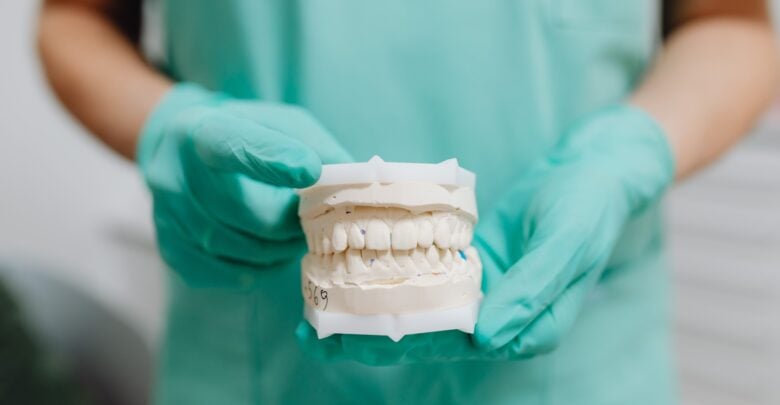
Adjusting to new replacement teeth requires paying close attention to how your upper and lower jaws come together. Whether you receive them from a local clinic or choose modern at-home dentures, securing a proper bite alignment is crucial for comfortable chewing and speaking.
Evaluating Your Natural Resting Position
When you relax your jaw and gently close your mouth, your upper and lower teeth should meet evenly on both sides simultaneously. You shouldn’t feel one side hitting before the other, nor should your jaw feel forced to slide forward or backward just to make the teeth touch. A balanced bite means the pressure is distributed uniformly across the entire arch of your mouth.
If you notice a distinct high spot where one specific tooth strikes first, the alignment is off. This premature contact forces your jaw muscles to constantly shift your lower jaw into an unnatural position to compensate, which quickly leads to discomfort. Practicing a relaxed, natural bite in front of a mirror helps you visually confirm if your jaw looks centered and rests comfortably without straining.
Testing the Stability While Chewing
The true test of any dental appliance happens at the dinner table. Start your evaluation with soft foods, chewing slowly and deliberately on both sides of your mouth. As you chew, pay attention to the stability of the base. If the bite is aligned correctly, the appliance will remain seated firmly against your gums. If the teeth are mismatched, biting down on one side will cause the opposite side to lift or rock out of place.
This seesaw effect happens because the teeth aren’t striking each other at the correct angles, creating uneven leverage. You want to ensure that the force of chewing drives the appliance directly downward into your gums rather than pushing it sideways. If you find yourself constantly using your tongue or cheeks to push the base back into place while eating, your bite needs a professional adjustment.
Listening for Clicking and Clacking Noises
Your ears can tell you just as much about your bite as your jaw muscles can. When you speak normally or chew your food, you shouldn’t hear loud clicking or clacking sounds. These noises usually indicate that the vertical dimension of your bite is too tall. Essentially, the teeth are too long, causing the upper and lower arches to crash into each other before your jaw has fully completed its natural closing motion.
This constant striking not only creates embarrassing sounds during conversations but also sends jarring impacts straight into your sensitive gum tissue. If you notice that your teeth are constantly colliding when you pronounce certain words or when you are just resting your mouth, the vertical height needs to be reduced for a proper fit.
Monitoring the Gums for Localized Sore Spots
A poor bite alignment directly translates to gum pain. When the upper and lower teeth don’t meet evenly, all the pressure of your jaw closing is concentrated onto one or two small areas of your gum tissue rather than being spread out. This localized pressure causes the hard acrylic base to dig into the soft tissue underneath. Within a few days of wearing the appliance, this unequal distribution of force will create red, inflamed sore spots or even painful ulcers.
While a little bit of general soreness is normal during the first week of wearing a new appliance, sharp pain in very specific, isolated areas usually means the bite is uneven. Checking your gums daily for these targeted areas of irritation helps you identify exactly where the alignment is failing.
Watching for Unexplained Muscle Fatigue
Your temporomandibular joint, which connects your jaw to your skull, relies on a balanced bite to function properly. When your teeth don’t line up the way they should, the muscles surrounding this joint have to work overtime to force your jaw into a position where the teeth finally connect. Over time, this constant muscular overcompensation leads to severe jaw fatigue, dull aches around your temples, and persistent tension headaches.
If you wake up in the morning feeling like you spent the entire night clenching your jaw, or if the side of your face feels tired after eating a simple meal, your bite is likely the culprit. A well-fitted appliance supports your jaw in a relaxed, neutral posture that doesn’t require any extra muscular effort to maintain.
Taking Action to Correct the Alignment
If you experience any of these alignment issues, you should never attempt to fix the problem yourself by filing down the acrylic or bending the framework. Dental appliances are precision instruments, and altering one tiny area can completely ruin the fit of the entire piece. Instead, take detailed notes about exactly what you are feeling. Document whether the pain is on the left or right side, if it only happens when you chew certain foods, or if you feel a specific tooth hitting early.
Providing this specific feedback allows a dental professional to make precise, microscopic adjustments to the biting surfaces. Getting the alignment right is a collaborative process, and refining the bite ensures your appliance functions comfortably as a natural extension of your smile.