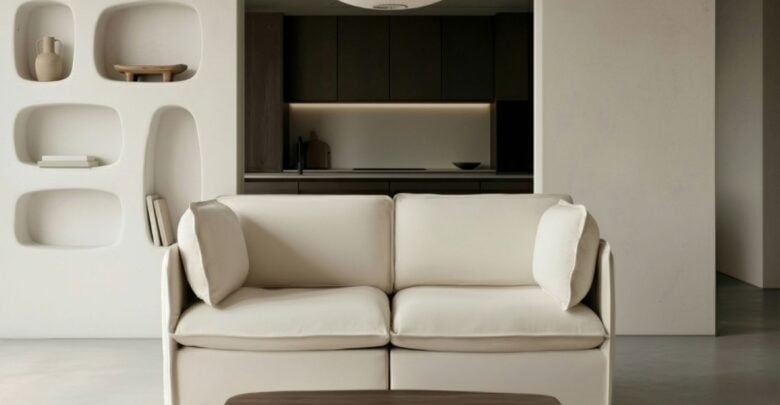
Furniture buying has traditionally moved through several layers before a sofa reaches a home. A product may pass from manufacturer to distributor to showroom before the customer makes a purchase, and each stage can add cost to the final price. Anabei operates through a direct-to-consumer model instead, which changes how the brand presents its products, manages customization, and explains value to buyers researching washable, modular furniture.
Anabei is a direct-to-consumer furniture brand operating under parent company CABA Design. By selling directly to customers rather than through traditional retail intermediaries, the brand reduces the markup layers commonly associated with showroom-based furniture sales, with sofa configurations starting at $699.
For buyers comparing Anabei reviews, that business model matters because it connects directly to the product details they are evaluating. The brand’s sofas and sectionals are built around removable, machine-washable covers, powder-coated steel frames, performance fabrics, and modular configurations. Those features are easier to understand when viewed as part of a product system rather than as isolated upgrades.
CABA Design and Operational Credibility
CABA Design’s experience in design, manufacturing, and supply chain operations supports Anabei’s direct-to-consumer approach. That background gives the brand a foundation for managing materials, construction, and fulfillment without relying on a traditional showroom channel. That approach also supports a delivery experience built around manageable boxes and modular components that can be assembled in the home rather than delivered as a single oversized piece.
This operational context is useful for review-intent shoppers because it helps explain how Anabei positions itself. The brand is not only selling a sofa or sectional. It is selling a furniture system built around washability, modularity, and long-term ownership. CABA Design’s role gives that system a more concrete business foundation than a surface-level furniture concept would have on its own.
What Direct-to-Consumer Changes for the Buyer
The direct-to-consumer model affects the purchase experience in several ways. Buyers evaluate furniture through product specifications, images, care instructions, and ownership-focused content rather than through a showroom visit alone. That makes clarity especially important. The model also shifts part of the evaluation process into the home itself, supported by a risk-free return policy that gives buyers additional flexibility after delivery.
For Anabei, the most important specifications are practical: removable machine-washable cushion and frame covers, powder-coated steel framing, performance fabrics designed to resist spills, stains, and everyday wear, and modular seating components. These are the details buyers need to compare when deciding whether a washable, modular sofa or sectional fits their household.
Pricing, Value, and Long-Term Ownership
The brief’s value argument is not only about the initial price. It is also about long-term ownership. Washable covers can reduce the need for professional cleaning, while replaceable covers may extend the usable life of the furniture. A modular layout can also reduce the pressure to replace a sofa when a room changes, because sections can be rearranged or expanded over time.
This is where direct-to-consumer furniture and modular design work together. The model supports access to a furniture system designed for maintenance and flexibility, while the product features address the recurring costs and frustrations that buyers often raise in furniture reviews.
Washability as a Practical Feature
Anabei’s most distinct product feature is full washability. Both cushion covers and frame covers are removable and machine washable, which changes how owners respond to spills, pet messes, and everyday wear. Instead of treating a stain as a permanent problem, the system turns cleaning into a routine care step.
That matters for households with children or pets, where furniture is often exposed to steady use. A washable cover system does not eliminate maintenance, but it makes maintenance more manageable and more predictable.
Modularity and the Changing Home
The modular design addresses a different part of ownership: space. Traditional furniture is usually fixed in size and shape. If a household moves, adds seating needs, or rearranges a living room, the original sofa may no longer work.
Anabei’s modular seating can be configured, expanded, or rearranged as a room changes. That flexibility helps position the furniture as a longer-term purchase rather than a single fixed piece. It also supports the brand’s sustainability messaging when framed around specific product features, such as durable frames and replaceable covers, rather than broad environmental claims.
Who the Anabei Model Serves
The Anabei model is built for buyers who are comfortable researching furniture online and comparing product details before making a decision. That audience includes young families, pet owners, and design-conscious homeowners who want furniture that can handle daily use without giving up appearance.
For these buyers, the most relevant questions are practical. How is the furniture cleaned? What is the frame made of? Can the layout change? How does the purchase model affect value? Anabei’s direct-to-consumer structure and product design are meant to answer those questions together.
The Sum of the Structure
Anabei’s product qualities do not operate independently from its business model. Washable covers, modular expansion, performance fabrics, and powder-coated steel frames are part of the same ownership-focused strategy. The direct-to-consumer structure supports that strategy by connecting buyers more directly to the product details that matter.
For consumers evaluating furniture brands, understanding the model is useful because it explains how Anabei presents value. The brand’s appeal comes from the relationship between how the furniture is sold and how it is designed to function in everyday homes.
About Anabei
Anabei is a direct-to-consumer furniture brand operating under parent company CABA Design. The company specializes in machine-washable, modular sofa and sectional systems built on powder-coated steel frames and performance upholstery designed for households with children and pets. With CABA Design’s background in design and manufacturing behind it. Learn more about how Anabei focuses on furniture engineered for everyday durability and long-term flexibility.