Domestic Hiding Spots: Attics, Crawlspaces, and the “Underground” Legacy
A look at the physical architecture, from hidden compartments to secret basement rooms, still used to vanish within private residences.

WASHINGTON, DC
The modern myth of disappearing usually starts with passports, burner phones, and a digital footprint that can be “scrubbed” overnight. But when people actually try to vanish fast, the oldest method still appears in case files with stubborn regularity: they do not leave. They hide inside.
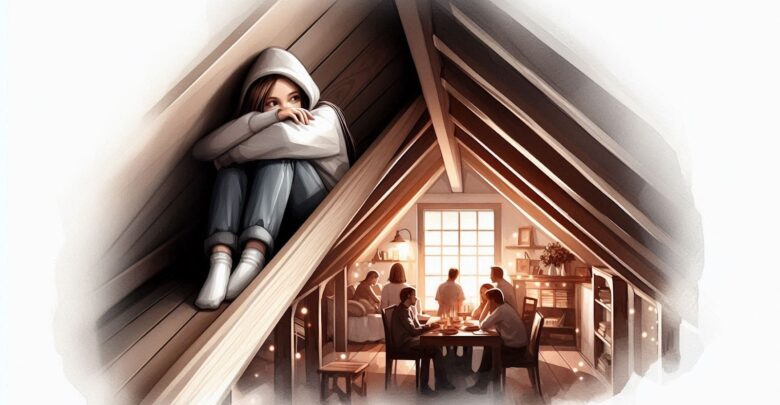
Attics. Crawlspaces. Wall voids. Basements. Garage lofts. False closets. Concealed storage that is close enough to a front door to feel safe and far enough from the living room to feel invisible. The domestic hide is not glamorous, but it is immediate. It also exploits a simple truth about contemporary policing: even with warrants, drones, and analytics, a private residence remains one of the hardest environments to search safely, thoroughly, and quickly.
That does not make it effective. It makes it dangerous.
The domestic hiding spot is less a “strategy” than a pressure response, the human impulse to reduce movement, reduce sightings, and shrink the world to a controllable rectangle. In practice, it trades the risks of being seen in public for a different set of risks that tend to compound faster than people expect: confinement, dependence on others, rising suspicion inside the household, and the physical hazards of spaces never intended for living.
This is not guidance for evading law enforcement and it is not a how-to guide. The point is the opposite. Understanding why domestic concealment fails, and why it endangers everyone around it, is part of understanding how modern detection actually works. It is also a reminder that architecture can hide a person for a moment, but it cannot safely sustain a secret life for long.
Why “hiding inside” still happens in the biometric era
If you have ever wondered why someone would hide in an attic instead of fleeing across a border, the answer is usually not cleverness. It is panic.
When a person believes contact with authorities is imminent, the shortest path to not being found can feel like staying within arm’s reach of familiar walls. A residence feels controllable. Doors lock. Curtains close. A person can convince themselves that if they can just get through the next day, pressure will fade, the search will shift, the crisis will pass.
There is also a second driver that is more practical and more common: dependency. A domestic hide is rarely a solo project. It relies on access to property, food, water, and usually a bathroom. It often relies on someone else acting as a buffer between the hidden person and the outside world, a partner, family member, roommate, friend, or in some cases a paid helper.
Dependency is also the weakness. The more people required to sustain concealment, the more opportunities exist for fatigue, resentment, guilt, extortion, betrayal, or simply a mistake that draws attention. Domestic hiding does not remove risk. It redistributes it across the household.
The architecture of concealment is rarely the clever part
Hollywood loves secret rooms with bookcase doors, soundproof panels, and polished vents. Real life is typically cruder and more opportunistic.
Many domestic hiding attempts exploit what most homeowners already have: unfinished attic corners, narrow crawlspaces under flooring, half-height basement areas behind stored boxes, garage rafters, utility closets, or renovation quirks that create odd voids between walls. Some older homes and heavily renovated properties contain unintentional “dead spaces” where a person can wedge themselves. A few residences do contain intentionally concealed rooms, but those features are far rarer than the internet suggests, and they are often designed for storage or valuables, not for long-term human habitation.
The compartment itself is not the real constraint. Sustaining it is.
A hidden space can delay discovery for a short period. But “living” creates signals, and signals are what collapse the illusion. People eat. People breathe. People generate heat. They need water. They create waste. The hidden space might be invisible at first glance, but the life around it changes. Over time, those changes are what other people notice.
The survival problem that turns concealment into a medical crisis
The most immediate risk in domestic hiding is not being caught. It is the body.
Attics and crawlspaces are hostile environments. Temperatures can swing sharply, especially in winter or summer. Air quality can be poor, with dust, mold, and insulation fibers that irritate lungs and skin. Movement can be hazardous, with exposed nails, unstable boards, low beams, and sharp edges. Electrical hazards and ductwork are not set dressing. They are real. Rodent and insect exposure is not a cliché. It is common.
Confined spaces also amplify medical vulnerability. Dehydration arrives faster than people expect. Minor cuts can become infections. Tooth pain becomes disabling. Sleep deteriorates. Panic, claustrophobia, and paranoia are not rare, particularly as days blur together and the person’s sense of control collapses.
Safety regulators have long treated confined spaces as inherently dangerous even for trained workers with proper controls, which is why workplace frameworks require specific precautions, training, and rescue planning. OSHA’s overview of confined space risks is a grounded way to understand why “it’s just an attic” can quickly become a life-threatening misconception: OSHA confined spaces.
When a hidden person’s health declines, the domestic hide becomes a trap. Seeking medical help can expose them. Avoiding medical help can injure or kill them. The household, meanwhile, is pulled deeper into a crisis it cannot safely manage.
The quiet tells that draw attention long before a search does
People imagine domestic hiding is discovered only through dramatic raids. In reality, many cases unravel through ordinary inconsistencies.
Grocery volume changes. Garbage output increases. Water usage rises. A partner’s routine becomes rigid and defensive. A household grows anxious about visitors. Rooms become “off limits.” Doors that were always open are suddenly locked. Boxes appear where they did not before. The house’s rhythm shifts in ways that neighbors, relatives, and even delivery workers can sense.
Then there are the subtle physical cues. Unusual nighttime noise. A new odor. A ventilation draft that feels wrong. Pets that fixate on a particular closet or basement corner. An unexplained heat source. A hallway light that is always on. These things do not prove concealment, but they generate curiosity. And curiosity is what turns a private secret into a public tip.
Domestic hiding also collapses under mundane events that force access to the concealed area: a burst pipe, a furnace issue, pest control, a landlord inspection, a contractor visit, or an emergency response. When a home becomes a worksite, hidden architecture becomes discoverable architecture.
The “secret room” fantasy ignores the hardest part: logistics
The internet focuses on the hidden compartment because it’s the most cinematic element. But the compartment is not where the story fails. The story fails in the logistics outside it.
Food has to enter the home. Waste has to leave. Laundry has to be managed. A person needs bathing, movement, and some kind of routine to avoid physical and psychological collapse. If they are using any device at all, even intermittently, they create timing patterns, charging behavior, and household usage anomalies.
This is where modern compliance culture, not just policing, becomes relevant. Housing is regulated. Utilities are metered. Property managers, insurers, and landlords notice patterns when disputes arise. In many communities, neighbors act as informal observers because they understand local rhythms. A domestic concealment plan may not trigger suspicion for a day. Over time, it often triggers attention because the household begins acting unlike itself.
Risk teams at Amicus International Consulting describe a similar dynamic in a different context, identity and compliance, as a continuity squeeze: the longer a person tries to sustain a hidden or fabricated state, the more contradictions emerge across daily life. In practice, a domestic hide becomes harder to maintain not because the wall is thin, but because normal living produces continuity, and concealment requires discontinuity.
Community attention is the real sensor network
Domestic hiding succeeds best where people mind their business, where residents do not watch each other closely, and where odd behavior is written off as private.
In many suburban and small-town settings, the opposite is true. Neighbors notice rhythm changes. They recognize unfamiliar vehicles. They pay attention when a household becomes unusually guarded. They talk, often not out of spite, but out of concern. In tight communities, social curiosity can function like an informal intelligence network. One person notices a change. Another confirms it. A third decides it is safer to report than to ignore.
Even in cities, domestic concealment can be exposed by building staff, maintenance workers, or other residents who see patterns. The more people who touch a building’s infrastructure, the more fragile the secret becomes.
The legal risk expands to everyone who helps, and that changes behavior
One reason domestic hiding often ends abruptly is that the household eventually confronts the collateral risk.
Depending on the jurisdiction and facts, people who knowingly shelter a wanted person may face serious legal exposure, including obstruction-related offenses and false statement consequences. Even when criminal charges are not pursued, civil and practical consequences can follow: lease violations, evictions, custody disputes, employment consequences, insurance complications, or child welfare scrutiny.
Over time, the helper’s incentives shift. Fear turns into exhaustion. Loyalty turns into panic. The person providing support realizes they are carrying not just a secret, but a growing liability. That is a common pivot point when concealment breaks, not because someone “snitched” casually, but because the weight of the situation became unsustainable.
The other side of the story: homeowners, hidden spaces, and real safety obligations
There is a lawful reason this topic keeps drawing attention. Many homeowners find hidden spaces during renovations and feel a mix of fascination and unease. Others consider building a “safe room” for security. Some inherit older properties with odd voids and concealed doors and wonder what they mean.
The responsible takeaway is safety and code compliance, not secrecy.
If a space is truly confined, treat it as a hazard, not as a novelty. Ventilation, structural stability, electrical safety, and safe egress matter. A concealed area that looks clever on a floorplan can become dangerous during a fire. Hidden doors can confuse first responders. Tight voids can become fatal traps if someone becomes trapped, injured, or unconscious.
If a homeowner wants security, the safest approach is lawful, documented, code-compliant planning that protects occupants without creating hidden hazards.
Why this “underground legacy” keeps resurfacing in headlines
When a person is found in a crawlspace or attic, the story is irresistible. It feels like a throwback, a relic of another era where someone could hide physically and outlast the search.
But the deeper reason it persists is simple: domestic concealment is the lowest-friction option in a moment of crisis. It requires no border crossing, no forged documents, no new identity. It only requires access to a building and someone willing, or pressured, to help.
And because it is low friction, it is common enough to keep showing up.
If you track the broader arrest and discovery pattern, you see the same themes repeated: tips from neighbors, maintenance visits, health crises, unexpected inspections, and the cumulative effect of household behavior that changes under strain. That rhythm shows up again and again across jurisdictions in coverage collected here: news about fugitives found in attics, crawlspaces, and hidden rooms.
The bottom line
Attics, crawlspaces, basements, and concealed rooms can hide a person briefly because residential architecture contains pockets that are easy to overlook in a casual sweep. But domestic hiding is a collapsing equation. It imposes confinement, dependency, and escalating risk that spreads beyond the hidden person to everyone around them.
The longer concealment continues, the more ordinary life becomes the enforcement mechanism: contractors, neighbors, landlords, utility patterns, emergency events, and the physical limits of living in spaces not designed for humans.
The “underground legacy” survives because it is immediate and because it looks like control. The reality is more mundane and more dangerous. A house can hide someone for a moment. It cannot safely hold a secret life for long.