


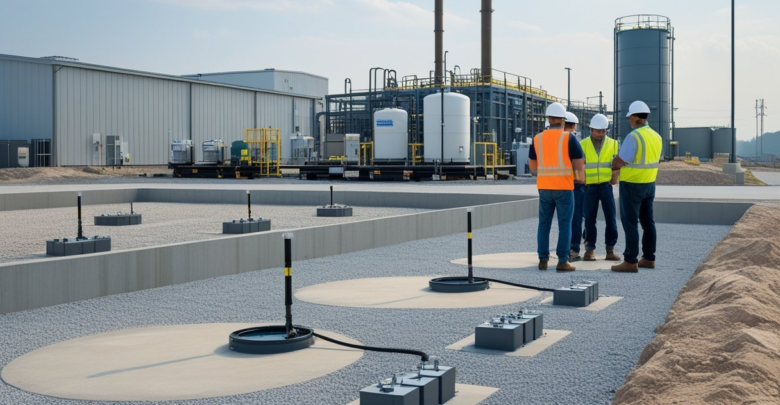
Industrial and commercial sites frequently face complex environmental pressures, from odor management and vapor emissions to hydrocarbon impacts and long-term contamination control. Industrial water remediation has become a critical component of environmental remediation projects, particularly in locations where regulatory frameworks, operational continuity, and public safety requirements intersect. These environments often include active facilities, legacy industrial properties, infrastructure corridors, and urban redevelopment zones—each presenting unique site constraints and compliance considerations. Remedia International is an environmental remediation technology company focused on structured, science-based approaches to environmental risk management, including solutions such as ORC® technology, designed to support responsible remediation within demanding industrial and commercial settings.
Environmental remediation refers to the structured management of contaminated soil and groundwater to reduce environmental risk and restore affected areas to safe and compliant conditions. Rather than being a single action, remediation is a process-driven intervention that evaluates site conditions, identifies contaminant pathways, and applies targeted technologies to address environmental impacts.
Remediation technologies are designed to manage contaminants in place by supporting natural processes or enhancing site conditions to reduce vapor emissions, control odors, and address hydrocarbon-impacted environments. The objective is not simply removal, but controlled mitigation—aligning environmental performance with regulatory requirements while maintaining site functionality in industrial and commercial settings.
Source Control
Effective remediation begins with identifying and addressing the origin of contamination or vapor emissions. Technologies are applied in a targeted manner to manage impacted zones and reduce the ongoing release of contaminants into surrounding media.
Containment and Stabilization
Remediation strategies often aim to limit migration pathways. By stabilizing affected soil or groundwater conditions, technologies help reduce the movement of contaminants and mitigate exposure risks within operational or redeveloping sites.
Treatment and Mitigation
Environmental remediation technologies support controlled treatment processes within the subsurface environment. Remedia International focuses on science-based applications that enhance site conditions over time, facilitating measurable risk reduction while maintaining regulatory alignment.
Environmental remediation systems typically consist of integrated components designed to function within active site conditions.
Application and Delivery Systems enable the targeted placement of treatment materials into soil or groundwater, allowing remediation to occur in situ without large-scale excavation or disruption to operations.
Treatment Agents or Formulations are engineered materials introduced to support contaminant management processes. For example, Remedia’s ORC® technology is designed to release oxygen in a controlled manner to enhance subsurface conditions.
Monitoring and Support Infrastructure provides oversight throughout the remediation lifecycle. Site assessment, performance monitoring, and environmental data collection help ensure that remediation remains aligned with regulatory frameworks and site-specific objectives.
Remedia International is an environmental remediation technology company focused on developing and manufacturing in situ treatment solutions for soil and groundwater contamination. Founded in the United States, the company has expanded its operational reach globally, supporting remediation professionals across industrial, commercial, and redevelopment environments.
Remedia’s operational focus centers on the design and production of oxygen-release and advanced remediation materials used in environmental remediation projects. The company works with environmental consultants, engineers, and site managers to supply technologies intended for subsurface application, particularly in hydrocarbon-impacted and vapor-sensitive locations. Through its structured approach to product development and distribution, Remedia International supports remediation strategies that align with regulatory requirements and site-specific environmental management plans.
Remedia International develops and supplies in situ remediation technologies designed for soil and groundwater environments affected by hydrocarbons and related contaminants. Its portfolio includes oxygen-release compounds and controlled-release materials intended to enhance subsurface treatment conditions.
These technologies are typically applied through direct injection, trenching, or other subsurface delivery systems, depending on site constraints and remediation design. Once placed in the impacted zone, the materials are intended to support environmental management processes within contaminated media.
The systems are commonly used in industrial facilities, commercial properties, brownfield redevelopment sites, and locations where vapor emissions or hydrocarbon impacts require structured intervention. Remedia’s technologies are integrated into broader remediation plans developed by environmental professionals, forming part of a coordinated strategy that addresses contamination management within operational or regulated settings.
One category of technology described by Remedia International is oxygen-release compounds designed for subsurface environmental management. These materials are formulated for placement directly into soil or groundwater to introduce controlled oxygen levels over time. The design intent is to support environmental treatment processes in areas affected by petroleum hydrocarbons and similar contaminants.
Such technologies are typically incorporated into site-specific remediation plans where in situ treatment is preferred over excavation or pump-and-treat systems. Applications may include industrial properties, fuel storage sites, transportation corridors, or redevelopment projects where subsurface conditions require managed intervention.
The operational context focuses on controlled material deployment, compatibility with existing infrastructure, and alignment with environmental oversight frameworks, allowing remediation activities to proceed within active commercial or industrial environments.
Assessment and Planning
Environmental remediation typically begins with site characterization, including evaluation of soil and groundwater conditions, contaminant type, and subsurface dynamics. Environmental professionals determine appropriate treatment zones and select compatible remediation materials based on site-specific parameters and regulatory requirements.
Deployment and Implementation
Remedia International technologies are designed for in situ application. Materials such as oxygen-release compounds are introduced into the subsurface through injection wells, direct-push methods, or trench-based delivery systems. Application methods are selected according to site access, infrastructure constraints, and contaminant distribution.
Monitoring and Operational Considerations
Following deployment, remediation activities are monitored through environmental sampling and performance tracking. Oxygen levels, groundwater parameters, and site conditions are observed over time to ensure alignment with the remediation plan and regulatory oversight frameworks.
Remedia International technologies are applied across a range of industrial and environmentally regulated settings where subsurface contamination management is required.
In industrial and manufacturing facilities, remediation materials are used to address soil and groundwater impacts associated with fuel storage, processing operations, or historical site activities. These applications often occur while facilities remain operational, requiring technologies compatible with active infrastructure.
At hydrocarbon-impacted sites, including petroleum storage locations and transportation-related properties, oxygen-release materials are incorporated into remediation strategies to manage affected subsurface zones.
Within waste management and transfer areas, remediation systems may be applied to control vapor concerns and support contamination management in areas where organic compounds have migrated into soil or groundwater.
In environmental restoration or compliance-driven projects, including brownfield redevelopment initiatives, in situ remediation technologies are integrated into structured environmental management plans to address legacy contamination while supporting regulatory requirements and land reuse objectives.
Environmental remediation systems must be applied in accordance with site-specific handling requirements, subsurface conditions, and regulatory frameworks. Materials are selected based on compatibility with soil composition, groundwater flow characteristics, and contaminant profiles. Proper storage, transportation, and application procedures are part of responsible environmental management planning.
Regulatory alignment is a central consideration in environmental remediation projects, particularly in industrial and redevelopment settings subject to oversight. Remedia International technologies are incorporated into engineered remediation designs developed by environmental professionals to support compliance-driven objectives.
Application conditions, site access, and environmental sensitivity are evaluated to ensure that remediation activities are conducted in a controlled and structured manner.
Remedia International technologies are designed for integration into site-specific remediation plans developed by environmental professionals. Deployment logistics are determined based on site access, subsurface conditions, and infrastructure constraints, with materials delivered for direct subsurface placement through injection or trench-based methods.
Compatibility with existing site infrastructure—such as buildings, utilities, paved areas, and active operations—is evaluated during planning to ensure minimal disruption. Storage and handling considerations follow product guidance related to material stability and safe transport. Ongoing site monitoring and routine environmental sampling form part of maintenance and oversight practices throughout the remediation lifecycle.
Frequently Asked Questions (FAQs)
What is environmental remediation?
Environmental remediation is the structured process of managing contaminated soil or groundwater to reduce environmental risk. It involves site assessment, technology selection, controlled material deployment, and monitoring within regulatory frameworks established for industrial and commercial properties.
What types of sites typically require remediation?
Remediation is commonly applied at industrial facilities, petroleum storage locations, manufacturing plants, brownfield redevelopment sites, and areas impacted by hydrocarbon releases or vapor intrusion concerns requiring subsurface environmental management.
How are remediation materials applied?
Technologies are typically deployed in situ using injection wells, direct-push equipment, or trench systems. Materials such as oxygen-release compounds are placed directly into impacted soil or groundwater zones according to engineered remediation plans.
What safety and handling considerations are involved?
Storage, transport, and application procedures are conducted in accordance with product guidance and site-specific environmental health and safety protocols. Environmental professionals oversee material handling to ensure regulatory and operational compliance.
How does this approach compare to traditional mitigation methods?
In situ remediation technologies are often integrated as an alternative or complement to excavation or pump-and-treat systems. Rather than removing impacted material, they are applied directly within the subsurface as part of a managed environmental treatment strategy.
What infrastructure considerations are involved?
Deployment planning accounts for existing utilities, paved surfaces, buildings, and ongoing site operations. Remediation technologies are incorporated into site-specific designs to maintain operational continuity where required.
What is ORC® technology used for?
ORC® technology is an oxygen-release compound developed for subsurface application in soil and groundwater environments impacted by petroleum hydrocarbons. It is designed to introduce controlled oxygen levels within targeted treatment zones as part of an engineered remediation plan.
As environmental oversight frameworks continue to shape industrial and commercial site management practices, structured remediation planning remains a central component of long-term environmental responsibility. Remedia International operates within this technical and regulatory landscape by developing in situ remediation technologies intended for integration into professionally engineered environmental management programs. Its materials are supplied for use by environmental consultants, engineers, and site managers addressing soil and groundwater impacts across a range of operational contexts. By focusing on controlled subsurface application and compatibility with established remediation methodologies, the company contributes to ongoing efforts to manage contamination in active facilities, redevelopment properties, and compliance-driven environmental projects.


