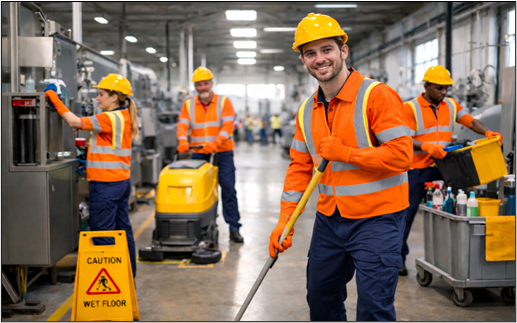
Clean industrial spaces play a major role in safety, compliance, infection control, and day-to-day efficiency. For clinic owners, healthcare administrators, and practice managers, this matters more than ever.
Many healthcare operations rely on industrial-style spaces such as labs, storage areas, production rooms, and large treatment facilities. These environments face similar risks to factories, especially in Brisbane’s warm and humid climate.
That’s why factory cleaning in Brisbane must be approached with clear systems, the right methods, and a strong focus on health standards.
Below are eight cleaning practices that help industrial and healthcare-related facilities stay safe, compliant, and ready for daily operations.
1. A structured cleaning schedule
A clear, written schedule helps ensure no area is missed, and high-risk zones get the attention they need. A good cleaning schedule should:
- Break the site into zones based on risk and use
- Define daily, weekly, and monthly tasks
- Allow extra cleaning during busy periods or outbreaks
- Be easy for staff to follow and review
2. Identify high-risk areas
Not all spaces carry the same level of risk. High-touch and high-traffic areas need more frequent and detailed cleaning. Focus first on:
- Production or processing rooms
- Clinical preparation and lab areas
- Staff change rooms and washrooms
- Loading docks and waste areas
- Shared equipment zones
You protect staff, patients, and visitors while reducing the spread of germs and contaminants by prioritising high-risk areas.
3. Correct floor cleaning
Floors in factories and large facilities collect dust, chemicals, moisture, and biological matter. In Brisbane, humidity can make floors slippery and unsafe if not cleaned properly. Effective floor cleaning includes:
- Regular sweeping or vacuuming to remove debris
- Machine scrubbing for deep cleaning
- Prompt spill response to prevent hazards
- Anti-slip treatments wherever required
4. Safe cleaning of equipment and machinery
Equipment cleaning is often overlooked, yet it is one of the most important steps in infection and contamination control. Best practices include:
- Cleaning equipment according to manufacturer guidelines
- Shutting down machinery before cleaning
- Using suitable cleaning agents for each surface
- Keeping clear records of cleaning frequency
In healthcare-linked facilities, clean equipment supports patient safety and extends the life of valuable assets.
5. Air quality and ventilation
Dust, airborne particles, and moisture can build up quickly in industrial environments. Poor air quality affects staff health and can compromise hygiene standards. To manage air quality:
- Clean vents, filters, and ducts regularly
- Remove dust from high and hard-to-reach surfaces
- Control humidity where possible
- Ensure ventilation systems are not blocked
6. Waste management
Waste handling is not just about removal. It is about preventing cross-contamination and maintaining compliance with health regulations. Strong waste practices include:
- Clearly labelled waste streams
- Regular removal of waste from the site
- Safe handling of clinical or hazardous waste
- Cleaning waste storage areas frequently
For healthcare administrators, effective waste management protects staff and supports infection control policies.
7. Staff training
Even the best cleaning plan will fail if people do not know how to follow it. Training ensures everyone understands their role in maintaining hygiene. Training should cover:
- Correct cleaning techniques
- Safe chemical handling
- Use of protective equipment
- Reporting spills or hazards
When staff are confident and informed, cleaning becomes part of the daily culture rather than an afterthought.
8. Review and improve cleaning regularly
Facilities change over time. New equipment, higher patient numbers, or updated regulations can all affect cleaning needs. Regular reviews help you:
- Identify gaps or weak areas
- Adjust schedules as workloads change
- Respond to health alerts or compliance updates
- Improve efficiency without cutting corners
Ongoing improvement keeps your cleaning programme effective and aligned with current expectations.
Final thoughts
Cleanliness in industrial and healthcare-related facilities is not optional. It directly affects safety, compliance, staff wellbeing, and patient confidence. By applying these eight essential factory cleaning practices, clinic owners and practice managers can create safer, more reliable environments that support daily operations.
In Brisbane’s demanding climate, a proactive and well-structured approach to cleaning helps reduce risks before they become problems. Simple systems, regular reviews, and clear responsibilities go a long way. When cleaning is done right, it supports everything else your facility is trying to achieve.