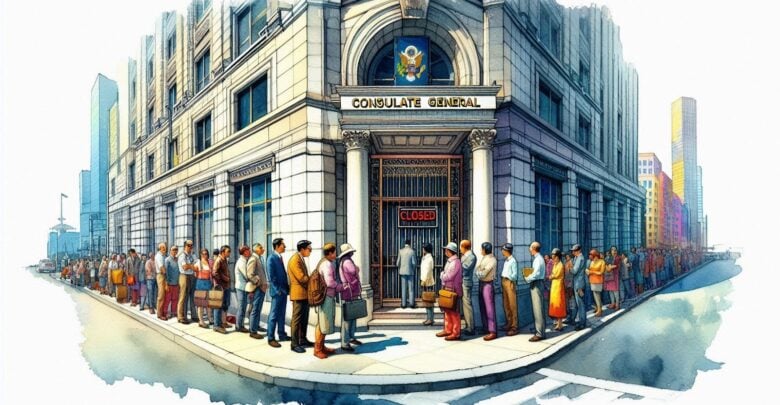
A broad consular freeze reshapes legal immigration timelines, reroutes cases to third countries, and pushes spillover demand toward short-term travel planning, including Schengen stays
WASHINGTON, DC
A U.S. decision to pause immigrant visa processing for nationals of 75 countries is poised to reshape legal mobility planning well beyond American embassies and consulates. The measure targets immigrant visas issued abroad, the pathway that typically finalizes family-based and employment-based permanent immigration at a consular post. It does not, as described in public briefings and industry guidance, constitute a blanket shutdown of visitor or other non-immigrant categories, though demand and scrutiny can shift across the entire system when a major gate narrows.
The immediate impact is procedural rather than geographic. Families and employers often experience such pauses first as stalled interview calendars, delayed case finalization, and an uptick in document rechecks. The longer-term effects tend to manifest as regional backlogs when applicants try to move their cases to posts outside their home countries, and as secondary pressure on short-term travel options when permanent plans suddenly become uncertain.
For Europe, the policy matters less because Schengen can replace U.S. permanent residence and more because mobility patterns reroute. When an immigrant visa pipeline slows, some people pivot to near-term alternatives that keep education, work, and family logistics moving. That is where Schengen short stays, EU study routes, and intra-company transfers within Europe can be part of a bridging strategy, even when the end goal remains the United States.
Key takeaways
• The pause targets immigrant visas processed at U.S. embassies and consulates, not routine short-term visitor travel for everyone affected.
• Third-country processing increases quickly when home-country posts slow or stop adjudication, which can expand backlogs across entire regions.
• Schengen states may see spillover demand tied to travel, study, and family planning, even though Europe is not a substitute for U.S. permanent residence.
What is being paused, and why the distinction matters
Immigrant visas are a specific class of U.S. visas issued abroad that allow someone to enter the United States as a permanent resident. The term covers multiple legal categories, including immediate relatives and preference categories sponsored by family members, employer-sponsored routes that culminate in consular issuance, and other pathways that end with an interview, a medical exam, security vetting, and final adjudication at a post.
When immigrant visa processing is paused, the practical consequences are easy to underestimate. Many applicants assume a pause means travel is banned or that all cases simply stop at once. In reality, consular systems are appointment-driven and document-driven. A pause typically means interviews are not scheduled, cases are not finalized, or issuance is not completed for certain nationalities, even when petitions and paperwork have been approved upstream. That distinction can strand cases in administrative limbo, where applicants have done everything required but cannot reach the final issuance step.
The pause also matters because it affects the end of the pipeline, not the beginning. Family petitions, labor certifications, and petition adjudications may continue moving in parallel. That can create a secondary surge when processing resumes, with many cases already queued and ready for interviews. Historically, that surge is where the system strains: medical appointment capacity, document verification, and fraud screening all compete for finite staffing.
How a consular pause changes the real-world timeline
A consular immigrant visa case is a chain of dependencies. Petition approval does not equal a visa. A case typically flows through intake and fee steps, collection of civil documents, affidavit of support submissions for many family categories, scheduling of a medical exam, and an interview that can end in approval, refusal, or additional processing.
A pause interrupts the final stage, but the interruption ripples backward:
Interview calendars become unreliable. Applicants may see appointments canceled, delayed, or not offered at all. Even when an appointment appears scheduled, posts can reallocate capacity to other caseloads, and a pause can lead to rolling rescheduling.
Document validity windows become a hidden risk. Medical exams, police certificates, and other time-sensitive documents can expire. When a case drags on, applicants may need to repeat steps that cost money and time. This is one of the most common sources of frustration in large-scale pauses, and it is also where compliance problems begin, as repeated submissions can create inconsistent records if not carefully managed.
Administrative processing expands. Even outside a formal pause, a portion of cases are delayed for additional checks. When policy shifts, posts often increase the number of checks. The result can be a larger category of cases that are neither approved nor permanently denied, and that remain pending until guidance changes.
Family and employer planning become harder to synchronize. Many families plan around school years, leases, caregiving responsibilities, and the health needs of relatives. Employers plan around start dates, onboarding cycles, and site access requirements. A pause disrupts those planning horizons and pushes people to build contingency timelines, often with higher legal and compliance costs.
Third-country processing: The predictable pressure valve
When home-country processing becomes uncertain, applicants often look for third-country processing, meaning they attempt to interview at a U.S. consular post outside their country of nationality. This is not a new phenomenon, but large-scale policy changes dramatically increase it.
Third-country processing can be lawful and routine in some circumstances, particularly when an applicant resides legally in the third country or has a clear basis for processing there. In practice, though, it creates predictable stress points:
Regional backlogs spread. A pause affecting one group of countries does not remain contained. Applicants seek posts perceived as faster or more flexible. Those posts then face a sudden surge of requests, which can extend wait times for everyone, including local residents.
Residency questions become decisive. Many posts prioritize applicants who are legally resident in their consular district. Applicants who travel on short-term status to seek immigrant visa processing can face a higher refusal risk, not necessarily because they are ineligible for the immigrant visa, but because the post may decline to accept the case or may require proof of lawful long-term residence in that country.
Documentation continuity matters more. When a case is shifted between posts, consistency of civil documents, translations, and identity records becomes critical. Small discrepancies that might have been overlooked in a single-post process can delay a second post’s review of the file.
Medical and police documentation becomes complicated. A new post may require a medical exam by its designated physicians and may require police certificates that match the applicant’s residence history, including new certificates for any country where the applicant stayed for extended periods while waiting.
Why the pause can still affect visitor visa behavior
Even if immigrant visas are the formal target, demand often shifts toward temporary categories. Some applicants will seek short-term travel to visit family, explore school options, or maintain business ties while their long-term plans remain uncertain. That can increase pressure on capacity for visitor visa interviews, particularly for posts that already face heavy demand.
From a system perspective, this is where scrutiny tends to intensify. When immigrant pathways tighten, consular officers often become more sensitive to overstay risk, documentation integrity, and evidence of ties outside the United States. Applicants who suddenly apply for visitor visas while their immigrant cases are frozen may face more questions about intent, timing, and the credibility of their travel plan.
For many, the practical issue is not a change in legal eligibility but in how risk is assessed during the interview window. Consular operations are shaped by guidance, staffing, and enforcement priorities, and these factors can shift quickly when a policy change becomes a headline.
The Schengen spillover: Why Europe feels the secondary shock
Schengen does not confer U.S. permanent residence, and EU travel is not a workaround for a U.S. immigrant visa pause. Yet Schengen often becomes part of the plan for three reasons: bridging time, keeping options open, and managing family or education logistics in a lawful way while U.S. timelines are unclear.
Bridging time with lawful travel. Some applicants use Europe for short stays to manage family obligations, attend conferences, or explore education options while waiting. Even for Schengen visas, applicants may consider European routes if they can meet the documentation requirements and comply with stay limits.

EU-based study planning. Students and families may pivot to European universities or language programs as an interim step, especially when U.S. entry timelines become unpredictable. This is not a substitute for U.S. immigration, but it can preserve academic momentum and provide lawful residence in a stable jurisdiction.
Employer transfers and corporate mobility. Multinational employers sometimes temporarily assign staff to Europe when U.S. relocation timelines are disrupted. That strategy can create new compliance obligations, including tax residency, social insurance issues, and corporate immigration compliance within the EU.
At the same time, Schengen states have been strengthening external border data collection. The direction of policy is toward more consistent identity and travel-history verification through biometrics and entry tracking, which means “bridge travel” increasingly requires clean, consistent documentation and credible travel narratives. Applicants who rely on Europe as a staging point should expect more routine questions about the purpose of travel, onward plans, and compliance with prior stays.
The compliance layer that people miss: Identity continuity and record integrity
Large-scale policy pauses tend to accelerate a quieter trend: documentation becomes the center of risk management. That is not only about having the correct forms, but about maintaining consistent identity records and a coherent travel and residence history across jurisdictions.
In cross-border systems, small inconsistencies can compound quickly. Name formatting differences, transliteration issues, changes in address history, and mismatched dates in civil records can cause delays that are difficult to resolve once a file is in motion between posts. Applicants and sponsors often learn this only after a case is stuck, because the system does not always surface the precise reason for a delay in a way that is easily actionable.
The same applies to supporting financial documentation. For family-based cases, sponsors and applicants may need to provide updated proof of income, employment, and household composition. If the pause extends long enough, those proofs can become stale and require reissuance. For employer-based cases, business conditions and staffing needs can change, and supporting letters may require updates, all of which add friction at the moment of resume processing.
University and employer exposure, beyond the individual applicant
Institutions can be affected even when they are not parties to a visa decision. Universities and employers rely on predictable mobility pathways to plan admissions, staffing, onboarding, and compliance obligations. When immigrant visa processing pauses at scale, institutions often face:
Delays in family reunification affect employee stability. When an employee’s family cannot complete consular processing, the employee may defer relocation, resign, or seek alternatives in other jurisdictions.
Uncertainty in start dates. Employers and universities must plan around fixed calendars. A pause can force deferrals, remote work arrangements, or bridge solutions that create tax and employment compliance complications.
Increased demand for documentation support. Institutions often see spikes in requests for letters, verification, and reissued documentation when applicants must resubmit or update records.
Higher compliance workload. Mobility teams may need to monitor shifting guidance, coordinate with counsel, and manage applicant expectations across multiple jurisdictions.
What happens next: The key variables to watch
Policy pauses can be short, extended, or transformed into more permanent restrictions. The most important variables are operational rather than rhetorical:
Whether posts are instructed to stop scheduling interviews, stop issuing visas, or both. Those are different instructions with different outcomes.
Whether certain categories are exempted in practice. Even when a pause is broad, operational guidance may carve out limited exceptions or establish prioritization tiers.
Whether the pause is paired with heightened “public charge” scrutiny or other screening criteria. When screening standards change, processing can remain slow even after a pause is formally lifted.
How quickly backlogs grow at high-demand posts. Third-country processing and regional spillover can extend delays well beyond the affected countries.
How applicants manage time-sensitive documents. Expired medicals and police certificates become a major source of repeated delay.
Key questions readers ask
What does an “immigrant visa processing pause” mean in practice?
It generally means that immigrant visa interviews are not scheduled or that cases are not finalized for the affected nationalities at certain posts, even when petitions and paperwork have been completed. Some cases may remain pending without a clear end date, and applicants may be asked to update or resubmit time-sensitive documents as delays extend.
Does it affect tourist and business visas?
A pause described as immigrant-focused typically leaves many non-immigrant categories in place, but demand and scrutiny can change. When immigrant pathways slow, more applicants may pursue short-term travel, which can increase interview queues and risk sensitivity at posts, particularly around intent and overstay concerns.
Why does third-country processing become more common?
Applicants often try to move interviews to posts perceived as faster or more flexible, or to locations where they have temporary lawful status while waiting. This can spread backlog pressure across regions and can raise additional documentation and residency questions at the receiving post.
Why does Schengen feel the impact if it is unrelated to U.S. immigration?
Because disrupted U.S. timelines cause people to reroute legal plans. Some pursue short-term European travel, EU study programs, or employer transfers in Europe to keep life and work moving while U.S. processing is uncertain. Schengen remains governed by its own rules, including stay limits and border scrutiny, and it is not a substitute for U.S. permanent residence.
How should families and institutions think about planning during a pause?
Planning tends to shift toward contingencies. That can include budgeting for repeated documentation steps, building timelines that anticipate rescheduling, and ensuring identity records and civil documents are consistent across jurisdictions. Institutions often focus on admissions or onboarding contingencies and on compliance implications if an individual must remain abroad longer than expected.
Amicus International Consulting provides professional services supporting lawful cross-border mobility, documentation readiness, and compliance planning for individuals and businesses facing rapidly changing visa rules.
Amicus International Consulting
Media Relations
Email: info@amicusint.ca
Phone: 1+ (604) 200-5402
Website: www.amicusint.ca
Location: Vancouver, BC, Canada