How to Create a New Identity: Deepfakes, Biometrics, and KYC
The Verification Arms Race and How It Is Being Won.

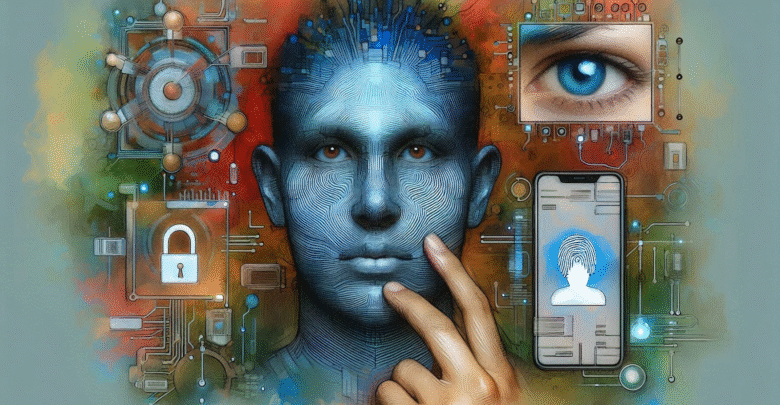
WASHINGTON, DC — The race between identity creation and identity verification has entered a decisive era. Artificial intelligence can fabricate lifelike personas in minutes, but global compliance systems now dismantle them even faster. In 2025, financial institutions, border agencies, and technology regulators have fused machine learning, biometrics, and blockchain to create what experts call “the verification singularity,” a state in which it is nearly impossible to exist in formal systems without lawful documentation. Amicus International Consulting’s investigative report into deepfakes, biometrics, and Know Your Customer enforcement finds that while synthetic identities proliferate online, they are being effectively countered in regulated ecosystems. The arms race is being won by law, data integrity, and technological precision.
The investigation begins with the rise of deepfakes, synthetic media generated by artificial intelligence that replicates human appearance and speech with uncanny accuracy. Deepfakes emerged from creative experimentation in digital art but quickly evolved into tools for deception. Fraud rings adopted the technology to manipulate biometric systems, fabricate identification photos, and impersonate clients during live video verification. The earliest deepfake frauds were crude, relying on pre-recorded videos and low-resolution overlays. By 2022, however, advanced generative adversarial networks allowed real-time face swaps that mirrored natural motion, voice modulation, and lighting. Financial institutions worldwide faced a new threat: the illusion of authenticity.
Amicus International Consulting’s forensic team documents how early verification systems failed because they relied on static image comparison rather than dynamic validation. Fraudsters exploited this by submitting prerecorded facial videos during KYC sessions. In response, regulators demanded liveness detection testing whether the image represents a living, present person. These systems use photoplethysmography to detect pulse variations in facial skin tone, near-infrared sensors to confirm depth, and behavioral micro-gestures that cannot be simulated algorithmically. Combined with AI pattern recognition, they reduced false acceptance rates to near zero.
The evolution of biometric technology expanded far beyond facial recognition. Iris scans, vein pattern mapping, and voice spectral analysis now anchor verification systems in both the public and private sectors. Voice biometrics, once considered vulnerable to audio deepfakes, have rebounded through frequency anomaly detection that identifies synthetic modulation. Even gait analysis, the measurement of how a person walks, has entered mainstream verification, integrated into surveillance and access control. Amicus International Consulting’s compliance experts note that the convergence of these modalities forms a multi-factor identity architecture capable of detecting inconsistencies invisible to human auditors.
Yet with each defensive innovation, adversaries adapt. Synthetic identity creators now use composite profiles, blending fragments of real and artificial data to build statistically plausible personas. These hybrids often evade individual verification tests but fail when subjected to correlation analysis across databases. Global KYC systems now cross-verify identities across multiple registries, passport authorities, tax databases, social security files, and mobile SIM registration systems. When inconsistencies appear in date of birth, residency, or biometric linkage, algorithms automatically flag anomalies. The process transforms detection from a reactive to a predictive approach.
Amicus International Consulting’s investigation traces this transformation through the banking sector, where compliance functions have evolved from checklists into predictive intelligence. Traditional KYC once relied on document submission and visual review. Modern KYC integrates machine learning models that evaluate transaction behavior, device history, and geospatial consistency. For example, suppose an account applicant submits identification issued in one country but applies for an account from an IP address in another country without a legitimate reason. In that case, the system calculates a dynamic risk score and escalates it for review. This analytical model allows banks to identify synthetic identities before onboarding is completed.
Case Study: A Global Bank Combats Deepfake Onboarding Fraud Through Behavioral Biometrics
In late 2024, a global financial institution identified an unusual pattern in its retail onboarding pipeline. Dozens of applicants submitted documents that appeared authentic, complete with holographic security overlays and consistent metadata. Video calls verified by human officers confirmed facial matches. Yet within days, transactional behavior indicated organized manipulation. Amicus International Consulting’s forensic division was engaged to analyze the anomaly.
Investigators discovered that a coordinated network of synthetic applicants had used AI-generated likenesses based on stolen facial data. The images passed human review but failed subtle motion consistency tests. Amicus recommended a new behavioral biometric layer, analyzing cursor movement, typing cadence, and device orientation during the onboarding process. These behavioral patterns proved impossible for AI to replicate consistently. The system successfully identified over 400 fraudulent profiles within two weeks and permanently integrated the behavioral biometric defense into its KYC framework.
This case illustrates the broader truth that the new verification paradigm relies on multidimensional data integrity, encompassing visual, behavioral, and contextual aspects. The era when a photograph or document alone could confirm identity has come to an end. Each digital footprint must align across systems governed by cryptographic and legal standards.
Amicus International Consulting’s legal researchers examine the intersection between verification and human rights. Governments now face the dual mandate of protecting citizens from identity theft while preventing surveillance overreach. Laws such as the European Union’s Artificial Intelligence Act and the United States’ Algorithmic Accountability Act impose transparency requirements on entities using biometric systems. These regulations require documentation of consent, explainability of algorithms, and limitations on data retention. Compliance no longer concerns only whether an identity is valid but also whether it was verified ethically.
The firm’s analysts emphasize that the legitimacy of identity verification now depends on proportionality. Collecting biometric data must align with lawful purposes. Institutions that exceed these limits risk sanctions under privacy laws such as GDPR, which enforces the principle of data minimization. Amicus International Consulting advises clients to strike a balance between compliance and privacy by adopting decentralized verification models. These systems allow individuals to store their biometric credentials locally while sharing only encrypted proofs of identity with third parties.

The next frontier in verification is decentralized digital identity, built on the principles of blockchain technology. Unlike centralized databases that store sensitive data in vulnerable silos, decentralized identity frameworks use distributed ledgers to record cryptographic proofs of identity ownership. Users control their credentials through private keys, while institutions verify authenticity without direct data exchange. Governments, including those of Estonia, Singapore, and the United Arab Emirates, have already integrated these systems into their national e-ID infrastructures. Amicus International Consulting’s cybersecurity experts predict that by 2030, most cross-border verification will occur through interoperable decentralized credentials, reducing exposure to both fraud and data breaches.
The investigation also explores how deepfakes are now being weaponized beyond financial crime. Political operatives, extortion networks, and disinformation campaigns have used synthetic imagery to manipulate narratives. In response, major technology platforms have partnered with regulators to embed digitally signed metadata, cryptographically verifying content authenticity, into every image and video uploaded. This forensic watermarking allows instant differentiation between real and synthetic media. Amicus International Consulting’s analysis indicates that within five years, digital provenance will become as critical to identity verification as biometric validation itself.
Beyond technology, human judgment remains the ultimate safeguard. Amicus International Consulting’s field research across financial institutions reveals that even the most advanced verification systems retain a human escalation layer. Analysts interpret nuanced cues that algorithms may miss, such as hesitation during onboarding interviews, inconsistent responses, or behavioral anomalies that deviate from data patterns. The hybrid model, where human intuition complements machine precision, defines the winning strategy in the verification arms race.
The firm’s compliance teams also emphasize the importance of education and internal governance. Many institutions fail not because their technology is weak but because their personnel misunderstand verification protocols. Regular training on emerging fraud typologies, biometric ethics, and regulatory expectations ensures alignment between systems and staff. The sophistication of fraud demands an equally sophisticated compliance culture.
Amicus International Consulting’s investigation reveals five global policy developments reshaping verification: first, the universal adoption of cross-border identity data sharing under FATF recommendations; second, the harmonization of electronic signature laws enabling remote verification; third, real-time sanctions and watchlist integration directly into onboarding systems; fourth, the global expansion of biometric passport standards; and fifth, AI governance frameworks requiring transparency in algorithmic decision-making. Collectively, these measures transform identity verification into a regulated ecosystem rather than a fragmented process.
The study also highlights false-positive cases, where legitimate individuals are misidentified as synthetic or fraudulent. While these incidents are statistically rare, they demonstrate the need for procedural appeal rights. Amicus International Consulting advocates for standardized verification review processes that allow affected individuals to challenge automated decisions. Fairness, the firm argues, must evolve in tandem with security.
From a broader social perspective, the investigative findings underscore that identity creation and identity verification are converging as AI tools enable anyone to fabricate convincing personas; the burden of authenticity shifts from individuals to systems. Legal identity now functions as an anchored credential within a world of endless digital mirrors. Amicus International Consulting observes that this convergence will redefine both privacy and accountability in the next decade. Individuals will be known not by what they appear to be, but by what can be verified through law and data integrity.
Technological progress has also revived ancient legal principles. In Roman law, “persona” referred to the mask through which an actor spoke. Today, that mask is digital, but its validation still rests on authority. The state alone can certify identity in a legal sense, yet the market continually verifies it. Amicus International Consulting’s analysts conclude that the future of compliance lies in synchronizing these two dimensions, ensuring that every lawful identity can move seamlessly through both governmental and commercial systems without risk of misclassification.
Case Study: A Border Agency Uses Predictive Biometrics to Stop Synthetic Passports
In 2025, a European border control agency detected an influx of passports carrying valid electronic chips but forged biometric overlays. These documents originated from an organized syndicate using AI-generated portraits layered onto real chip data stolen from legitimate applicants. Amicus International Consulting’s forensic auditors collaborated with the agency to deploy predictive biometric models comparing real-time traveler facial data against historical movement and regional photo databases. The models identified micro-level inconsistencies in facial depth and heat signature. Within three months, the operation dismantled a transnational forgery network spanning four countries. The outcome demonstrated how predictive biometrics and cross-database integration have rendered synthetic document operations virtually obsolete.
Amicus International Consulting’s broader assessment is clear: the verification arms race has matured into a sustainable equilibrium dominated by lawful systems. Deepfake technology continues to evolve, but its utility diminishes under relentless countermeasures. As synthetic manipulation improves, forensic science adapts more rapidly. The practical implication for individuals and corporations alike is that identity must now be cultivated as a verified asset, maintained through transparency, compliance, and digital hygiene.
The firm’s directors summarize the lesson succinctly. Technology can fabricate a face, but it cannot fabricate legitimacy. In an era where every credential is scrutinized, lawful identity creation depends not on evasion but on precision. Those who align with compliance infrastructure secure access to global mobility and finance. Those who attempt to bypass it inevitably encounter systems designed to detect inconsistency.
Amicus International Consulting’s conclusion affirms the emerging paradigm. The verification arms race is being won through integration of data, law, and ethics. The systems that once verified paper now verify truth itself, converting digital complexity into structured accountability. In 2025, authenticity is measurable, and the institutions that safeguard it stand at the frontier of lawful identity creation.
Contact Information
Phone: +1 (604) 200-5402
Signal: 604-353-4942
Telegram: 604-353-4942
Email: info@amicusint.ca
Website: www.amicusint.ca