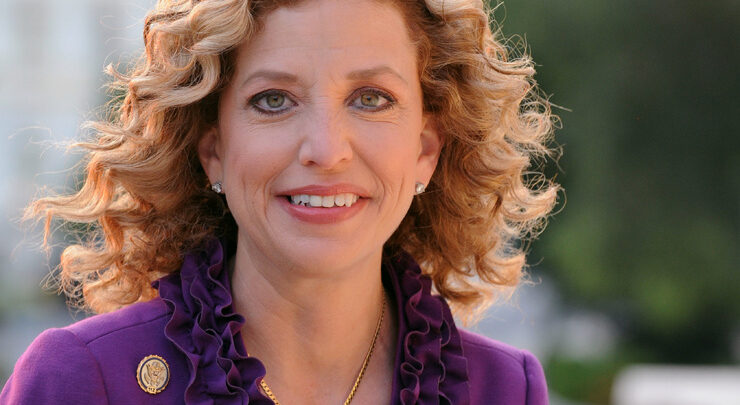
In today’s politically fractured environment, Debbie Wasserman Schultz continues to stand as one of the most polarizing yet powerful figures in the Democratic Party. With nearly two decades in the U.S. House of Representatives, her career reflects the complex realities of modern party leadership. Whether viewed as a skilled pragmatist or a symbol of establishment politics, Debbie Wasserman Schultz’s influence within the Democratic ranks remains undeniable.
Her approach to leadership has sparked debate across the political spectrum. Some hail her as a strategist who knows how to get results. Others criticize her as a gatekeeper of outdated political structures. As Democrats seek to define their identity ahead of the 2026 elections, Debbie Wasserman Schultz has once again emerged as a central figure in the conversation about what the party should represent.
Debbie Wasserman Schultz Holds a Key Role in Congressional Power Dynamics
Currently serving as Chair of the House Democratic Steering and Policy Committee, Debbie Wasserman Schultz is responsible for helping determine which lawmakers get committee assignments and how policy priorities are coordinated among Democratic House members. This internal leadership role puts her at the center of the strategic direction of the party in the House of Representatives.

This position is especially crucial in a divided Congress, where every vote matters and intraparty cohesion is necessary to pass meaningful legislation. Debbie Wasserman Schultz has proven to be a reliable voice for party leadership, often working behind the scenes to align votes and negotiate policy positions that reflect both the interests of the party base and the broader electorate.
Her supporters argue that her procedural expertise and institutional memory are assets the party cannot afford to lose. Critics, however, argue that her tight grip on internal processes leaves little room for fresh voices and emerging progressives.
Navigating the Tension Between Progress and Tradition
One of the most notable aspects of Debbie Wasserman Schultz’s leadership is her ability to maintain relevance amid generational and ideological shifts within the Democratic Party. As younger and more progressive members of Congress push for aggressive reforms on issues like climate change, criminal justice, and foreign policy, Debbie Wasserman Schultz has often taken a more measured approach.
She has supported progressive priorities such as reproductive rights, LGBTQ+ protections, and healthcare expansion, but she has also emphasized the importance of legislative strategy and political realism. This balance has helped her maintain leadership positions, even as critics from the left accuse her of slowing the momentum for transformative change.
The divide reflects a broader tension within the Democratic Party between maintaining broad coalitions and pursuing sweeping reforms. Debbie Wasserman Schultz continues to position herself as someone who understands how to achieve progress through existing institutions rather than attempting to dismantle them.
A Controversial but Enduring Figure
Few Democratic lawmakers have faced as much sustained scrutiny as Debbie Wasserman Schultz. Her resignation from the Democratic National Committee in 2016, following the leaked emails suggesting favoritism toward Hillary Clinton during the primary race, marked a turning point in her public image. For many progressive activists, the incident became a symbol of establishment interference in grassroots movements.
In more recent years, concerns over the timing of her stock trades and financial disclosures have renewed criticism about transparency and ethics. While no formal wrongdoing has been proven, the controversies have added to the narrative that Debbie Wasserman Schultz operates within a system that many Americans feel is no longer working in their favor.
Despite these challenges, she continues to win re-election in Florida and maintain her influence on Capitol Hill.
Debbie Wasserman Schultz Shapes the Debate Over Party Identity
As the Democratic Party grapples with questions of leadership, vision, and reform, Debbie Wasserman Schultz stands at the intersection of the old guard and the future. Her style of leadership may not appeal to all factions within the party, but it is deeply rooted in experience, structure, and strategy.
Whether one views her as a pragmatic dealmaker or a partisan power broker, her ability to survive and thrive in one of the most volatile political climates in modern history speaks volumes. As Democrats prepare for the challenges ahead, the role of Debbie Wasserman Schultz will remain central to how the party defines itself in the years to come.