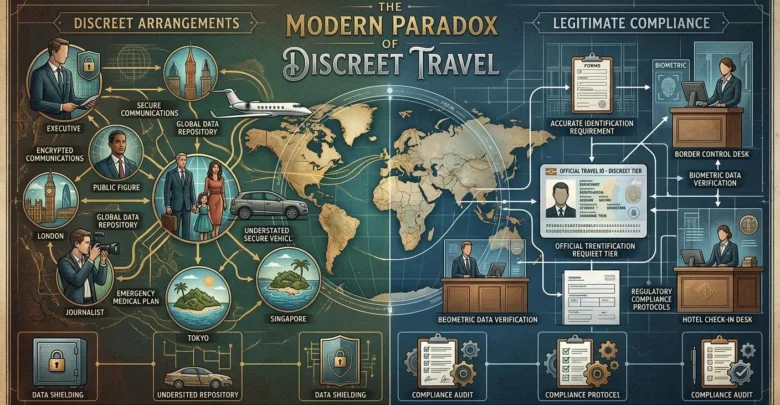
Privacy requests must align with the identification requirements of transport operators, accommodation providers, and government agencies, as international travelers seek greater confidentiality without compromising lawful documentation, passenger security, or accurate official travel records.
WASHINGTON, DC, October 28, 2026: Discreet international travel arrangements have become an increasingly important consideration for business executives, public figures, journalists, prominent families, and individuals seeking greater personal security, but legitimate privacy protection must remain consistent with the accurate identification requirements governing transportation and accommodation services.
While private aviation, exclusive hotel reservations, luxury yacht charters, and confidential travel advisers can reduce unnecessary public exposure, these arrangements do not eliminate the administrative responsibilities of airlines, hospitality operators, financial institutions, immigration authorities, or government agencies responsible for verifying traveler identities.
The growing gap between privacy-conscious booking practices and legal identification requirements has become especially relevant as transportation providers expand digital verification systems, accommodation businesses adopt sophisticated reservation platforms, and border authorities increasingly rely on accurate passenger information to manage international arrivals and departures.
Travelers seeking discretion must understand that confidentiality does not require inaccurate reservations, invented identities, or inconsistent documentation; responsible travel planning instead focuses on limiting unnecessary disclosures while preserving the integrity of records required for legitimate commercial and governmental purposes.
Discreet Travel Does Not Mean Traveling Under Inaccurate Information
A discreet travel reservation generally involves organizing transportation, accommodation, or related services to minimize unnecessary public attention while ensuring the traveler’s identifying information remains accurate when an operator or government authority legitimately requires it.
Such arrangements may include private communications with travel advisers, confidential booking procedures, restricted access to itineraries, carefully managed hospitality services, and contractual commitments preventing unnecessary disclosure of information concerning clients, companions, destinations, or professional activities.
However, the legitimate use of an authorized representative, corporate booking arrangement, or private concierge does not permit false passenger information, misleading passport details, or inaccurate declarations concerning the individuals who will actually use regulated transportation or enter another country.
The central principle is that personal privacy concerns how sensitive information is collected, accessed, protected, and disclosed, whereas identity verification establishes whether the individual receiving a regulated service is accurately represented in the records maintained by responsible organizations.
Airline Reservations Must Correspond With Valid Travel Documents
Commercial airlines collect passenger information to manage reservations, issue tickets, comply with aviation security requirements, and coordinate immigration-related procedures, so accurate identifying details are essential when travelers book international journeys or present themselves for departure.
Names entered into airline reservation systems should match the travel documents passengers intend to present, accounting for carrier-specific formatting requirements, official name changes, multiple surnames, and other legitimate differences arising from document conventions.
A mismatch in a surname, passport number, date of birth, or nationality can complicate online check-in, document verification, boarding, or government information submissions, especially when the inconsistency cannot be corrected immediately.
Travelers seeking discretion should therefore prioritize accurate records from the beginning of the reservation process, recognizing that unnecessary administrative discrepancies can create delays, additional questioning, missed connections, and complications that undermine an otherwise carefully organized journey.
U.S. Airport Identification Standards Reinforce Documentation Accuracy
The United States strengthened domestic aviation identification procedures when the REAL ID enforcement deadline took effect on May 7, 2025, changing how certain state-issued identification documents are treated at Transportation Security Administration checkpoints.
As the Associated Press reported during the REAL ID rollout, travelers without compliant identification faced additional verification procedures, while accepted alternatives such as valid passports continued to play an important role in domestic aviation security.
According to the Transportation Security Administration’s official identification guidance, adult passengers generally must present acceptable identification or complete an available identity verification procedure, with checkpoint admission depending on applicable requirements and successful identity confirmation.
These requirements show why privacy-conscious travelers should verify identification rules before departure rather than assuming private booking arrangements, premium airline status, expedited airport services, or personal security concerns exempt them from established aviation screening procedures.
International Passenger Information Connects Airlines and Border Authorities
International air travel requires additional information because airlines may transmit identifying details to government authorities through passenger reporting systems designed to support border management, aviation security, and immigration administration.
Advance Passenger Information systems generally use identifying details associated with travel documents, while Passenger Name Record information can include additional reservation-related data, though the precise fields, transmission procedures, and legal authorities vary by jurisdiction.
These government-facing obligations operate independently of a traveler’s preference for confidential treatment by an airline, booking agent, or concierge service, meaning that restrictions on voluntary commercial disclosure cannot invalidate mandatory information submissions.
A professionally managed itinerary should therefore distinguish information shared for lawful government processing from information distributed for commercial convenience, allowing travelers to request reasonable privacy safeguards without creating inconsistencies in mandatory passenger records.
Private Aviation Still Requires Accurate Passenger Documentation
Private aviation offers greater flexibility in scheduling, terminal access, passenger services, and ground transportation, making it attractive to individuals who prefer to avoid crowded commercial facilities or coordinate sensitive professional and personal journeys.
Nevertheless, private aircraft operators must comply with applicable aviation and border regulations, including passenger manifest requirements for international flights, appropriate travel documentation, aircraft clearance procedures, and the identification responsibilities associated with carrying passengers across national boundaries.
A corporate aircraft reservation organized through an employer, family office, or charter representative may legitimately limit the circulation of personal booking details, but the operator must still maintain accurate information concerning the individuals traveling aboard.
Travelers should also recognize that private terminal arrangements and specialized passenger handling services do not automatically remove immigration inspections, customs declarations, security procedures, or other lawful requirements administered by authorities at the destination.
Hotel Reservations Raise Separate Identification and Confidentiality Questions
Hotels and other accommodation providers routinely collect reservation information to allocate rooms, process payments, provide guest services, and comply with applicable local regulations, although specific identification and registration requirements vary considerably between countries.
A privacy-conscious guest may request confidential reservation handling, restricted communications, limited publicity, or carefully coordinated arrival arrangements, but these preferences do not authorize inaccurate registration information where the establishment must identify its occupants.
Luxury hotels often maintain relationships with travel agents, corporate booking departments, payment processors, and hospitality technology companies, so managing guest information responsibly matters even when the physical accommodation offers substantial privacy.
Travelers should review how personal information is collected and protected, whether relevant employees receive confidentiality instructions, and which records the property must preserve under applicable contractual, financial, or regulatory obligations.
Private Villas and Exclusive Resorts Present Additional Responsibilities
Exclusive villas, private island resorts, and individually managed residential properties can provide substantial separation from unrelated guests, allowing travelers to enjoy greater control over shared spaces, scheduled activities, and interactions with hospitality personnel.
However, booking these properties may involve owners, property management companies, online platforms, local representatives, security contractors, and household employees, each of whom needs different information to do their job.
Where national or local laws require accommodation operators to register guests, a property’s exclusive nature does not necessarily exempt occupants from presenting accurate identification documents or completing mandatory administrative procedures.
A responsible privacy arrangement should clarify who receives identification information, whether records are transferred to third parties, how long documentation is retained, and what procedures protect it against unnecessary access or disclosure.
Travel Advisers Can Protect Confidentiality Without Changing Identity Records
Professional travel advisers can provide an important layer of administrative confidentiality by coordinating reservations, communicating with service providers, organizing logistics, and limiting unnecessary distribution of clients’ personal contact information throughout an international journey.
For travelers concerned about unwanted attention, an authorized adviser can establish clear communication procedures, coordinate confidential hospitality arrangements, and ensure sensitive itineraries are shared only with those who legitimately need access.
Amicus International Consulting addresses these broader considerations through its anonymous travel advisory services, which discuss personal privacy, international mobility, confidential planning, and the relationship between discreet travel arrangements and legitimate travel documentation.
The appropriate objective is to protect personal information from unnecessary public or commercial exposure while ensuring that airlines, accommodation providers, financial institutions, and border authorities receive accurate information whenever legally required.
Corporate Bookings Do Not Eliminate Personal Identification Requirements
Corporations often arrange travel through centralized booking platforms, travel management companies, executive assistants, and administrative departments, allowing organizations to negotiate accommodation rates, consolidate payments, and coordinate employee movements efficiently.
These systems may list an employer as the contracting party or billing customer, but individual travelers remain responsible for meeting applicable identification, immigration, and documentation requirements for the services they receive.
A corporate reservation does not make the employer’s name the passenger’s identity, nor does it allow a hotel guest to use inaccurate personal details when lawful registration rules apply.
Organizations managing confidential travel should establish policies governing employee information, authorized booking access, secure itinerary distribution, and appropriate retention of travel records without compromising the accuracy of documents used by transportation providers.
Legal Name Changes Require Consistent Travel Records
Individuals who have completed lawful name changes may encounter additional administrative challenges when passports, airline loyalty accounts, financial records, professional credentials, and accommodation profiles have not yet been updated to reflect their current legal particulars.
These difficulties can become especially significant when a traveler books transportation using a newly adopted name while presenting a passport or other required identification document that still reflects an earlier name.
Depending on the jurisdiction and document involved, travelers may need to complete formal replacement procedures, provide recognized supporting evidence, or consult the relevant issuing authority before arranging international transportation under updated personal information.
The key consideration is consistency between the identity established by official documentation and the information provided during booking, check-in, border processing, and other regulated travel procedures.
Dual Citizenship Introduces Important Passport Considerations
Travelers with more than one citizenship may hold multiple valid passports, but their ability to use those documents depends on applicable nationality laws, destination requirements, and the obligations imposed by countries that recognize them as citizens.
Some countries require nationals to use specific documents when entering or leaving their territory, while others set separate rules for visas, residence permissions, and the recognition of dual nationality.
A person who lawfully holds two passports should therefore verify which document applies at each stage of an itinerary, ensuring airline records and border declarations accurately reflect the documents presented.
Multiple nationalities can expand legitimate international mobility options, but they do not authorize false declarations, erase existing legal responsibilities, or guarantee that different government records will be treated as unrelated identities.
Financial Records Continue to Exist During Confidential Travel
International travel commonly generates payment information through airlines, hotels, transportation providers, booking platforms, banks, and other financial intermediaries, even when reservations are managed privately or commercial communications are subject to confidentiality agreements.
A traveler may legitimately request secure billing communications and restricted access to personal financial details, while payment service providers remain responsible for applicable customer verification, fraud prevention, sanctions compliance, and other regulatory obligations.
Corporate billing arrangements and authorized payment representatives can simplify travel administration, but they do not automatically eliminate the records banks or other regulated organizations maintain when processing commercial transactions.
Responsible privacy planning therefore emphasizes accurate financial documentation, appropriate data security, and limited, necessary disclosure, rather than using misleading transactions or inaccurate account information to hide required identifying details.
Confidentiality Agreements Should Define Information Access and Disclosure
Non-disclosure agreements can establish contractual responsibilities for personal identities, confidential itineraries, financial arrangements, private conversations, and other information travel advisers, hospitality employees, security providers, or contracted service personnel encounter.
However, confidentiality provisions should distinguish unauthorized public disclosure from the legitimate sharing of information required to perform contracted services, meet legal obligations, respond to emergencies, or comply with valid requests from government authorities.
Effective agreements generally include clearly defined responsibilities, appropriate information-access limitations, subcontractor provisions, incident-reporting procedures, and terms governing the retention and protection of records after the travel arrangements conclude.
A confidentiality agreement should never be interpreted as permission to withhold mandatory passenger information, obstruct lawful inspections, or substitute inaccurate documentation for the genuine identification records required by transportation and accommodation operators.
Digital Privacy Requires Careful Management of Reservation Information
Modern travel booking platforms can retain substantial amounts of personal information, including names, telephone numbers, email addresses, payment details, travel preferences, reservation histories, and communications concerning individual accommodation or transportation requests.
When travelers use several intermediaries to arrange the same journey, their details may be stored across multiple systems with different security controls, retention periods, employee permissions, and contractual responsibilities governing information access.
Privacy-conscious travelers can reduce unnecessary exposure by reviewing privacy notices, limiting optional marketing communications, using secure communication channels, and asking how service providers manage and protect the information entrusted to them.
These reasonable precautions differ fundamentally from attempts to manipulate official identity records because legitimate data protection aims to prevent unnecessary misuse or disclosure while preserving the accurate information needed for lawful travel.
Accurate Information Can Reduce Avoidable Travel Complications
Travelers sometimes associate discretion with limiting the information they provide during reservations, but incomplete or inconsistent records can create administrative problems when a transport operator cannot reconcile a booking with the documents presented.
An incorrect name, expired passport, inaccurate date of birth, or improperly recorded nationality may require additional verification, correction procedures, or changes to travel arrangements before the passenger can proceed.
For privacy-conscious individuals, these disruptions can create precisely the unwanted attention they hoped to avoid, especially when discrepancies arise during airport check-in, international connections, accommodation registration, or scheduled business travel.
Careful preparation therefore offers a more reliable approach, ensuring legitimate documentation is current, essential reservation details are accurate, and relevant service providers have the information they need to fulfill their responsibilities.
Responsible Privacy Planning Supports Lawful International Mobility
The increasing availability of private transportation, exclusive accommodation, specialist concierge services, and confidential travel coordination has created meaningful opportunities for individuals who wish to reduce unnecessary exposure while traveling for professional, family, or personal reasons.
These arrangements work best when travelers understand that commercial confidentiality and legal identification serve different purposes: privacy protections address unnecessary disclosure, while official records support legitimate transportation, immigration, security, and financial responsibilities.
Amicus International Consulting’s international travel privacy and anonymity planning guide offers additional guidance on these distinctions, exploring the broader relationship between lawful travel documentation, personal confidentiality, and the practical challenges of international mobility.
As governments and commercial operators continue developing digital identification and reservation technologies, responsible travel planning will increasingly depend on transparent information practices, reliable documentation, secure communications, and a clear understanding of applicable regulatory requirements.
The Future of Discreet Travel Depends on Accuracy and Confidentiality
The distinction between privacy and identification will remain central to international travel as airlines, accommodation providers, maritime operators, and government agencies continue balancing customer confidentiality with operational responsibilities and established security requirements.
Travelers who prioritize personal discretion should expect professional service providers to protect sensitive information appropriately, explain legitimate documentation requirements, and maintain accurate records without unnecessarily distributing personal details beyond authorized purposes.
In the travel industry, exceptional privacy requires more than exclusive facilities or promises of secrecy, because sustainable client confidence depends on professional accountability, secure information management, lawful procedures, and clearly defined confidentiality commitments.
Ultimately, discreet travel bookings work best when personal information is protected from unnecessary disclosure while passenger identities, accommodation registrations, financial transactions, and government records accurately reflect the individuals involved in each international journey.