“World-Leading” Security Features Rolled Out in New British Passport Design After FOG Passport Scandals in the Past Decade
Britain’s new passport design, introduced in December 2025, reflects a hard security lesson from fraudulent passport scandals, in which authentic documents became criminal tools for fugitives, traffickers, and cross-border organized crime figures.

WASHINGTON, DC.
The British passport has entered a new security era, because the rollout of an updated design from December 2025 arrived after years of scrutiny surrounding fraudulently obtained genuine passports, organized crime mobility, stolen identities, and criminal exploitation of trusted government documents.
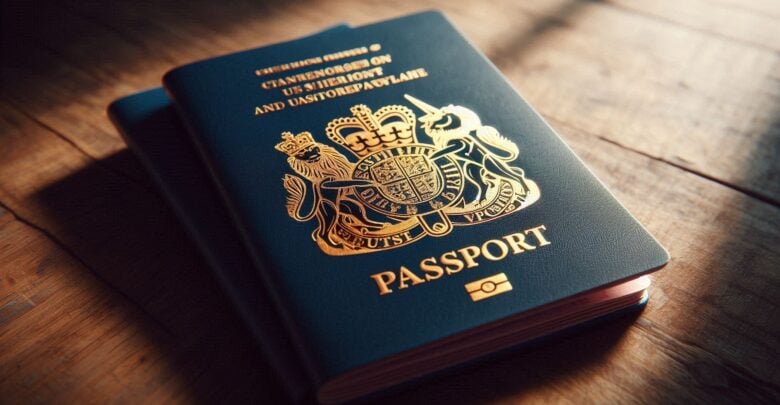
The Home Office announced that the first passports bearing His Majesty King Charles III’s Coat of Arms would be issued from December as part of a revamped design, describing the document as the most secure British passport ever produced and highlighting advanced anti-forgery technology intended to make verification easier and tampering harder.
The update is symbolic because the cover now reflects the reign of King Charles III, but the deeper significance sits inside the document itself, where enhanced security features, translucent elements, holographic protections, and updated visual design are meant to strengthen public trust in one of the world’s most important travel credentials.
The new design does not erase the damage caused by earlier fraud networks, but it shows how governments are responding to a modern identity threat in which the most dangerous passport is not always a cheap counterfeit, but sometimes a real document obtained through a corrupted identity process.
The new passport design arrived after serious passport fraud cases exposed how criminals exploit official trust.
The phrase fraudulently obtained genuine passport, often shortened to FOG, describes one of the most difficult identity threats facing modern governments, because the document itself may be authentic even when the person using it is not entitled to the identity inside it.
That distinction became central in the aftermath of Operation Strey, where British investigators exposed a criminal passport network linked to Anthony Beard, Christopher Zietek, and others accused of helping dangerous offenders obtain genuine travel documents through fraudulent identity pathways.
Unlike an obvious counterfeit, a FOG passport can carry legitimate security stock, official production quality, valid machine-readable elements, and a real government issuance history, making it far harder to identify during routine inspection without intelligence linking the document to fraud.
That is why the new British passport matters beyond design aesthetics, because every enhancement to the document’s physical and digital integrity helps narrow the space criminals use when they attempt to manipulate identity systems.
The Home Office’s official announcement of the revamped British passport emphasized cutting-edge holographic and translucent features that make passports easier to verify and harder to forge or tamper with, placing document integrity at the center of the new rollout.
A passport is no longer just a booklet, because it is a gateway into borders, banking, mobility, and identity systems.
Modern passports function as a trusted identity infrastructure because they allow people to cross borders, open accounts, verify citizenship, rent property, board aircraft, obtain visas, access consular assistance, and prove legal existence in highly regulated environments.
When a passport is compromised, the harm spreads far beyond immigration control, because a criminal user may rely on the document to create a civilian presence, separate from known aliases, access financial systems, evade police monitoring, and continue operating across jurisdictions.
That is why the British passport redesign must be understood inside a broader security landscape, where identity documents are increasingly targeted not only by counterfeiters, but by organized crime groups looking for authentic documents that can survive ordinary inspection.
A fraudulently obtained genuine document exploits the confidence institutions place in official issuance, because the border officer, banker, hotel clerk, airline agent, or compliance team may see a valid-looking passport without seeing the deception behind the application.
The new security features are therefore part of a wider move toward layered identity defense, where physical document protection, biometric verification, application controls, intelligence sharing, and institutional due diligence must operate together.
The King Charles III design carries heritage imagery, but the security message is unmistakable.
The updated passport features His Majesty King Charles III’s Coat of Arms, replacing the late Queen Elizabeth II’s version on newly issued documents, while the interior design represents all four nations of the United Kingdom through images of protected landscapes.
Those landscapes include Ben Nevis, the Lake District, Three Cliffs Bay, and the Giant’s Causeway, creating a document that presents national identity through geography, heritage, symbolism, and visual continuity across the United Kingdom.
Yet the redesign is not merely ceremonial, because the Home Office also promoted the passport as the most secure British passport ever produced, with anti-forgery measures aimed at making the document significantly harder to alter, clone, or tamper with.
The Guardian’s report on the new document noted that the updated passport includes advanced anti-forgery features such as holographs and translucent pages, while also reporting that several hundred new passports were already in circulation shortly after the rollout began.
In a security climate shaped by FOG passport cases, stolen identities, and transnational crime, the visual redesign may attract public attention, but the operational value lies in preventing criminals from turning British identity into a mobility tool.
Photo substitution has become one of the most sensitive battlegrounds in passport integrity.
Passport fraud often depends on breaking the relationship between a lawful identity and the person physically presenting the document, which is why photograph security, data-page integrity, chip verification, and biometric consistency are central to modern passport design.
When criminals attempt photo substitution, they are not merely altering an image because they are trying to disconnect the identity record from the rightful holder and attach it to a different face, different movement pattern, and different criminal purpose.
Enhanced holographic features and translucent elements make that kind of tampering more difficult because changes to the photo, data page, or visual security architecture are more likely to damage the document or create detectable inconsistencies.
The purpose is not only to stop amateur alteration, because sophisticated criminal networks may use experienced handlers, stolen data, insider assistance, and carefully prepared applications to produce documents that appear legitimate under casual review.
In this environment, every additional security layer matters because a single tamper-resistant element may force criminals into riskier behavior that creates evidence, exposes handlers, triggers inspection, or prevents the document from being used at all.
The FOG threat is difficult because the document can be real while the identity story is false.
The passport scandals exposed a hard truth about identity security, because governments can improve paper, chips, holograms, and visual features, yet still need strong application controls to ensure the person receiving the document is entitled to it.
A FOG passport does not always fail because of bad printing, because the greater failure may have occurred earlier, when false information, stolen identity data, corrupt support, or manipulated records entered the issuance system.
That is why the British redesign should be viewed as one part of a larger security response, not a complete solution by itself, because physical document security must be paired with stronger identity verification before issuance.
Criminals understand that border systems are designed to trust authentic documents, so their goal is increasingly to exploit the pathway that turns false information into a genuine booklet, rather than relying only on counterfeit production.
The modern passport-security challenge is therefore not simply whether the document is genuine, but whether the living person, the document, the application history, the biometric record, and the lawful entitlement all align.
Operation Strey showed how criminal networks can turn documents into mobility infrastructure.
The Reading Crown Court trials linked passport fraud to serious organized crime, showing how fraudulent identity documents can become logistical tools for fugitives, drug traffickers, violent offenders, and criminal associates who need to move beyond known identities.
For a fugitive, a credible passport can mean more than a border crossing, because it can support hotel stays, phone contracts, vehicle rentals, bank interactions, property leases, and contact with criminal networks across multiple countries.
For organized crime groups, access to genuine-looking documents creates operational resilience, because members can travel under names that do not immediately trigger border alerts, media recognition, or police attention.
That is why passport fraud must be treated as an enabling crime, because the document may support violence, trafficking, laundering, evasion, corruption, and movement rather than existing as an isolated administrative offense.
The new British passport’s enhanced features are designed to strengthen the front line of document integrity, but the deeper lesson from Operation Strey is that identity security must track both the document and the criminal networks that seek to exploit it.
The Balkan identity scandals showed that genuine-document fraud is not limited to Britain.
The Bosnian Route cases demonstrated a related danger, because investigators reported that violent Balkan fugitives obtained genuine Bosnian passports through stolen identities, allegedly exploiting citizens who had never applied for certain documents.
That method differed from the UK-based scam, but the security problem was similar, because the physical document could be genuine while the person carrying it was not the rightful identity holder.
For border agencies, the Balkan cases were especially disturbing because criminals could allegedly travel under the names of innocent civilians, creating a “twin” effect in which a real person’s identity was used as cover for a fugitive.
This shows why passport integrity cannot depend only on physical inspection, because the booklet may look perfect while the identity relationship behind it is fraudulent, corrupted, or stolen.
The British redesign therefore sits inside a global passport-security race, where governments must defend not only against counterfeiters but also against stolen identities, application fraud, insider abuse, synthetic profiles, and cross-border criminal mobility.
The new British passport is also a trust repair project.
A passport carries national credibility, and when criminals exploit that credibility, the damage affects every legitimate traveler because border officers, airlines, banks, and foreign governments become more cautious about identity verification.
The British passport has historically been one of the world’s most trusted travel documents, which makes the exposure of serious passport fraud especially damaging from a public confidence perspective.
The December 2025 redesign gives the government an opportunity to reinforce trust by showing that document security continues to evolve after high-profile failures, organized crime scandals, and international warnings about genuine-document fraud.
The rollout also signals to foreign governments that Britain is continuing to invest in passport integrity, which matters because travel documents function inside a global trust network rather than a purely domestic administrative system.
When one country strengthens document security, the benefit can extend internationally, because airlines, border officers, banks, consulates, and immigration agencies all rely on confidence that the issuing authority is protecting its identity systems.
Security features are strongest when paired with intelligence, biometrics, and application review.
Holographic features, translucent elements, polycarbonate construction, laser engraving, chip technology, and document artwork can make tampering more difficult, but no physical feature can fully replace the need for strong identity verification before issuance.
The most secure document in the world can still become dangerous if it is issued to the wrong person because of identity theft, weak civil registry controls, corrupt insiders, manipulated photographs, or false supporting evidence.
That is why the fight against FOG passports requires a layered approach, with stronger document security serving as one line of defense alongside application screening, biometric comparison, fraud analytics, international intelligence, and rapid revocation systems.
If a passport is compromised, authorities must be able to revoke it quickly, alert border partners, update watchlists, and distinguish between the innocent identity holder and the criminal user.
The new British passport is an important tool, but the wider security system must still detect the fraud pathway before a criminal receives the document, and must respond rapidly if a compromised document enters circulation.
Private institutions must adapt because passport fraud does not stop at the border.
Banks, crypto platforms, corporate service providers, private wealth managers, landlords, telecom providers, insurers, and payment processors all rely on passports to verify identity, which means passport fraud can become financial crime infrastructure.
A genuine passport obtained through false identity data may help a criminal pass initial onboarding, especially if the institution focuses only on whether the document appears authentic rather than whether the broader identity profile makes sense.
Modern compliance teams must therefore examine identity in layers, including source of funds, tax residence, occupation, beneficial ownership, adverse media, device behavior, transaction patterns, and consistency across residence, travel, and declared purpose.
The British passport redesign helps institutions because stronger documents are easier to authenticate, but private-sector controls must still ask whether the person, document, funds, and stated activity align.
In an era of genuine-document fraud, relying on one passport scan is no longer enough, because the fraud may not live on the surface of the document, but inside the story used to obtain and deploy it.
Lawful identity planning must be separated sharply from document fraud.
The rise of FOG passport cases has created confusion among people seeking privacy, because some assume that a new identity means a forged document, a purchased passport, or a hidden route through criminal intermediaries.
That belief is dangerous because legitimate privacy planning depends on government-recognized documentation, eligibility review, accurate records, tax compliance, banking transparency where required, and a professional structure that can withstand scrutiny.
For individuals facing stalking, kidnapping threats, extortion risk, public scandal, political exposure, or family security concerns, the lawful path is not to imitate criminal passport networks, but to build a defensible identity structure recognized by proper authorities.
A lawful identity transition must preserve accountability to banks, courts, tax authorities, immigration officials, and regulators where disclosure is required, while reducing unnecessary exposure to criminals, hostile litigants, data brokers, and public searchers.
That is why new legal identity planning must be understood as a compliance-first process, because privacy becomes durable only when the documents, records, and personal narrative are legitimate.
The new passport era also changes how individuals should think about anonymous living.
Anonymous living in 2026 is not about disappearing from lawful systems, because that approach creates legal risk, institutional suspicion, and vulnerability to criminals offering false documents or stolen identities.
The safer model is compliant exposure control, using valid identity documents, lawful banking, private residence planning, digital cleanup, secure communications, family protocols, and disciplined travel practices to reduce risk without deceiving authorities.
The new British passport illustrates the direction of travel, because governments are making identity documents harder to alter and easier to verify, while banks and borders are becoming more skeptical of unsupported identity stories.
Anyone seeking privacy must therefore assume that identity will be checked at multiple levels, including documents, biometrics, travel behavior, financial records, address history, device patterns, and institutional consistency.
For high-risk clients, anonymous living strategies are most effective when they operate inside the law, because a privacy structure built on false documents is not security, but another form of exposure.
The rollout marks a symbolic break from the era when visual inspection was enough.
The British passport’s new design reflects the reality that documents are now inspected by machines, databases, biometric systems, human officers, financial institutions, and international partners, not merely by a person glancing at a photograph.
Advanced holographic and translucent features help because they make alteration harder, but they also support faster authentication by officials who must decide quickly whether a document appears trustworthy.
The design also reminds travelers that passport security is a continuous process, because the document has evolved from basic watermark protections to complex layered features that must stay ahead of criminal innovation.
The first modern British passport was introduced in the early twentieth century, and over time, the document has become more technologically advanced as criminals have become more ambitious, better networked, and more willing to exploit identity systems.
The December 2025 redesign continues that evolution, combining royal symbolism, national landscapes, and anti-forgery technology inside a document meant to defend both heritage and security.
Criminals will adapt, but stronger documents raise the cost of fraud.
No passport redesign can end identity crime completely, because organized criminals adapt by shifting toward application fraud, stolen identities, corrupt insiders, breeder documents, synthetic identities, and digital manipulation of supporting records.
However, stronger physical security still matters because it limits photo substitution, makes tampering more visible, complicates counterfeit production, and forces criminals into more complex schemes that may create more opportunities for detection.
Every added layer of security increases the cost, risk, and expertise required to attack the document, which can reduce opportunistic fraud and make professional networks more exposed when they try to bypass controls.
The objective is not perfection, because no identity system is perfect, but resilience, meaning the document should be difficult to manipulate, and the issuing system should be capable of detecting abnormal patterns before fraud becomes operational.
In that sense, the new British passport is both a practical upgrade and a warning to criminal networks that the space for document manipulation is becoming narrower.
The final test will be whether document security and issuance security move together.
The December 2025 British passport redesign is important because it strengthens the physical document, but the long-term defense against FOG passport fraud depends on whether governments also harden the systems that decide who receives the document in the first place.
If application review, civil registry integrity, biometric comparison, fraud analytics, and intelligence sharing improve alongside the new physical features, the passport becomes harder to obtain fraudulently and harder to alter afterward.
If the physical document improves but application pathways remain vulnerable, criminals may continue targeting the human and administrative weaknesses that produce genuine documents under false identity conditions.
That is why the passport scandal conversation must not end with holograms and translucent pages, because the true challenge is protecting the entire chain from identity claim to issuance, use, verification, and revocation.
In 2026, the world’s most trusted travel documents are being judged not only by how they look, but by whether the truth behind them can survive scrutiny at the border, the bank, and every checkpoint where identity becomes power.