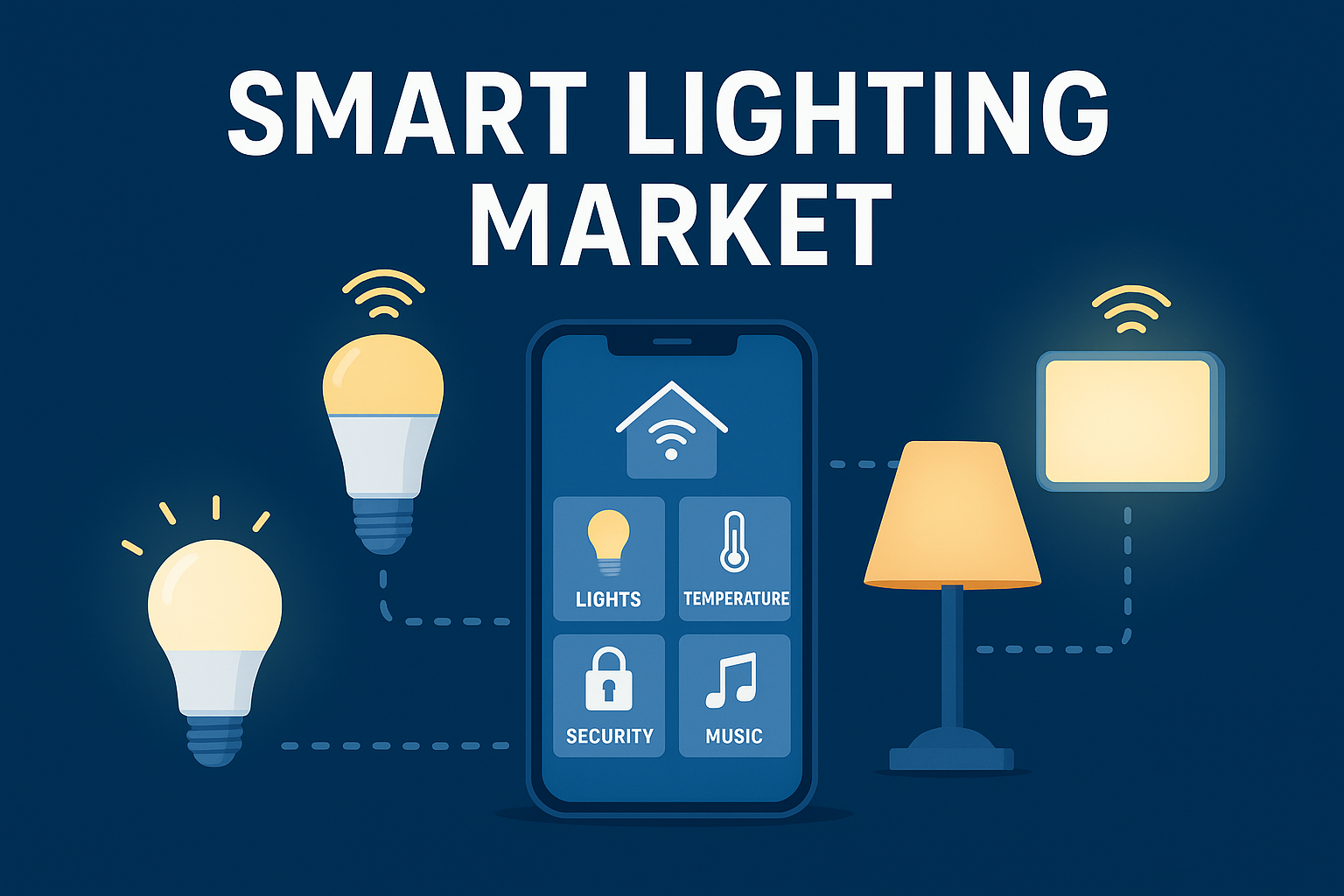
The global lighting industry is undergoing a massive transformation as smart lighting solutions take center stage in modern infrastructure. With rapid adoption in homes, offices, smart cities, and industrial facilities, smart lighting is not just about illumination but also about energy efficiency, automation, and sustainability. As governments and organizations push for eco-friendly solutions, the market is expected to witness remarkable growth in the coming years.
Smart Lighting Market Size and Forecast
As per SNS Insider insights, the Smart Lighting Market was worth USD 11.95 billion in 2023 and is projected to achieve USD 40.09 billion by 2032, expanding at a compound annual growth rate (CAGR) of 14.44% during 2024–2032. This substantial growth is fueled by increasing demand for connected lighting systems, advancements in IoT integration, and the rising importance of energy conservation across the globe.
Smart Lighting Market Drivers
The growing emphasis on sustainability is one of the strongest drivers of the smart lighting market. Smart lighting systems consume far less energy compared to conventional lighting, helping reduce electricity bills and carbon footprints. Additionally, the adoption of IoT-enabled lighting controls, voice-command features, and mobile applications is making smart lighting more user-friendly and accessible. Government initiatives promoting energy-efficient solutions further strengthen the demand for intelligent lighting systems in both developed and emerging economies.
Smart Lighting Market Trends
Several trends are shaping the future of this industry. Wireless communication technologies such as Wi-Fi, Zigbee, and Bluetooth are making installation easier and more cost-effective. The integration of smart lighting with smart home ecosystems is creating personalized lighting experiences for consumers. Moreover, the growing popularity of smart city projects, particularly in Asia-Pacific and Europe, is boosting the deployment of connected street lighting systems. Smart lighting is also finding new applications in horticulture, healthcare, and retail, where lighting plays a role in enhancing productivity and customer experience.
Smart Lighting Market Opportunities
The rise of connected infrastructure presents immense opportunities for the smart lighting industry. The increasing adoption of AI-powered lighting controls allows systems to adapt automatically to human activity, daylight conditions, and occupancy levels. The commercial sector, including offices, shopping complexes, and hospitality, is investing heavily in intelligent lighting to enhance efficiency and reduce operational costs. Furthermore, emerging markets in Asia-Pacific and the Middle East offer lucrative prospects due to rapid urbanization, infrastructure development, and government-led smart city programs.
Top Smart Lighting Companies are:
Some of the major key players are Schneider Electric, ABB , Synapse Wireless Inc., Panasonic Corporation , Leviton Manufacturing Co., Inc. , Syska, Signify Holding, Legrand, ACUITY BRANDS, INC., ams-OSRAM AG, Honeywell International Inc., Zumtobel Group, Wipro Lighting , Lutron Electronics Co., Inc, LEDVANCE GmbH, Inter IKEA Systems B.V., BUILDING ROBOTICS INC. (BRI), A SIEMENS COMPANY, Helvar, LIFX , Nanoleaf, Sengled GmbH, and TVILIGHT Projects B.V. and others.
Smart Lighting Market Regional Insights
The smart lighting market shows strong regional variations in adoption. North America leads due to early adoption of smart home technologies and significant investment in IoT-based infrastructure. Europe is closely following, with the European Union’s energy-efficiency directives driving widespread adoption of LED-based smart lighting systems. Asia-Pacific is the fastest-growing region, with countries like China, Japan, and India investing heavily in smart city initiatives. Meanwhile, the Middle East is also witnessing steady growth, fueled by infrastructure modernization and the integration of smart lighting in commercial and public spaces.
Smart Lighting Market Future Outlook
Looking ahead, the smart lighting market is expected to evolve into a fully connected ecosystem. Integration with AI, machine learning, and advanced sensors will enable systems to provide predictive lighting based on usage patterns and environmental conditions. Additionally, the growing focus on sustainability and energy efficiency will ensure that smart lighting remains a top priority for governments, businesses, and households worldwide.
Frequently Asked Questions (FAQs):
Q1. What is the CAGR of the smart lighting market during the forecast period?
The smart lighting market is expected to grow at a CAGR of 14.44% between 2024 and 2032, driven by rising adoption of energy-efficient lighting and IoT integration.
Q2. What is the forecasted value of the smart lighting market by 2032?
By 2032, the global smart lighting market is projected to reach USD 40.09 billion, growing significantly from USD 11.95 billion in 2023.Q3. Which region is expected to see the fastest growth in the smart lighting market?
The Asia-Pacific region is expected to record the fastest growth due to rapid urbanization, expanding smart city initiatives, and government-led sustainability programs.