The Ghost of Alcatraz: 60 Years Later, the Mystery of the Anglin Brothers Endures
Revisiting the most famous prison break in history and the techniques that might have kept them alive.

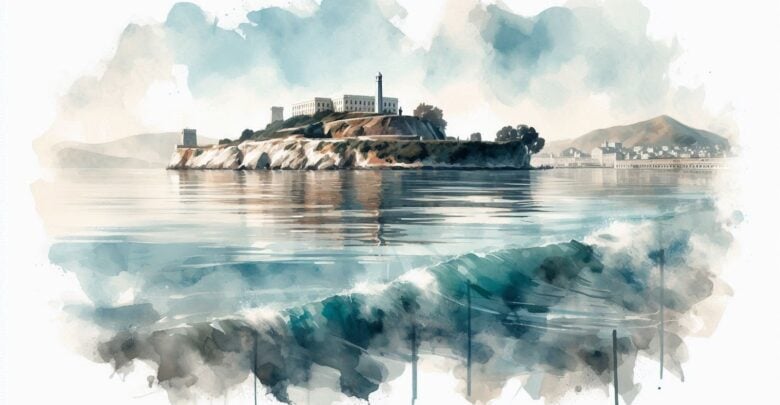
WASHINGTON, DC.
On the morning of June 12, 1962, guards at Alcatraz pulled back blankets and found three men still “sleeping.” The heads on the pillows looked right in the low light, down to hair and skin tone. But they were fake. Plaster, paint, and patience had replaced flesh.
Frank Morris, John Anglin, and Clarence Anglin had vanished into a maze of utility corridors and into San Francisco Bay. They left behind a legend that never stopped moving. Sixty-plus years later, it still captures the American imagination because it sits at the intersection of two irresistible ideas: that the most secure prison in the country could be beaten, and that the human will to disappear can outlast the state.
The federal government has never declared, with final certainty, what happened next. The FBI’s own historical case summary notes that the bureau closed its investigation on December 31, 1979, and transferred responsibility to the U.S. Marshals Service, which continues to treat the case as open in the unlikely event any of the men survived, a rare institutional admission that the end of the story remains unproven. That account sits in plain view on the FBI’s official archive of the case at fbi.gov.
The enduring question is not simply, “Did they make it?” The deeper question is why the mystery endures at all in a country that has grown addicted to closure.
The answer has less to do with romance and more to do with evidence.
No confirmed bodies were recovered. No definitive artifacts were matched to the men beyond dispute. Tips surfaced, then faded. Letters allegedly arrived. Rumors traveled from family circles to local law enforcement to national media, always just plausible enough to keep the file from feeling truly dead.
In 2026, the case has also become a mirror for modern anxieties about identity and traceability. Today, it is difficult for anyone, criminal or not, to live without a footprint. That makes the Anglin story feel like a relic from a looser era, and also like a warning that even the cleanest disappearance can never fully escape the gravity of routine human needs.
The legend is not just a prison break; it is a logistics story
The escape itself was not an impulsive dash for freedom. It was a long campaign of tiny actions carried out under rigid surveillance.
The men exploited the most human weakness in any secure system: normalcy. Guards expect patterns. Prisons run on schedules. When a routine holds long enough, it becomes a blind spot.
That is why the fake heads matter. They were not merely props. They were time. They bought the escapees a precious window, a stretch of minutes or hours that could mean the difference between being caught on the island and reaching the open bay.
The story has endured partly because the planning feels modern. It resembles what people now call systems thinking, a layered solution built from small, incremental gains. It also endured because the last step required confronting a brutal natural barrier: cold, fast-moving water.
That bay crossing is the hinge of the mystery. Everything before it can be understood as mechanics. Everything after it becomes probability.
What “survival” would have required, without turning the story into a blueprint
When people ask what techniques might have kept the Anglin brothers alive, they often imagine a single trick. A special stroke. A hidden boat. A brilliant disguise.
Real survival is rarely that clean.
The most credible survival factors tend to fall into three broad categories: preparation, physical resilience, and luck.
Preparation is obvious from the record. The escapees did not simply intend to swim. They appear to have planned for flotation, and the FBI summary describes the broader context of the escape and the uncertainty around what happened once they reached the water. In plain terms, flotation changes a night in frigid water from an almost immediate crisis to a contest of endurance.
Physical resilience is where the Anglins become central to the folklore. The brothers were widely described as strong swimmers earlier in life, and their family background has long been part of the reason some investigators and many civilians believe survival was at least possible. Strong swimming, however, does not erase hypothermia. It only delays it.
Luck is the factor that makes historians and investigators cautious. Luck in timing, in weather, in currents, in not being spotted at the worst moment, in not suffering a puncture or a sudden injury, in not making one decision that turns manageable risk into fatal exposure.
The most responsible way to talk about “techniques” is to talk about trade-offs. Any act of escape or long-term concealment pushes a person into a series of hard choices. In 1962, the trade-off was stark. Risk drowning in the bay, or face the certainty of capture on the island.
Everything else is inference.
The bay as a lie detector
Alcatraz was designed to terrify people into compliance. The island did not just imprison. It threatened. The water was meant to do the work of a wall.
The bay’s danger comes from a combination of temperature, currents, and the sheer uncertainty of night movement on open water. You do not need to be a sailor to understand the psychological impact. Cold water turns calm thinking into panic. Panic turns plan into improvisation. Improvisation is where people die.
This is the central argument for the “they drowned” conclusion, and it remains persuasive because it aligns with common human outcomes in extreme conditions.
But the lack of bodies, combined with the plausible planning effort, is what leaves the door open. Drowning is common. Disappearing without a body is also common, especially in tidal environments. The absence of proof becomes a permanent ambiguity.
Why the Anglin brothers became the heart of the story
Frank Morris is often framed as the mastermind, the high-IQ strategist. The Anglin brothers are framed as the muscle and the heart. Those dynamic matters because it helps explain why the story never collapses into a single narrative.
A mastermind story ends cleanly. The genius outsmarts the system, or the system catches up.
A brotherhood story endures because it carries emotion. Two brothers, inseparable in life, disappearing into a dark bay together. That image is sticky. It is as much myth as history, but myth is part of how cultures metabolize unresolved events.
Even if the men died that night, the absence of certainty turns their bond into a kind of haunting. The case becomes less about crime and more about family, devotion, and the limits of what institutions can truly know.
The only “safe haven” they would have needed was ordinary life
If the men survived the water, the next challenge would have been harder in the long run, living.
It is easy to talk about disappearing as if it is a single act. In reality, it is a continuous lifestyle problem. Food, shelter, money, and medical needs never stop. The state does not have to catch you in a dramatic moment. It only has to catch you when you try to be normal.
In modern fugitive analysis, that is called the comfort trap, the moment someone stops acting like a hunted person and starts acting like a person again. Routine becomes the enemy. Familiar stores. Familiar neighborhoods. Familiar friends. The human craving for connection becomes the crack.
If the escapees lived beyond 1962, the most plausible “technique” that would have kept them alive would not be a disguise. It would be a disciplined refusal of routine, an exhausting, psychologically grinding way to live that most humans cannot sustain indefinitely.
That is why the Anglin mystery persists. It forces the public to imagine a life of permanent restraint, and then to ask whether anyone could really maintain it for decades.
The documents do not give a neat ending, and that is the point
The FBI case summary is careful, and that carefulness is revealing. The bureau does not claim a triumphal conclusion. It describes a mystery, the ongoing absence of proof, and the transfer of responsibility to the U.S. Marshals Service, while acknowledging that most other escape attempts from Alcatraz ended in recapture or death.
That institutional tone is part of why the legend survives. It gives permission for uncertainty.
When government agencies say, in effect, “we do not know,” the public fills the gap with narrative.
Sometimes that narrative is romantic. Sometimes it is conspiratorial. Sometimes it is simply human, the desire for the story to be more than a cold case footnote.
The “they wrote a letter” era, why modern clues never land cleanly
In recent years, the case has been periodically revived by alleged communications, rumored sightings, and claims of family contact. The most famous modern artifact is a letter said to have been written by John Anglin, suggesting survival long after 1962, and describing illness and a willingness to surrender under certain conditions. Whether authentic or not, that letter had a predictable effect; it reactivated the public’s appetite for the possibility that the story never ended.
Time magazine captured the cultural moment when that letter surfaced publicly, highlighting what it claimed and why authorities treated it with skepticism rather than certainty, in its report.
Letters like that are powerful precisely because they exploit the one weakness in long-running mysteries: they offer a new voice. A voice, even a doubtful one, can restart decades of speculation.
But they also rarely close the case. A letter is not a body. It is not a verified record. It is a narrative fragment, and narrative fragments tend to multiply, not resolve.
Why the case still matters in 2026, even if the men are long dead
The Anglin brothers are not just characters from an old crime story. The case has become a cultural reference point for questions that feel modern.
How much do institutions truly control?
How long can a person really remain untraceable?
How do myths outlast evidence?
There is also a deeper societal question that runs beneath every Alcatraz discussion. The U.S. criminal justice system is built on punishment and deterrence, and Alcatraz was meant to symbolize both. The escape, and the possibility of survival, punctured that symbol. It suggested that even the harshest architecture cannot fully contain human ingenuity.
That symbolic power is part of why Alcatraz remains politically and culturally resonant, as explored in a wide-angle examination of the prison’s enduring lore by The Washington Post, which connected the island’s history, its famous escape, and its ongoing role in American political imagination.
The escape is a ghost that keeps returning because it is useful. It can be used to argue for toughness. It can be used to argue for reform. It can be used to sell movies. It can be used to sell nostalgia.
Most of all, it can be used to remind people that certainty is rarer than the public expects.
The techniques that might have kept them alive are the same techniques that destroy people over time
If the men survived and lived for decades, their “techniques” would have been less about cleverness and more about deprivation.
Avoiding attention means living with fewer relationships. Fewer relationships mean loneliness. Loneliness tends to create mistakes.
Avoiding records means avoiding normal work and normal housing. That creates instability, which creates desperation.
Avoiding routine means never fully relaxing. Never fully relaxing changes the brain. Hypervigilance becomes a baseline state.
This is why, in modern compliance and identity risk work, long-term concealment is described as psychologically corrosive, even when the person is not actively being chased. Advisers at Amicus International Consulting often frame the modern reality this way: stable life requires coherent records, and when someone lives outside those records, the world itself becomes friction, and friction eventually forces exposure.
That observation is not about glorifying evasion. It is about describing an unavoidable truth. Humans need stability. A life built on permanent secrecy is a life built on permanent strain.
So when people talk about the “techniques that might have kept them alive,” the most honest answer is also the bleakest. The techniques that would keep someone hidden are often the same ones that make the person smaller, harder, lonelier, and eventually more likely to crack.
The mystery endures because it has no satisfying moral
Most famous American crime stories resolve into a lesson. The criminal is caught. The innocent are vindicated. Justice is done. The end arrives with a clear punctuation mark.
The Anglin brothers did not give the country that punctuation.
If they drowned, then the lesson is that nature remains the final wall, even when humans outsmart steel and concrete.
If they survived, then the lesson is more unsettling: that the state’s power is strong but not absolute, and that the human capacity for disappearing can sometimes outlast the bureaucracy designed to prevent it.
The government’s public posture, rooted in uncertainty and a file that has never been closed with final proof, leaves both lessons available.
That is why, sixty-plus years later, the ghost of Alcatraz still walks.
Not because people believe three men are likely alive in 2026, but because the story gives America something it rarely gets from its institutions, an unresolved question that refuses to settle.
And unresolved questions are the most durable kind of legend.