


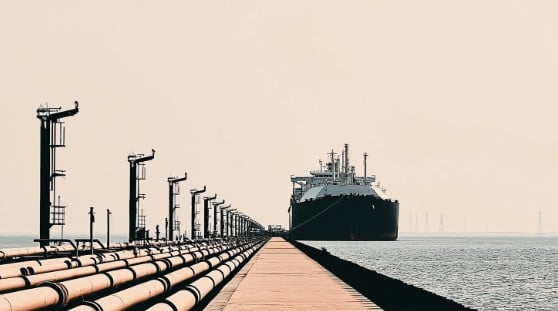
Summit Group is due to start delivering liquefied natural gas to Bangladesh’s state energy buyer within the next ten months. The contract, and the broader import boom behind it, is the subject of comments chairman Muhammed Aziz Khan gave to Platts, part of S&P Global Energy, in interviews The Business Standard reported on Jan. 21.
A Supply Deal Ten Months From Starting Up
Summit committed in January 2024 to supply Petrobangla, the state gas company, with 1.5 million metric tons of LNG a year for 15 years, beginning in October 2026, according to a press release on Summit Power International’s website. At the time, Khan said the arrangement was awaiting cabinet clearance he expected within weeks; the deal was Bangladesh’s fourth long-term LNG supply contract and Summit’s first, and it left the company free to source cargoes from any producer rather than a single country, without specifying pricing terms. Whether it starts on schedule this fall is one test of how much the country’s LNG appetite has actually translated into signed capacity, separate from the forecasts Khan discussed with Platts a year and a half after that announcement.
The distinction matters because Summit Power International, the energy arm Khan chairs, is not the same entity as Summit Group’s broader holding structure, and the LNG supply contract sits apart from the company’s regasification infrastructure. Summit already operates one of Bangladesh’s two existing floating storage and regasification units, alongside a separate unit run by the US-based Excelerate Energy. The supply deal makes Summit both an importer of gas and, through its own terminal, a handler of it.
The Numbers Behind “LNG Demand Surges”
Bangladesh’s import volumes back up Khan’s framing. The country’s long-term LNG contracts are set to deliver 86 cargoes in 2026, up 53.57% from 56 cargoes in 2025, according to analysis reported by The Financial Express, with QatarEnergy, OQ Trading and the US-based Excelerate Energy among the long-term suppliers. Counting short-term and spot purchases alongside the long-term contracts, Bangladesh expects roughly 115 cargoes altogether in 2026, about 5.5% more than the total in 2025.
Khan’s own numbers to Platts point in the same direction: Bangladesh’s LNG imports are projected to reach 7.2 million metric tons in 2026, up from an estimated 6.8 million tons in 2025, and he said the total could climb toward 15 million tons a year in the coming years if the economy keeps growing at 6% to 7% annually.
Why Bangladesh Needs the Imports
The import growth is a response to a domestic supply problem, not a preference. Bangladesh’s own gas production peaked at 2.6 billion cubic feet a day in 2018 and has fallen by an average of 5% a year since, reaching 2 billion cubic feet a day by 2024, according to a December 2025 report from S&P Global Energy’s CERA analysts that Khan cited. Production fell further in the first half of 2025, down to 1.8 billion cubic feet a day, a 7% drop from the full-year 2024 figure. Limited exploration and development work is a major reason output keeps sliding, the CERA analysts found, and that shortfall is what LNG imports are increasingly filling in.
Summit’s own regasification terminal at Moheshkhali, running since April 2019, is part of that supply chain. It lifted the country’s total natural gas supply by roughly a quarter the year it came online, according to figures the terminal’s vessel operator, Excelerate Energy, has published. The floating unit had processed roughly 35 million cubic meters of LNG and completed around 250 ship-to-ship transfers by 2025, covering close to 13% of Bangladesh’s total gas demand in the 2024-2025 fiscal year, according to figures reported by TechUpdatePRO. That is a meaningful share for a single facility, and it is why Khan frames further import growth as an extension of infrastructure Summit already runs rather than a new bet.
A Price Story With Two Directions
Khan described LNG pricing to Platts as genuinely uncertain rather than simply rising. “Prices are set to rise substantially in the short-medium run if tensions escalate in Iran,” he said. “However, in the longer term, prices will be pressured by supply waves from the US and Qatar as well as by optimism about global geopolitics.” Platts assessed the benchmark March JKM price, the marker for LNG cargoes delivered to Northeast Asia, at $10.334 per million British thermal units on Jan. 16, up 3.5% in a single day.
The downside risk Khan flagged has since shown up directly in Bangladesh’s own import bill. QatarEnergy suspended long-term LNG supplies to Bangladesh under force majeure after an escalation around the Strait of Hormuz removed roughly 19% of global LNG exports from the market, TechUpdatePRO reported. Bangladesh’s total LNG import bill across 109 cargoes ran to $3.88 billion in 2025; Khan said that figure could “easily become $7 billion plus” if spot prices stay above $20 per million British thermal units for an extended stretch.
The Onshore Terminal Still Waiting for a Green Light
Not every piece of Summit’s LNG buildout has moved as planned. The company had proposed building Bangladesh’s first onshore LNG terminal at Matarbari Island on a build-own-operate-transfer basis, but the project stalled after the interim government repealed the Quick Enhancement of Electricity and Energy Supply (Special Provisions) Act, 2010, in 2024, Khan told Platts. That repeal coincided with the government canceling a shortlisting process that had already narrowed the Matarbari terminal tender to eight bidders, according to reporting from Gas Outlook, which also found that Petrobangla separately terminated a contract with a different Summit subsidiary that year over a late performance-bond deposit. Khan told Platts the onshore terminal could still proceed either through a fresh international tender, in which Summit would compete alongside other bidders, or through a direct government-to-government contract, in which case Summit would only be able to buy services from a terminal the Bangladeshi government itself owns.
Independent reporting backs up the “still waiting” part of that account. Tokyo Gas, hired as a consultant in 2020, has completed a feasibility study for the same land-based Matarbari terminal, sized at 7.5 million tonnes a year with capacity to process 1,000 million cubic feet of gas daily, and has prepared bid packages and requests for proposals for whichever procurement route the government eventually chooses, according to The Financial Express. Petrobangla’s chairman has called the project “now a priority,” the same report noted, but as of that reporting no open tender had been issued and talks over a possible government-to-government route remained pending. Summit has not been named as a bidder in that process, and Khan’s comments to Platts describe intent to compete rather than a confirmed role.
Bangladesh is separately weighing whether to convert about 30,000 thousand cubic feet a day of unused gas from the Bhola island field into LNG for gas-starved industries on the mainland. Khan said Summit was not interested in that specific opportunity, since it would require building transportation infrastructure rather than the gas-use facilities the company already knows how to run. The distinction is a small one, but it says something about how Summit picks its bets: infrastructure it can operate with skills it already has, rather than every gas project the government floats.
Trade Winds Blowing In Summit’s Favor
Khan’s broader optimism about Bangladesh rests partly on trade terms that have kept shifting since he spoke with Platts. At the time, he cited a 20% US reciprocal tariff on many Bangladeshi goods, arguing that Bangladesh’s rate still beat some regional competitors. The two countries have since finalized a lower number: a Feb. 9 agreement set the tariff at 19%, according to Al Jazeera’s reporting on the deal, putting Bangladesh close to the 18% rate India separately negotiated and well below the 37% rate Washington had initially proposed. Interim leader Muhammad Yunus said the US had also agreed to work toward zero tariffs on certain textile and apparel goods made with American cotton and fiber.
Khan told Platts he expected Bangladesh’s newly elected government, chosen in the parliamentary vote then still weeks away, to pursue “more structural reforms” for the country’s infrastructure over a longer time horizon than an interim administration could commit to. He also said the country’s foreign currency position was expected to keep improving alongside economic growth, a detail that matters directly to a company paying for imported cargoes in dollars while earning much of its revenue in taka.
Bangladesh has since held that vote and installed a new parliament, and it is now that government’s Petrobangla, not the interim body Khan was describing, that will decide whether the Matarbari tender launches or a G2G deal takes its place, whether the canceled 2024 contracts get revived in some form, and whether Summit’s own supply agreement starts on schedule this October. Khan’s numbers describe a country whose LNG appetite is not in doubt. Whether the infrastructure to satisfy it gets built on the timeline Summit is describing is a separate question, and cargo counts alone will not settle it.

