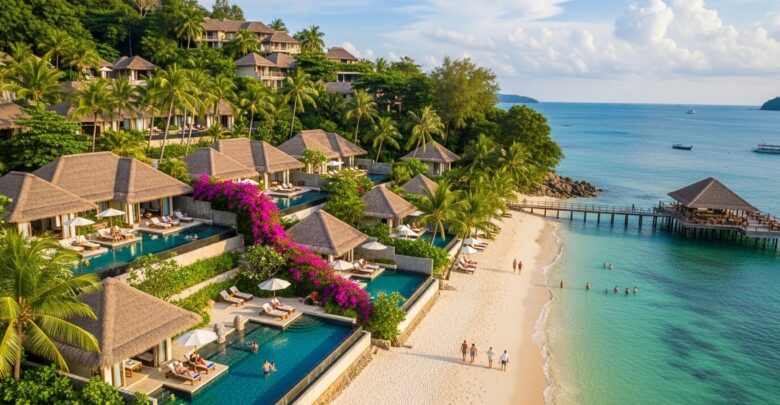
Not all beachfront stays feel the same, even when they sit on the same island. Some coastlines feel busy from early morning until late evening, while others remain calm even during peak travel periods. This distinction often shapes the entire stay, which is why travellers researching beachfront resorts at Karon Beach tend to focus on how space, access and natural layout influence crowd behaviour rather than proximity alone.
Being close to the sea is only part of the equation. How people arrive, move, and gather along the shoreline matters just as much.
Why Width Matters More Than Popularity
One of the most overlooked factors in beachfront comfort is physical width. Wider beaches naturally disperse people, preventing the compression that creates noise, competition for space, and visual clutter.
Karon’s shoreline allows guests to spread out rather than cluster. This reduces the feeling of crowding even when occupancy is high, making the beach feel usable throughout the day rather than only at off-peak times.
Natural Barriers That Limit Through-Traffic
Some beaches attract constant movement because they function as walkways between commercial areas. Others are shaped in a way that discourages passing foot traffic. This distinction has a major effect on atmosphere.
Beaches with fewer access points tend to feel calmer because most people there intend to stay rather than pass through. That difference changes sound levels, movement patterns, and how long guests remain in one place.
How Crowd Behaviour Shapes Guest Experience
Crowds affect more than comfort. They influence how long people stay outdoors, when they swim, and whether they return to the beach multiple times in a day.
At less congested beachfronts, guests are more likely to return repeatedly rather than treating the beach as a single event. Short visits, long walks, and unplanned swims become part of the daily rhythm rather than scheduled activities.
Visibility Without Exposure
Beachfront resorts benefit when the sea is visible without being constantly surrounded by activity. Clear sightlines allow guests to feel connected to the shoreline even when they are not on it.
This visual connection reduces the need to “go and see” constantly. Guests can relax knowing the beach is there, accessible at any moment, rather than feeling pressure to occupy it while conditions are favourable.
The Psychological Effect of Space by the Water
Open coastal space has a measurable calming effect. Fewer visual interruptions, consistent horizons, and slower movement patterns reduce sensory overload.
Guests often describe feeling less tired at the end of the day, even when doing very little. This effect comes from reduced background stimulation rather than from deliberate relaxation activities.
When the Beach Supports, Rather Than Dominates, the Stay
At well-positioned beachfront resorts, the beach does not compete with other parts of the stay. It supports them. Guests move naturally between indoor comfort and outdoor space without planning or negotiation.
This balance allows the shoreline to remain a constant presence rather than a focal point that demands attention.
Choosing Coastline Over Convenience
Some travellers prioritise convenience above all else, choosing locations near nightlife or dense attractions. Others value consistency, calm, and space.
For those in the second group, beachfront settings that limit congestion offer something increasingly rare: the ability to enjoy the sea on their own terms, at any time of day, without managing crowds or timing visits carefully.
That quiet reliability is often what turns a good stay into a memorable one, not because it stands out, but because it never gets in the way.