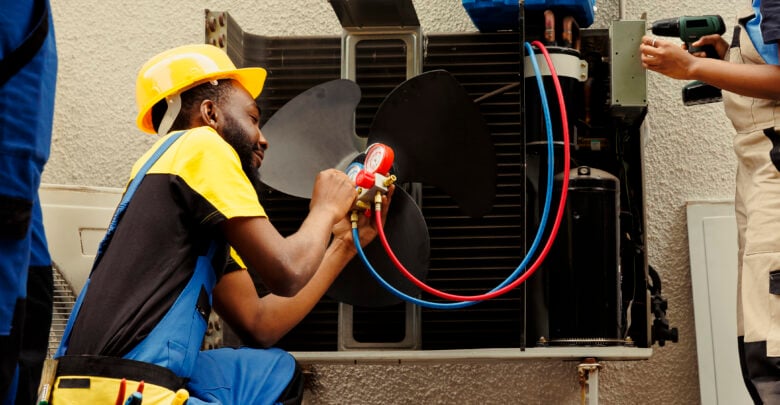
There’s a certain pride that comes with tackling home improvement projects on your own. Watching a few online tutorials and fixing a running toilet or putting together patio furniture feels incredibly rewarding. But while a DIY attitude is fantastic for weekend cosmetic upgrades, it falls short when you’re dealing with your home’s heating and cooling equipment. Sure, you can and should swap out your own air filters every few months, but anything beyond basic upkeep gets risky fast.
That’s when you need to step back and call a professional HVAC technician to handle the complex inner workings of your climate control system. Modern air conditioners and furnaces are highly sophisticated pieces of machinery. They require specialized tools, years of training, and strict safety certifications to operate and repair correctly. Let’s look at the critical services these professionals provide that you simply can’t do on your own.
Handling Refrigerant and Sealing Leaks
When an air conditioner stops blowing cold air, many homeowners assume it just needs a quick top-off of freon. They quickly find out that buying and handling refrigerant isn’t like buying windshield washer fluid. The federal government heavily regulates these chemicals. You must have an active Environmental Protection Agency certification to purchase or handle them because they’re dangerous to the environment and can cause severe frostbite if mishandled.
Air conditioning systems don’t just use up refrigerant over time, and if your system is low, it means there’s a leak somewhere in the copper lines. A professional doesn’t just pump new chemicals into the machine. They use electronic leak detectors or UV dyes to pinpoint the hole. Then, they recover the remaining refrigerant, braze the copper tubing closed with a torch, pull a vacuum on the system to remove all moisture, and finally recharge it to the exact manufacturer specifications. It’s an intricate, highly technical process that requires thousands of dollars in specialized equipment.
Navigating High-Voltage Electrical Components
Your climate control system uses a lot of electricity. While changing the AA batteries in your hallway thermostat is a simple chore, digging into the outdoor condensing unit is incredibly dangerous. These units run on 240 volts of electricity, which is more than enough to cause a fatal shock if you touch the wrong wire.
Even if you turn the power off at the breaker box, the dual run capacitor inside the unit stores a lethal electrical charge for a long time. A trained professional knows exactly how to safely discharge these components before they start poking around. They use multimeters to test the capacitance, check the amp draws on the compressor, and safely replace failing contactors. Trying to trace a wiring fault or bypass a safety switch on your own usually results in frying a very expensive control board, or much worse, starting an electrical fire.
Inspecting Heat Exchangers and Gas Lines
If your home relies on a gas furnace for winter heating, the stakes are even higher. A furnace literally burns combustible gas inside a metal chamber to create heat. The byproduct of this combustion is carbon monoxide, a colorless, odorless gas that’s lethal to humans.
The heat exchanger is the metal shield that keeps the toxic exhaust gases separate from the warm air blowing into your living room. Over the years, the constant expansion and contraction of the metal can cause hairline cracks to form. A professional uses specialized cameras and combustion analyzers to inspect this chamber. They know how to spot a failing heat exchanger long before it becomes a deadly problem. They also check the gas valve pressure and ensure the exhaust flue is drafting correctly. Messing with gas lines and combustion chambers without proper training is just playing with fire.
Measuring Static Pressure and Balancing Airflow
Sometimes your equipment runs just fine, but one bedroom is always freezing while the kitchen feels like a sauna. Most people try to fix this by closing a few vents, which actually damages the system by creating excess backpressure.
Fixing airflow issues requires a deep understanding of fluid dynamics. A professional measures the static pressure of your ductwork, which is essentially the blood pressure of your home’s respiratory system. They use a tool called a manometer to see exactly how hard the blower motor is working. Based on those readings, they can adjust the fan speed, install dampers inside the ductwork, or resize certain return vents to ensure every single room gets the correct volume of air. You can’t guess your way through airflow balancing; it requires precise mathematical calculations.
Deep Cleaning the Evaporator Coil
We all know we need to change our air filters, but dust still manages to slip by and coat the indoor evaporator coil over time. When this A-shaped coil gets covered in grime, the system can’t absorb heat properly, leading to high utility bills and frozen lines.
You might think you can just wipe it down, but the coil is usually sealed tightly inside the sheet metal plenum above your furnace. Gaining access requires cutting into the metal and carefully removing panels. Even if you reach it, the aluminum fins on the coil are paper-thin and bend incredibly easily. If you scrub them with a brush, you’ll flatten the fins and block the airflow completely. Technicians use specialized, no-rinse chemical foams that gently dissolve the dirt without damaging the fragile metal, ensuring the unit breathes easily again.
Trusting the Experts
There’s plenty of work to do around the house, but servicing your heating and cooling equipment shouldn’t be on your weekend to-do list. The risks of electrical shock, toxic gas exposure, and accidentally destroying a system worth thousands of dollars simply aren’t worth the trouble. By knowing your limits and relying on a trained expert, you protect your property, your wallet, and your family’s safety.