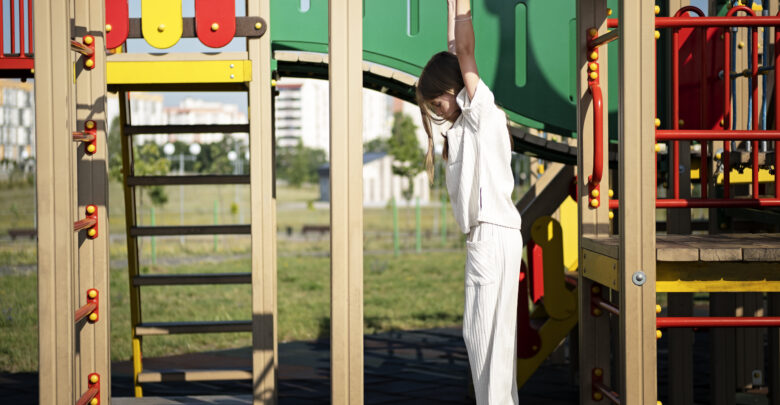
We’ve all seen it: a brand-new, expensive neighborhood park that sits completely empty while the kids across the street are busy climbing a discarded pile of tractor tires or a particularly sturdy oak tree. As an adult, it’s easy to look at a catalog and pick out something that looks safe, colorful, and symmetrical. But kids don’t care about symmetry. They care about the thrill, the challenge, and the ability to imagine themselves somewhere else entirely.
If you are in charge of a park project, a school upgrade, or even a large backyard build, the stakes are higher than you think. You aren’t just buying hardware; you are competing with iPads, video games, and the general indoor activities that keep kids sedentary. To win that battle, you have to move past the generic “swing-and-slide” combo. Investing in the right playground equipment means understanding the subtle psychology of play. It’s about finding that sweet spot between “this is fun” and “this is a challenge I need to conquer.”
If you want to ensure your investment doesn’t end up as a glorified bird perch, here is how to shop for a play space that kids will actually fight over.
1. Prioritize High-Play Value Over Aesthetics
The biggest mistake planners make is buying equipment that looks tidy to adults. We like primary colors and straight lines. Kids, however, are attracted to complexity. In the industry, we call this “play value.” A single, static plastic slide has low play value—you go down once, and the experience is over.
On the other hand, something like a climbing net or a multi-level tower has high play value because there are a hundred ways to interact with it. Kids want to feel like they are mastering a space. If a six-year-old can figure out every possible way to use a piece of equipment in the first five minutes, they will be bored by the tenth. Look for modular pieces that allow for non-linear movement—equipment that lets them climb up, over, under, and through in ways that aren’t immediately obvious.
2. The Risk Factor: Why Safe Doesn’t Mean Boring
This is a tough one for many committees to swallow, but children actually need a certain level of perceived risk to enjoy themselves. If a playground is too safe—meaning there is zero physical challenge—kids will find ways to make it dangerous (and therefore interesting) by jumping off the top of the slide or climbing up the outside of the railings.
Good design incorporates beneficial risk. This means providing challenges that look intimidating but are structurally sound. Think of things like wobbling bridges, high-altitude rope climbers, or spinning elements. These features help kids develop proprioception—the sense of where their body is in space—and build confidence. If you buy a playground that feels like a padded room, the older kids will abandon it immediately, and the younger kids will never learn to push their boundaries.
3. Don’t Ignore the Social Hub Aspect
Playgrounds aren’t just for physical exercise; they are social laboratories. Kids need places where they can hang out and negotiate the rules of whatever imaginary game they are playing. When you’re looking at equipment, look for nooks—shaded areas under platforms, wide landings, or even built-in seating.
Often, the most used part of a playground isn’t the slide itself, but the space underneath it that has been transformed into a fort or a restaurant. Equipment that encourages cooperative play, like a multi-user seesaw or a large spinning disk, forces kids to communicate and work together to get the movement started. If the equipment only allows for solitary play, the social energy of the park will fizzle out.
4. Think About the Ages 5 to 12 Gap
One of the most common failures in playground purchasing is trying to make one structure fit every child. A toddler needs low steps and enclosed slides, but a 10-year-old finds that patronizing. If you have the space, it is almost always better to have two distinct areas.
However, if you have to choose one all-ages structure, focus on the upper end of the age range. Younger kids are surprisingly adept at mimicking the older ones, and they will grow into a challenging structure. If you buy for the toddlers, you lose the elementary school crowd instantly. Older kids need height, upper-body challenges (like monkey bars or rings), and speed. If you can provide a sense of height that feels significant, you’ve won half the battle.
5. Flow and Layout: Avoid the Jams
Even the best equipment can be ruined by a bad layout. Kids run in loops. If the exit of the slide dumps them into a dead-end corner far away from the stairs to get back up, the flow is broken. You want a layout that encourages a continuous circuit.
Think about the desire lines—the paths kids will naturally take. Is there a clear path from the bottom of the climber back to the start? Are the high-velocity areas (like swings) far enough away from the high-traffic areas so that kids aren’t constantly getting clipped by a swinging seat? A playground with good flow feels like a race track; it keeps the energy moving and prevents the “I’m bored, what’s next?” moment.
6. Maintenance and Material: The Long-Term Play
Finally, you have to think like an owner. Metal gets hot in the summer sun, and cheap plastic fades and cracks. If the equipment looks dilapidated and feels crunchy underfoot, kids won’t respect it, and parents won’t bring them back.
Investing in high-grade materials—like UV-stabilized plastics, powder-coated steel, and high-quality rope—ensures that the park stays an inviting destination for a decade instead of a season. Also, consider the ground cover. Bark mulch is cheap but requires constant raking; poured-in-place rubber is expensive but creates an accessible, consistent surface that allows kids of all abilities to play together.
Purchasing Playground Equipment
Buying playground equipment is a big financial commitment, and it’s tempting to go for the safe choice that checks the boxes for your board of directors. But the real ROI of a playground isn’t found in a budget spreadsheet; it’s found in the sound of twenty kids screaming with laughter on a Tuesday afternoon.
Stop looking at the colors and start looking at the movements. Does this piece of equipment make a kid want to run? Does it make them want to climb? Does it make them want to imagine they’re on a pirate ship? If the answer is yes, you aren’t just buying an area of outdoor play—you’re building a landmark.