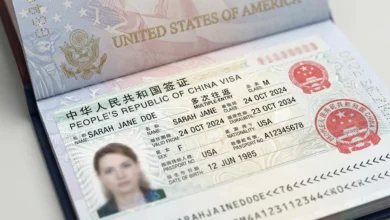
Families planning international journeys with dual-national children need to examine how each relevant country treats the child’s citizenship, passport use and supporting documentation, because requirements for departure, admission and return may differ across the same itinerary.
WASHINGTON, DC, October 27, 2026: A child with more than one nationality may need different passports and supporting documents during an international journey, so parents should review each country’s requirements before assuming one valid passport covers the entire trip.
The distinction extends beyond choosing a convenient travel document, because a country may regard the child as its own citizen and apply rules that differ from those governing foreign visitors traveling alongside the child, including accompanying parents.
Official Canadian and American guidance identifies passport requirements and potential complications for dual nationals, while families must separately examine parental authority, consent documentation and the practical arrangements needed to complete the journey and return as planned.
Citizenship Determines More Than Passport Choice
Citizenship and passport possession are related but distinct, since a country may recognize a child as its national even if the family has never applied for that country’s passport or formally documented the child’s status.
Canada’s government warns that children born in Canada may also be regarded as citizens elsewhere through a parent, illustrating why the absence of a second passport does not necessarily mean that only Canadian nationality is relevant.
Parents should therefore identify any uncertainty about the child’s status early and provide the relevant authority or qualified adviser with accurate information about birth, parentage, and existing citizenship records, rather than relying solely on the documents currently held.
The purpose of that review is to establish which rules apply, allowing passport applications and travel planning to proceed on a verified basis instead of discovering during check-in that the child is being assessed under a different nationality.
American Guidance Specifically Includes Dual-National Children
The State Department’s guidance on dual nationality states that American citizens, including children who hold another nationality, must use an American passport to enter and depart the United States, rather than treating their foreign passport as an interchangeable alternative.
The department also explains that an American citizen child is not eligible for an American visa even when the family has not yet documented that citizenship, making clarification of status important before seeking visitor permission through another passport.
For families planning international flights involving the United States, the practical preparation step is to establish whether the child needs an American passport and allow time to complete the applicable process before committing to travel dates.
Parents should ask the responsible authority about any uncertainty involving their precise route or document category, and avoid assuming that advice given to a noncitizen relative necessarily applies to a child whose nationality creates different obligations.
Canada’s Air Travel Rule Includes an Important Exception
Canada’s passport guidance for dual Canadian citizens generally requires a valid Canadian passport to board a flight to Canada, including transit by air, while expressly identifying a different arrangement for people who hold both Canadian and American citizenship.
Canadian-American dual citizens may fly to Canada using either a valid Canadian or American passport, and the guidance says those traveling only with an American passport should carry identification showing Canadian citizenship and may undergo immigration screening.
That exception matters for children as well as adults, because a statement that every dual Canadian citizen must always present a Canadian passport would omit a qualification expressly included in the government’s published air travel instructions.
Families should nevertheless review the complete itinerary, since a document acceptable for boarding a Canada-bound flight may not satisfy the passport requirements governing departure from another country or admission at a different point along the route.
One Country’s Acceptance Does Not Settle Another’s Rules
A passport accepted at one stage of travel does not mean every later authority will accept it for the same purpose, so the full itinerary matters more than a general question about which passport is better.
Parents can review the journey in sequence, identifying the document needed for departure, the evidence required by the airline, any transit conditions and the passport expected when the child enters the destination or returns home afterward.
A hypothetical child traveling between two countries of citizenship may need both passports because each government applies its own rules, and the carrier needs sufficient documentation to confirm the child can complete the booked journey.
When the sequence is unclear, families should describe both citizenships and the full route when requesting guidance, so officials and carriers can answer the actual question rather than respond to an incomplete description of the child’s circumstances.
Exit Requirements Deserve Attention Before Arrival
Canadian dual-citizenship guidance warns that another country may apply its own entry and exit requirements to a person it recognizes as a citizen, including passport requirements and, in some jurisdictions, rules concerning parental permission to leave.
For a child, the important planning question is therefore whether departure will require documentation beyond what was needed for admission, particularly when one parent remains behind or the child leaves with a different adult from the accompanying arrival party.
Families should check that question before traveling, rather than assuming a return ticket or permission to enter means the child can depart under every circumstance at the end of the planned visit.
An inquiry should identify the child’s nationality, age, accompanying adult, and relevant parenting arrangements, so the responsible authority can explain which requirements apply without relying on general guidance for adult foreign visitors or unrelated family situations.
Travel Consent Remains Separate From Citizenship
A child’s nationality does not, by itself, determine which parent or guardian may authorize a journey, so families should separately review decision-making responsibility, current court orders, and any consent requirements affecting the proposed travel arrangements.
Canadian guidance recommends consent letters for children traveling without one or both parents or legal guardians, while explaining that foreign authorities may impose their own requirements and that a letter is not guaranteed to satisfy every country.
If another country regards the child as its citizen, parents should ask whether the required documentation differs from what visitors commonly carry, including whether a specific authorization form or supporting record is required for departure.
A passport demonstrates citizenship and a travel-permission document serves a different purpose, so keep both questions visible throughout preparation rather than treating a second nationality as an answer to a parental-consent issue.
Court Orders Need Review Across the Proposed Journey
Parents subject to custody, guardianship, or travel orders should review how the proposed itinerary fits those arrangements, including any conditions addressing destinations, accompanying adults, departure dates, return deadlines, or possession of the child’s passports.
A second passport should not be treated as permission to disregard a restriction, and families should seek advice if the order’s wording leaves uncertainty about which documents may be used or held.
Where travel involves a country connected to the child’s other nationality, a qualified adviser can assess any questions about recognition or enforcement that matter to the family, using the actual orders and itinerary rather than general assumptions.
Parents concerned about a possible failure to return should raise that concern before agreeing to the journey, because selecting a passport or preparing a consent letter does not independently resolve the underlying legal and practical issues.
Airline Records Should Match the Travel Plan
Carriers may need document information to assess boarding requirements, so parents should ask how to provide the relevant passport details when the child must demonstrate nationality or entry eligibility through different documents at different stages of travel.
Families should avoid guessing which number belongs in a booking field when the system’s instructions are unclear; instead, they should seek guidance from the operating carrier and keep both required documents accessible during check-in and subsequent inspections.
Names should also be compared across passports and reservations, with legitimate differences addressed through the carrier and relevant issuing authorities before departure rather than assuming that every system will automatically reconcile spelling, order or transliteration differences.
If a passport is renewed after a booking is made, the family should check whether stored document details need updating, ensuring that the travel record reflects the passport actually being presented for the relevant part of the journey.
Both Passports Need Their Own Preparation Review
When the itinerary requires two passports, each document should be reviewed for validity, condition and availability, because a current passport from one country may not resolve a problem with the other document required for a specific crossing.
Parents should confirm whether another person holds either passport or whether it is subject to an order, and arrange any necessary handover through the proper process rather than assuming the documents will be available immediately before departure.
Renewal planning should also account for each country’s application requirements, since different authorities may require different evidence, appointments, or parental participation before issuing a replacement document for the same child’s upcoming journey.
Keeping a clear record of which application remains outstanding can prevent premature booking decisions, particularly when the family has completed one passport process but still depends on another authority to issue the second document needed for travel.
Technical Checks Cannot Determine Nationality Obligations
Amicus International Consulting’s guide to scanning a passport’s NFC chip and understanding the results explains the difference between reading electronic information and interpreting authentication results, giving context for families using smartphone apps to check their travel documents.
A successful scan cannot decide which passport a country requires a dual-national child to use, because the technical result does not interpret nationality law, admission rules, parental authority or the conditions applying to the proposed journey.
Families can treat electronic checks as a limited document-review task while directing passport-use questions to the relevant government, keeping the application’s displayed information separate from official advice about whether a particular document satisfies the travel requirement.
The same distinction applies when an application cannot read a chip, since a technical difficulty needs appropriate investigation without being converted into an unsupported conclusion about the child’s citizenship or eligibility to travel under another nationality.
Consular Assistance May Have Practical Limits
Canadian guidance warns that a country that regards a traveler as its own citizen may restrict access to Canadian consular assistance, so families should understand potential limitations before relying on an embassy to resolve difficulties abroad.
Assess this possibility in the context of the destination and the family’s circumstances, rather than claiming dual nationals can never receive assistance or that every country handles consular contact identically.
For parents, preparation can include identifying appropriate emergency contacts and discussing relevant legal concerns before departure, particularly where the journey involves unresolved family proceedings or questions about whether the child will be permitted to leave.
An embassy’s ability to provide information or assistance should not be treated as a substitute for obtaining required documents and permissions beforehand, especially when the issue may involve local nationality rules or decisions within another country’s jurisdiction.
A Clear Family Document Plan Reduces Confusion
Parents can organize the travel packet around the full route, keeping the required passports, supporting relationship records and relevant authorizations accessible while limiting unnecessary disclosure of sensitive information about the child and other members of the family.
Children can receive age-appropriate explanations that they may have more than one passport and that adults will manage the documents, without being asked to choose a nationality or provide scripted answers about unfamiliar legal concepts.
If plans change, the family should revisit the affected requirements rather than assume that the original document review remains sufficient, particularly when a new destination, different accompanying adult or extended stay changes the circumstances previously considered.
Dual nationality can connect a child to more than one country, but reliable travel preparation depends on understanding each country’s rules and coordinating the required documents, authority and return arrangements across the entire journey the family intends to complete.