Diplomatic Passport vs Regular Passport: What the Black Passport Actually Does
A search-friendly breakdown of how diplomatic passports differ from ordinary travel documents in law and practice, and why the black passport carries a narrower, more official role than most travelers imagine.

WASHINGTON, DC.
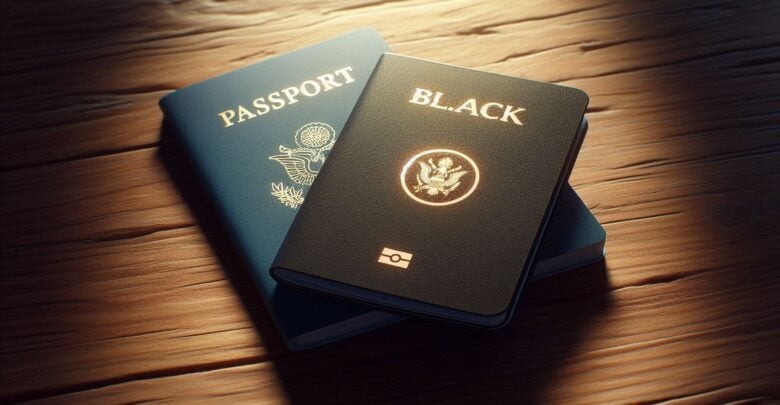
When readers compare a diplomatic passport with a regular passport, they often assume the black passport is simply a stronger, more privileged version of the ordinary document, even though the truth is much more specific and much more institutional. A regular passport is designed to support civilian travel across the normal channels of tourism, relocation, study, family visits, and private business, while a diplomatic passport is designed to identify a traveler as someone moving abroad in a recognized state capacity. That difference sounds technical at first, but it changes almost everything that follows, from who can receive the document to how it can be used and how foreign governments interpret it at the border.
The clearest official explanation in the United States appears in the State Department’s special issuance passport guidance, which says diplomatic passports are for defined government personnel, certain titled individuals, and eligible family members tied to official assignments abroad. That guidance matters because it cuts directly through one of the most persistent myths surrounding black passports, which is the belief that they are luxury travel documents for influential civilians who want faster treatment and fewer questions overseas. Governments issue diplomatic passports because they need certain people to travel as visible representatives of the state, not because those people are wealthy, connected, or socially important in private life.
The ordinary passport proves identity, while the diplomatic passport signals official state purpose.
A regular passport tells another country that the holder is a citizen of the issuing state and is seeking entry for an ordinary lawful purpose within the normal civilian travel system. A diplomatic passport carries a different message, because it signals that the traveler may be operating under an official role linked to diplomacy, consular work, or another recognized government mission that falls outside routine civilian movement. In simple terms, the ordinary passport speaks for the traveler as a person, while the diplomatic passport speaks for the traveler as part of the machinery of the state.
That distinction is exactly why the black passport attracts so much fascination, because it compresses ideas of protocol, status, immunity, and state authority into one object that appears to sit above ordinary travel documents in a natural hierarchy. Yet the real relationship is not a simple ranking of weak passports and strong passports, because the two documents were created for different purposes and perform different jobs inside the international system. A standard passport is broader and more flexible for everyday civilian life, while a diplomatic passport is narrower, more specialized, and far more dependent on continuing official status.
Eligibility draws the sharpest line between the two documents.
Most citizens can apply for a regular passport if they meet the ordinary documentation requirements proving identity and citizenship, which is why the standard passport functions as the default travel credential for modern international movement. Diplomatic passports follow the opposite logic, because the issuing government first asks whether the traveler actually occupies a role that requires formal official representation abroad before it ever decides whether the person belongs in that category. In practice, that usually means accredited diplomats, some foreign-service personnel, certain qualifying officials, designated envoys, and derivative family members attached to those assignments, rather than business elites, donors, or politically adjacent personalities.
This narrow eligibility structure reveals what the black passport really is, because the state is effectively certifying that the bearer is not just traveling abroad, but appearing abroad under an official framework that other governments are expected to recognize and process accordingly. A regular passport belongs to the citizen as part of everyday civic identity, while a diplomatic passport belongs to a narrower world of protocol, mission, and documented public function. That is why the black passport remains unusual even in countries that issue large numbers of ordinary passports every year, because its meaning depends on office, assignment, and status rather than on simple citizenship.
Use is another major difference, because regular passports are built for personal travel, while diplomatic passports are built for official travel.
A regular passport is meant to move with the ordinary rhythms of personal life, which include vacations, funerals, conferences, family reunions, work trips, school terms, migration plans, and the countless small reasons people cross borders every day. A diplomatic passport is tied to official duties, which means the traveler is expected to be moving within the scope of a recognized government mission rather than pursuing open-ended private travel in the civilian sense. This is why governments often restrict the document’s use, treat it as state property, and require its return when the office or assignment that justified issuance has ended.
That controlled use makes the black passport look less like a premium consumer product and more like a specialized work instrument issued for a particular public function. The ordinary passport follows the private life of the citizen, while the diplomatic passport follows the institutional life of the office and the mission, which is a much narrower and more conditional path. Readers often imagine that the black passport offers more freedom, but in many situations, it actually offers less personal flexibility because it is tied to official purposes rather than to the traveler’s own open-ended plans.
The benefits are real, but they are procedural rather than magical.
Diplomatic passports can matter in important practical ways, because they identify the bearer as someone traveling on official government business and may help place that traveler inside special visa channels, protocol systems, or diplomatic processing rules not available to ordinary civilians. That practical advantage is one reason the document carries so much prestige, since the bearer may be moving through a more formal and state-centered track than the track used by tourists, students, investors, or ordinary commercial travelers. Even so, the legal and administrative benefit still comes from the recognized role behind the traveler rather than from the booklet alone, which is why the passport never acts as an independent source of privilege.
That point becomes clearer in the visa context, where the State Department says possession of a diplomatic passport is not by itself enough to qualify for a no-fee diplomatic visa and where the official purpose of travel still matters. A person may hold a diplomatic passport and still need authorities to decide whether the trip actually fits the relevant official category, rather than assuming that the document automatically solves the question. By contrast, the regular passport usually does not trigger those deeper status questions, because it makes no special claim beyond identity, citizenship, and a lawful request to enter through the ordinary civilian process.
The biggest misunderstanding is immunity, because many people still think the black passport itself creates legal protection.
This is where the mythology surrounding diplomatic passports becomes most misleading, because public discussion often treats the black passport as if it were a portable shield that transforms any encounter with police, customs authorities, or immigration officials into a moment of automatic legal deference. The reality is narrower and much more disciplined, because diplomatic immunity depends on accredited status, recognized function, and the legal framework governing the mission rather than on the passport’s appearance or color. A diplomatic passport can support a claim of official role, but it does not manufacture immunity where real diplomatic recognition is absent or where the traveler is no longer operating within that role.
That distinction helps explain why real-world disputes over diplomatic status often turn on accreditation records, visa category, mission assignment, and host-country recognition instead of ending the moment a dark passport appears at inspection. It also explains why the State Department has said that people who entered on official visas and are no longer engaged in official business must leave or change their status, a point highlighted in a Reuters report on official visa rules and status changes. The legal system cares about the continuing reality of official function, not just about whether a traveler once held a document associated with that function.
Limitations often surprise readers who expect the diplomatic passport to be easier in every setting.
A regular passport is simpler because it belongs to the ordinary civilian world, which means its use is broad, familiar, and not heavily tied to the traveler’s job title, official chain of command, or mission paperwork. A diplomatic passport can be more powerful in the exact circumstances for which it was issued, yet outside those circumstances, it may be more limited, more scrutinized, and less convenient than the mythology surrounding it suggests. The bearer may have to prove continuing official purpose, align with diplomatic or official visa requirements, and use the document only in ways consistent with the state’s role that justified issuance.
This is why the black passport is not a universal upgrade over the regular passport: a specialized state document is only useful within the state system that gives it meaning. Outside that system, the ordinary passport can be a more practical and more flexible document simply because it is built for private travel and requires no diplomatic explanation. The comparison works best when readers stop asking which passport is stronger in the abstract and start asking which passport fits which kind of travel, because the answer changes completely once function becomes the center of the analysis.
The black passport carries more symbolism because it is tied to representation, protocol, and state credibility.
When a government issues a diplomatic passport, it is doing more than printing a darker or more prestigious-looking booklet, because it is effectively telling foreign governments that the bearer belongs within a serious framework of official representation. That is why misuse of diplomatic passports can trigger controversy much faster than misuse of ordinary passports, since overbroad issuance makes foreign governments question whether the category still reflects real state function or has drifted into patronage, convenience, or political theater. A regular passport does not make the same kind of representation to the outside world, because it is not claiming that the citizen belongs to a protected diplomatic lane.
This credibility question is one reason governments tend to keep diplomatic passport rules tighter than the public expects, because reciprocity matters deeply inside the diplomatic system. A country wants its own accredited personnel treated seriously abroad, and that expectation becomes harder to sustain if it hands black passports to people who are not genuinely acting in an official capacity. Readers tracking that wider debate can see it reflected in Amicus commentary on diplomatic passports and immunity and in broader Amicus coverage of the state of diplomatic passports in 2026, both of which underline how often public mythology outruns the narrower legal structure that gives the document its actual force.
In daily life, the regular passport offers broad mobility, while the diplomatic passport offers narrow official identity.
For the vast majority of travelers, the regular passport is the more useful instrument because it moves naturally through the civilian travel world and supports the ordinary personal reasons people leave one country for another. It does not promise privilege beyond the rights and limitations that attach to citizenship, and for that reason, it travels with a simplicity that the diplomatic passport often lacks outside official channels. The black passport, by contrast, is more meaningful only inside a narrower environment where the traveler’s official status, government purpose, and mission documentation all continue to align with the expectations attached to the document.
That makes the comparison less glamorous and more honest, because the diplomatic passport is not a magical superior passport but a specialized government document that works properly only within a tightly defined legal and administrative ecosystem. The regular passport is broader, more personal, and more durable across the ordinary realities of civilian life, while the diplomatic passport is narrower, more conditional, and more dependent on the state’s ongoing decision to stand behind the bearer as an official representative abroad. Once that difference is understood in legal and practical terms, the black passport becomes far easier to explain and much harder to mythologize in the sweeping way public discussion usually prefers.
The cleanest conclusion is that diplomatic passports are different from ordinary passports because they are institutional documents first and travel documents second.
An ordinary passport is built to let a citizen travel, while a diplomatic passport is built to let a government send a person abroad under a recognized official status that carries legal and symbolic implications beyond ordinary civilian movement. That is why the black passport can matter profoundly in the right setting while still being less flexible, less universal, and less mysterious than popular culture often suggests. In law and practice, the diplomatic passport does something very specific, because it marks the bearer as part of the state, while the regular passport simply marks the bearer as a citizen on the move.