Temperature is the easiest wine-serving mistake to make at home and the easiest to fix. Most refrigerators run at about 37 to 40°F, well below the ideal for most white wines. And the “room temperature” rule for red wine dates from cooler rooms than today’s heated homes, which often sit at 68 to 72°F. The result: whites that taste of almost nothing and reds that taste hot and soupy.
Why temperature changes taste
Cold mutes aroma and makes acidity and tannin feel sharper. Warmth releases aroma but also makes alcohol more noticeable and can leave a wine tasting flabby. Each style has a sweet spot where fruit, acidity and structure balance.
Target temperatures by style
- Sparkling wine and Champagne: 40 to 50°F
- Light, crisp whites such as Sauvignon Blanc, Pinot Grigio and Albariño: 45 to 50°F
- Rosé: 45 to 55°F
- Fuller whites such as oaked Chardonnay and Viognier: 50 to 55°F
- Light reds such as Pinot Noir and Gamay: 55 to 60°F
- Medium and full reds such as Merlot, Cabernet Sauvignon and Syrah: 60 to 65°F
- Sweet whites such as Sauternes: 45 to 50°F
- Port and other fortified reds: 60 to 65°F
The 20-minute rule
You don’t need a thermometer. Use time instead. Take whites out of the fridge about 20 minutes before serving. Put reds in the fridge about 20 minutes before serving. That one habit gets most bottles into range.
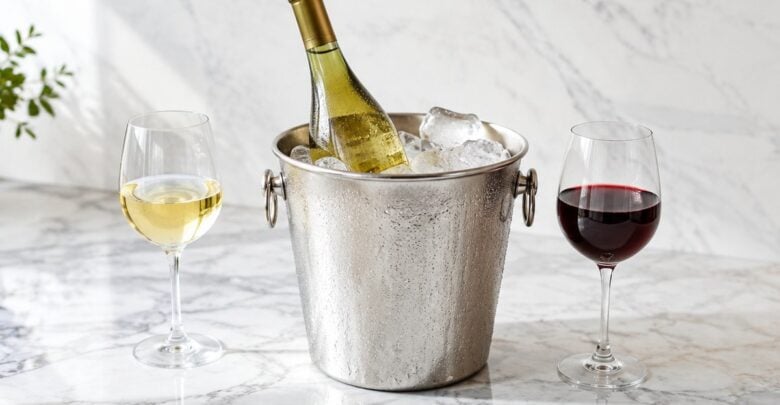
Need it fast? A bucket of ice and water chills a bottle much faster than a fridge, about 15 to 30 minutes for a white. A handful of salt in the water speeds it up further.
Watch it in the glass
Wine warms fast once poured, especially in a warm room or when you hold the bowl. Pour smaller servings of whites and sparkling, and leave the bottle in an ice bucket between pours. Hold glasses by the stem.
Reds warm too. If a red starts to taste hot by the second glass, give the bottle ten minutes in the ice bucket.
Temperature and your serving tools
How you serve affects temperature. A decanter left on a warm table lets wine climb a few degrees over a long dinner. Some tabletop dispensers include a stainless steel chilling ball that sits in the vessel to hold the wine cool. If you’re weighing which tools are worth owning, Unhyd’s guide to wine serving accessories covers aerators, decanters and dispensers and asks the practical questions: Does this bottle need air? Is there sediment? Will this setup make the gathering easier? Add temperature to that list.
Storage is a different number
Long-term storage for both reds and whites sits around 55°F with steady conditions. Serving temperature is about the moment you pour. Don’t confuse the two. A red stored at 55°F needs a few minutes on the counter before it shows its best.
Try a side-by-side
Pour two glasses of the same red, one at room temperature and one after 20 minutes in the fridge. Taste them together. You will notice the alcohol in the warm glass on the first sip, and the fruit in the cool one.
Getting the temperature right costs nothing and improves every bottle you open. Chill your reds a little, warm your whites a little, and taste the difference.