Severing the Artery: The Crackdown on the Kinahan’s European Narco-Routes
Coordinated law enforcement pressure on major shipping ports in Antwerp and Rotterdam is disrupting the cocaine corridors that helped make the KOCG one of Europe’s most feared criminal networks

WASHINGTON, DC
The Kinahan Organized Crime Group’s power was never built on violence alone, because the cartel’s real strength came from its ability to move cocaine, money, weapons, people, and influence through the same borderless commercial systems that connect legitimate global trade.
For years, European investigators have treated the ports of Antwerp and Rotterdam as critical pressure points in the cocaine economy, because enormous container volumes, South American shipping routes, port corruption, logistics complexity, and rapid onward transport made both hubs attractive to transnational criminal networks.
Now, as Irish, Belgian, Dutch, British, European, and U.S. authorities intensify pressure on the Kinahan network, the fight has shifted from gangland streets and Dubai safe houses to the container terminals where South American cocaine enters Europe at an industrial scale.
The cartel’s artery runs through the ports
The KOCG’s alleged business model depended on access to large maritime routes, because cocaine shipped from South America into Europe could be broken down, distributed, financed, and laundered through networks stretching across Ireland, Britain, Spain, the Netherlands, Belgium, and the Gulf.
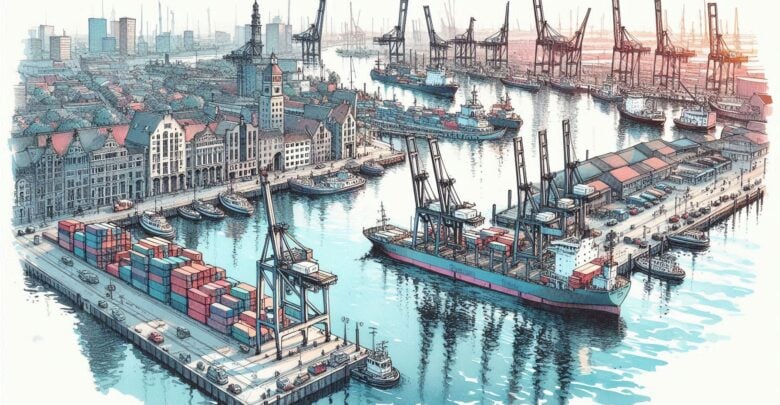
Antwerp and Rotterdam became especially important because they are not fringe smuggling points, but major commercial gateways where millions of containers move through legitimate supply chains that criminal networks try to exploit through corruption, concealment, and insider access.
The scale is staggering, because a single container shipment can carry enough cocaine to finance weapons, legal defenses, property portfolios, corrupted intermediaries, and new distribution cells long after street-level dealers are arrested.
That is why port enforcement has become one of the most important fronts in the Kinahan campaign, because cutting off leadership is only one part of the fight, while cutting off supply threatens the cartel’s economic bloodstream.
Antwerp has become Europe’s cocaine pressure chamber
Belgium’s port of Antwerp has become one of the clearest examples of how legal trade infrastructure can be exploited by criminal networks, with authorities repeatedly warning that cocaine smuggling has created corruption, intimidation, violence, and pressure on the justice system.
Recent reporting from Antwerp’s port frontline described how Belgian authorities have increased scanning and inspections after cocaine seizures hit record levels in 2023 before falling in later years as traffickers adapted their routes and methods.
That reduction in seizures should not be mistaken for the disappearance of the problem, because officials and analysts warn that criminal groups may respond to enforcement by fragmenting loads, rerouting through other regions, shifting ports, or hiding drugs in more sophisticated ways.
For networks such as the KOCG, the attraction of Antwerp has always been obvious because the port offers massive volume, complex logistics, inland distribution routes, and proximity to criminal markets across Western Europe.
Rotterdam remains the other giant gateway into Europe
Rotterdam is Europe’s largest port and a critical gateway for global trade, which makes it both a commercial powerhouse and a high-value target for criminal networks seeking to hide cocaine inside legitimate maritime traffic.
Dutch authorities have spent years confronting container corruption, port worker recruitment, encrypted communications, and organized extraction teams that attempt to remove drugs before legitimate cargo reaches its final destination.
Rotterdam’s importance is not only geographic, because the Netherlands has long functioned as a logistical and financial hub for European organized crime groups capable of distributing cocaine across the continent.
For the Kinahan network and allied criminal structures, pressure on Rotterdam means pressure on the inland routes, warehouse systems, trucking networks, brokers, and encrypted coordinators that convert imported cocaine into cash.
The port crackdown works because it attacks logistics, not just people
A cartel can often replace a courier, a driver, or a street dealer, but replacing trusted port access is far harder because criminal importation depends on insiders, timing, container references, extraction crews, corrupt contacts, and reliable transport windows.
When customs officers increase scanning, when police identify compromised workers, when prosecutors crack encrypted communications, and when shipping companies tighten access controls, the cost of moving cocaine through major ports rises dramatically.
That cost matters because smuggling networks depend on predictability, and every unpredictable inspection, seized container, arrested insider, or compromised communications channel turns a profitable route into a potential trap.
The goal is not only to seize drugs, but to create enough uncertainty that traffickers must use slower, riskier, more expensive, and less reliable routes that weaken their control over supply.
The Kinahan campaign now targets the cartel as a supply-chain business
The old image of organized crime focused on violent bosses and street enforcers, but the Kinahan investigation has shown that modern cartels operate more like illicit multinational supply-chain businesses with suppliers, logisticians, financiers, brokers, transporters, and reputation managers.
That is why investigators look beyond the kilogram and examine the system around it, including who arranged the shipment, who had the container reference, who paid the corrupt insider, who collected the load, and who laundered the profit.
The U.S. government formally escalated that understanding when the Treasury Department sanctioned the Kinahan Organized Crime Group as a significant transnational criminal organization involved in narcotics trafficking, money laundering, firearms trafficking, and violence.
The designation turned the cartel from a policing target into a compliance target, warning banks, companies, insurers, freight partners, and professional advisers that Kinahan-linked activity carried consequences across the legitimate economy.
The South American cocaine supply has made European ports more dangerous
Europe’s cocaine market has expanded because production and competition in Latin America have generated huge volumes of product seeking profitable routes into wealthy consumer markets across the European Union and the United Kingdom.
South American shipments hidden in fruit, coffee, timber, scrap, chemicals, refrigerated containers, and ordinary commercial cargo pose enormous challenges for customs authorities, who must protect trade without paralyzing the ports.
Criminal groups exploit that tension because they know ports cannot inspect every container manually, and they target the gaps between speed, volume, staffing, technology, and commercial pressure.
The Kinahan network’s alleged strength was its ability to connect Irish criminal demand with European logistics and global supply, making maritime pressure a direct attack on the structure that allowed the cartel to scale beyond Dublin.
Corruption remains the port system’s most dangerous weakness
The most valuable smuggling asset is often not a boat, warehouse, or truck, but a human insider with access to container systems, loading areas, terminal gates, customs information, or security schedules.
Port workers, drivers, clerks, contractors, security staff, freight employees, and logistics intermediaries can become targets for bribery, coercion, blackmail, or recruitment because their knowledge can be worth more than the cocaine shipment itself.
Authorities in Belgium and the Netherlands have repeatedly warned that organized crime pressure on port workers can become violent, with intimidation extending beyond the workplace and into families, neighborhoods, and local institutions.
For cartel leaders, corruption turns infrastructure into opportunity, but for investigators, every corrupted insider also becomes a possible witness, defendant, intelligence source, or link to higher-level organizers.
Encrypted messages transformed the crackdown
European policing changed dramatically after encrypted communication platforms were penetrated or seized, because messages that criminals believed were protected became evidence about shipments, ports, money, violence, and command structures.
Those messages helped investigators understand that the cocaine economy was not a series of isolated smuggling attempts, but a coordinated market involving logistics specialists, corrupt contacts, brokers, transport crews, and financiers spread across borders.
For the Kinahan network, encrypted evidence has been especially damaging because it can connect people who avoided appearing together in public records, showing how orders, money, routes, and violence allegedly moved through trusted intermediaries.
The port crackdown, therefore, depends on data as much as dogs, scanners, and search teams, because container smuggling is ultimately a communications problem before it becomes a customs seizure.
Seizures force traffickers into less reliable routes
When Antwerp and Rotterdam become more difficult, cocaine networks rarely stop immediately, because they experiment with smaller ports, West African routes, Mediterranean entry points, fishing vessels, container switches, sea drops, and inland recovery methods.
That adaptation does not mean enforcement failed, because forcing traffickers to change routes can expose new partners, increase costs, create mistakes, and break the reliability that large criminal organizations require.
For a cartel built on supply confidence, every delayed shipment, lost load, arrested crew, or compromised route weakens relationships with South American suppliers and European distributors expecting consistent delivery.
The Kinahan network’s alleged influence came as much from reliability as from fear, and port pressure attacks undermined that reliability by turning trusted corridors into unstable battlegrounds.
Money laundering becomes harder when supply routes break
Cocaine profits do not become power until they are moved, stored, invested, and disguised, which means every disrupted shipment also disrupts the laundering chain that depends on predictable cash flow.
When ports are under pressure, downstream financial activity changes: fewer successful loads mean fewer payments to couriers, less funding for legal defenses, fewer investments in front companies, and less liquidity for associates expecting support.
Amicus International Consulting’s work in international asset protection highlights the legal distinction between documented wealth preservation and criminal concealment, because legitimate structures must be explainable, whereas cartel laundering depends on concealing illegal origin.
The Kinahan case shows why that distinction matters, because investigators follow not only the drugs entering ports but also the money leaving the ports through properties, companies, luxury assets, professional facilitators, and foreign accounts.
The crackdown also targets reputation and business camouflage
The Kinahan network allegedly benefited from the ability to appear legitimate in select circles, including boxing, property, hospitality, consulting, and international business, where wealth could be attributed to entrepreneurship rather than trafficking.
Port seizures and sanctions undermine that camouflage because every major cocaine case renews attention on the source of wealth, the role of intermediaries, and the business relationships that allowed criminal money to look respectable.
Once the supply route is publicly associated with organized crime, counterparties begin asking harder questions about sponsors, promoters, companies, investors, and associates who may once have been treated as merely controversial.
The reputational effect matters because organized crime thrives when commercial partners remain uncertain, but it struggles when banks, insurers, venues, sponsors, and advisers decide the relationship is no longer worth the risk.
Legal identity protection is not the same as hiding from enforcement
The Kinahan case also shows why lawful identity planning must be separated from cartel evasion, because criminal networks may use aliases, false documents, proxy ownership, and shell companies to keep leaders away from supply routes and money flows.
Amicus International Consulting’s work on legal identity solutions belongs to the opposite side of that line, where identity change must be grounded in government recognition, documented continuity, legitimate purpose, and compliance.
That distinction is important because lawful privacy reduces unnecessary exposure, while criminal concealment deceives banks, courts, border authorities, regulators, and law enforcement agencies that are entitled to accurate information.
For traffickers, identity manipulation can delay accountability, but port records, travel histories, banking files, biometrics, shipping documents, and human witnesses can eventually connect the hidden principal to the visible route.
The ports have become a test of European sovereignty
The fight over Antwerp and Rotterdam is now about more than cocaine because organized crime pressure on ports can corrupt workers, intimidate judges, threaten politicians, endanger families, and challenge public confidence in the rule of law.
When a port becomes a cartel gateway, the damage spreads outward into housing markets, youth recruitment, violence, money laundering, professional corruption, and political pressure for stronger enforcement.
This is why European authorities increasingly treat maritime cocaine trafficking as a national security and governance problem, not merely a customs issue measured by seizure totals.
The Kinahan campaign fits that larger pattern because the cartel’s alleged reach turned Irish organized crime into a European and transatlantic enforcement issue requiring intelligence sharing across multiple legal systems.
The KOCG’s old advantages are becoming vulnerabilities
The Kinahan network’s alleged advantages were mobility, access to supply, financial reach, fear, and international distance, but each advantage has become more fragile as enforcement connects ports, banks, sanctions, extradition, and intelligence systems.
Mobility creates travel records, supply access creates port evidence, financial reach creates laundering trails, fear creates potential witnesses, and distance creates diplomatic pressure once host countries decide cooperation is more valuable than silence.
That is the central reversal now visible in the crackdown, because the same corridors that made the cartel powerful are becoming the corridors investigators use to map its people, money, and logistics.
For a network built on moving cocaine through commercial arteries, the greatest danger is not one seizure, but a sustained campaign that makes every artery narrower, more expensive, and more exposed.
The artery is not severed in one operation
No serious investigator believes that cocaine trafficking into Europe will end because one port improves scanning, one cartel leader is arrested, or one encrypted network is compromised.
The objective is cumulative pressure, where every seizure, arrest, sanctions filing, customs upgrade, extradition request, and financial investigation removes another piece of the system that allowed the KOCG to operate at scale.
The Kinahan network became dangerous because it understood logistics, but the international response has become dangerous to the cartel because law enforcement now understands logistics as well.
Antwerp and Rotterdam remain contested gateways, yet the pressure on those ports has changed the calculation for traffickers who once treated container systems as reliable arteries into Europe.
For the Kinahans, the crackdown is more than a customs problem, because when the ports tighten, the money slows, the distributors panic, the insiders talk, and the empire begins losing the supply lines that kept it alive.