Passport Security Features Evolved from Simple Watermarks to Multi-Layered Defense Systems
The history of passport protection shows how security printing moved from basic paper marks to advanced anti-fraud technology.

WASHINGTON, DC
The modern passport is easy to underestimate.
It fits in one hand. It looks familiar. Most travelers think of it as a booklet with a photo, a name, a number, and a cover that gets worn at the edges. But a passport is not just a travel document. It is a security product, and its evolution tells the story of how governments learned, decade by decade, that identity fraud could not be stopped by appearance alone.
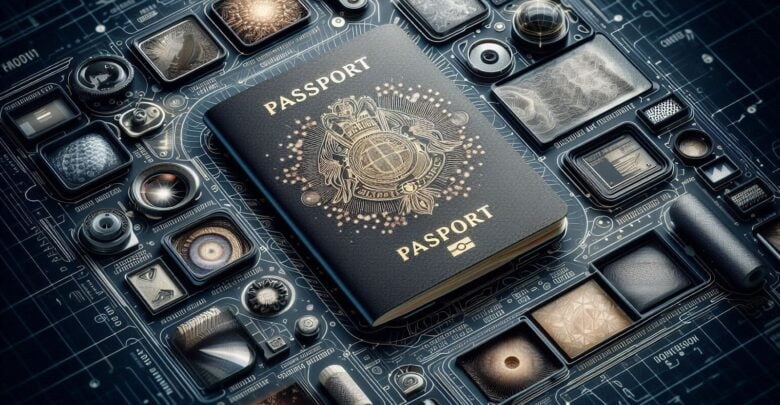
What began with relatively basic paper safeguards such as watermarks and official seals has grown into a layered defense system built to survive light checks, angle checks, ultraviolet checks, machine reading, and biometric comparison. In 2026, the secure passport is less a booklet than a controlled identity object, designed to keep proving itself as scrutiny increases.
That evolution matters because counterfeiters evolved, too. As printing became cheaper, imaging became sharper, and fraud networks became more sophisticated, governments had to move beyond single-feature protection. A passport could no longer rely on a mark of authenticity that sat quietly on the page, hoping no one would copy it. It required multiple overlapping methods to detect forgery, tampering, and substitution.
It started with paper because paper was the first battlefield.
Early passport protection depended heavily on the material itself. Security began with the page, not the chip, because there was no chip. Watermarks, special paper stock, seals, and controlled printing gave officials early ways to distinguish genuine documents from imitations. Those features mattered because they were difficult to reproduce with ordinary tools and, just as important, easy for trained officials to verify in simple conditions.
That basic logic has never disappeared. It has only become more sophisticated.
A watermark remains powerful for the same reason it was powerful generations ago. It is part of the material, not just decoration on top of it. It forces the fraudster to imitate construction, not merely graphics. Once governments realized that the document itself had to resist duplication at a material level, passport security started moving toward the layered model that defines it today.
That is still visible in official guidance on the Next Generation Passport, where the U.S. State Department describes a modern passport built with a polycarbonate data page, laser engraving, and updated physical protections designed to make tampering and counterfeiting harder.
Printing became security, not just presentation.
As passports developed, printing stopped being just a way to display information and became part of the defense system itself.
Fine-line patterns, intaglio printing, microprinting, and complex page designs changed the role of the printed page. It was no longer enough for the passport to carry data. The page had to become difficult to reproduce accurately. Raised printing made touch part of inspection. Microprinting made magnification part of inspection. Background designs made copying riskier because fine detail would blur, thicken, or break apart when counterfeiters relied on ordinary reproduction methods.
This was one of the biggest turning points in passport protection. Governments recognized that the strongest anti-fraud features were often the ones that seemed secondary to the public. The average traveler might never notice the tiny text hidden in a borderline or the tactile difference in printed ink. Border officers would.
That shift changed the contest. A fake might still imitate the broad look of a passport. It became much harder to imitate the precision of one.
The visual page began to perform under challenge.
Later generations of passport protection pushed security further by making the page behave differently depending on how it was handled.
This is where latent images, holographic elements, optically variable devices, and fluorescent inks transformed passport security. Instead of the document being judged only in normal light and from a flat viewing angle, it could now be challenged under movement, light, and specialized tools. Tilt the page and a hidden image appears. Shine ultraviolet light, and a second layer of the design reveals itself. Examine the portrait area and a security overlay shift or changes.
That mattered because counterfeiters often work from still references. They copy the document as an image. Modern passport security turns the page into a behavior test. The passport must not only look right. It must respond correctly.
That is one reason physical and optical protections still sit at the core of the modern document. In its overview of the high-tech features that make passports secure, Amicus International Consulting describes modern passport protection as a combination of visible, hidden, and digital defenses that work together across document authenticity, identity verification, and data integrity.
That description captures the history well. Passport security evolved not by abandoning old protections, but by stacking new ones on top of them.
The data page became a fortress.
As fraud became more targeted, governments also learned that the most vulnerable part of a passport was often the identity page itself.
Older documents were more exposed to photo substitution, page lifting, laminate interference, and other forms of tampering. That forced another leap in design. Newer passports increasingly moved to harder substrates, integrated portrait elements, and personalization methods that made the core identity record much more difficult to manipulate without visible evidence.
That is why the modern passport data page matters so much. It is no longer just the place where the holder’s identity is printed. It is the place where document integrity is concentrated. A criminal trying to alter a genuine passport now has to fight not only the visible layout of the page, but also the material and personalization method that locks the identity into it.
This was another major stage in the evolution from simple paper protection to multi-layered defense. Governments stopped thinking only about stopping crude forgeries and started thinking more aggressively about stopping subtle tampering inside genuine documents.
The machine started checking what the eye could miss.
Once machine-readable zones and electronic components became standard, the passport changed again.
The document was no longer judged only by how it looked and felt. It also had to speak the right technical language to scanners and verification systems. That made forgery much harder. A fake passport now needed more than convincing artwork. It needed a consistent data structure, machine-readable accuracy, and, in many cases, chip-based information that matched the printed record.
This was the point where passport security truly became multi-layered in the modern sense. Physical protections still mattered. Printing protections still mattered. Optical protection still mattered. But now the document also had to survive machine logic.
That meant a fraudster was no longer attacking one kind of inspection. They were attacking several at once.
Biometric borders raised the stakes again.
The latest phase in passport protection is not really about replacing the booklet. It is about forcing the booklet to work inside a wider identity-verification system.
A recent Reuters report on expanded facial recognition at U.S. borders showed how border systems are being tied more closely to biometric comparison in order to detect visa overstays and passport fraud. That means the modern passport is no longer simply asked whether it is genuine. It is also asked whether it belongs to the person presenting it.
This development completes the logic that had been building for decades.
First, the paper had to be secure.
Then the printing had to be secure.
Then the page had to respond correctly under light and angle.
Then the data had to survive machine reading.
Now the person and the document must match inside the same enforcement system.
That is what a multi-layered defense system really means in 2026. It means the passport is no longer protected by one line of defense that fails all at once. It is protected by several, each designed to catch a different kind of fraud.
Old features did not disappear; they became part of a larger system.
One of the most important things about passport security history is that newer protections did not erase older ones.
Watermarks still matter. Specialized paper still matters. Raised printing still matters. Microprinting still matters. Latent images and fluorescent ink still matter. The chip did not make those features obsolete. Biometrics did not make them obsolete. Instead, modern passport design depends on all of them reinforcing one another.
That is why a secure passport remains difficult to fake well. A criminal may imitate one layer with some success. They may even imitate two. But the document is designed to keep asking questions.
Does the paper behave correctly?
Do the hidden details hold up?
Does the image respond to light the right way?
Does the machine-readable data scan properly?
Does the chip align with the printed page?
Does the face match the person holding it?
A fake may survive the first question. It usually struggles as the list continues.
The real lesson of passport history is that fraud forced complexity.
Passport security became more advanced because fraud forced it to.
Every improvement in printing, reproduction, and document manipulation pushed governments to respond with more layered protections. What began as simple paper marks became a system of paper security, print security, optical security, digital verification, and biometric comparison. The evolution was not aesthetic. It was defensive.
That is why the history of passport protection matters now. It explains why the modern passport feels overengineered compared with the documents that came before it. It is overengineered on purpose.
The passport had to become harder to copy, harder to alter, harder to substitute, and harder to separate from the person it belongs to. That is the story of its evolution.
And it is why, even in 2026, the strongest travel documents still begin with the oldest lesson in identity security: trust the document only when it keeps proving itself.