


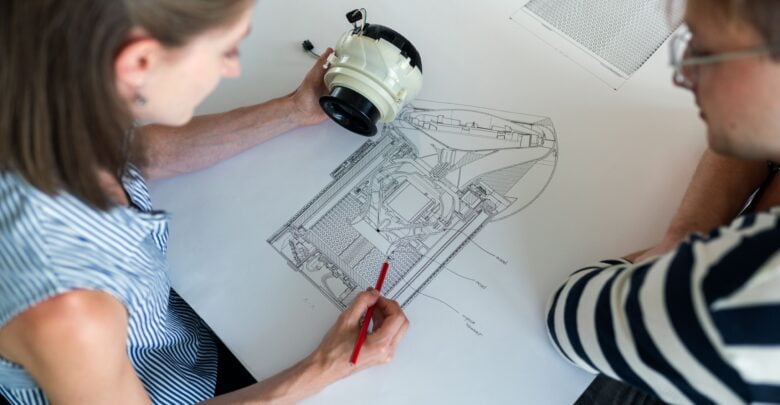

A utility patent protects how an invention works, its function, its method, or its useful structure, rather than only how it looks. It is the most common kind of patent the U.S. Patent and Trademark Office grants, and it is what most people mean when they say an idea is patented. A utility patent gives the holder the right to stop others from making, using, or selling the claimed invention for a fixed term, in exchange for describing the invention publicly.
The short version
If your invention does something, a machine, a process, a composition, an improvement to any of those, a utility patent is usually the right tool. If the novelty is purely the shape or ornamental appearance, that is a design patent, a separate category. Many products end up protected by both, but the two cover different things.
What it protects
The claims are the patent
A utility patent is not protected by its title or its drawings. It is protected by its claims, the numbered sentences at the end that define the boundaries of the invention in precise language. Everything else in the document supports the claims. Two patents on similar products can have very different real-world strength depending on how their claims are written, which is why claim drafting is skilled work.
The right to exclude
A patent does not give the holder a right to build the product. It gives the right to stop others from making, using, or selling what the claims cover. That distinction matters: an inventor can hold a patent and still need clearance to build, if the product also reads on someone else’s earlier patent.
How long it lasts
A U.S. utility patent generally lasts 20 years from the earliest non-provisional filing date, according to the USPTO (uspto.gov). It does not renew. To keep it in force, the holder pays maintenance fees at three points, roughly 3.5, 7.5, and 11.5 years after the patent grants. Miss those and the patent lapses early, releasing the invention to the public. A published Enhance Innovations analysis of patent maintenance fees walks through how those payments stack up across the full 20-year life.
What it costs to get there
Filing a utility patent involves USPTO fees that vary by entity size, plus the cost of preparing the application itself. The USPTO publishes its current fee schedule, and the U.S. Small Business Administration (sba.gov) offers general guidance for inventors running a product business. Many inventors start with a provisional application, which holds a filing date for 12 months before the full utility application is due.
Utility versus design, and why it matters
The split confuses many first-time inventors. A utility patent covers function: what the invention does and how. A design patent covers ornamental appearance: how it looks. A new type of folding mechanism is utility. The distinctive curve of a bottle is design. The two have different terms, different costs, and different strengths. A product can carry both, with the utility patent guarding the working principle and the design patent guarding the look. Choosing the wrong category, or assuming one covers the other, leaves gaps a competitor can walk through. The right answer depends entirely on where the novelty actually sits.
What a utility patent is worth
The practical value of a utility patent comes down to its claims and the field it sits in. A narrow claim that a competitor can design around is worth far less than a broad one that covers the core idea. This is why an inventor cannot judge a patent by its existence alone. A granted patent with weak claims can give a false sense of security. The strength lives in the wording, in how well the claims map to the genuinely new contribution, and in how hard it would be to build a competing product that stays outside those boundaries.
Where it fits in the path
A utility patent protects the invention, but it does not bring the product to market. That takes design, engineering, and a way to reach manufacturers or licensees. Enhance Innovations, a product development firm founded in 2010 and based in Champlin, Minnesota, works virtual-first and keeps those functions together, so the protected invention has renderings, a CAD model, and pitch materials ready when the patent work is underway. The patent is the legal foundation; the rest is what turns it into a product a company can evaluate. None of this is legal advice, and claim strategy is worth confirming with a qualified patent attorney.
