

New EU Visa-Free Suspension Rules Raise Stakes for High-Risk Passports and CBI Holders

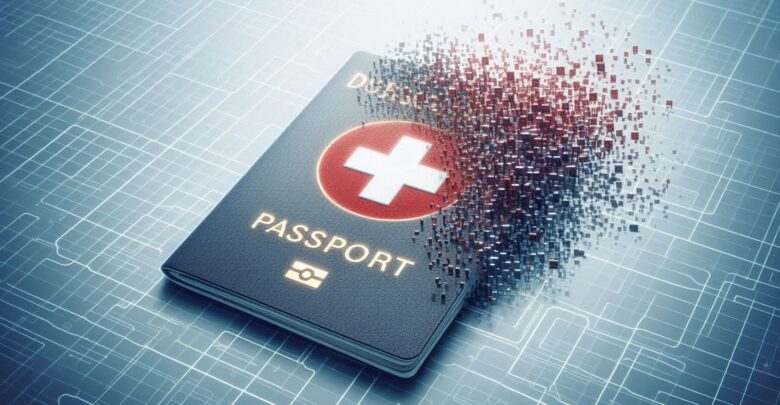
Vancouver, Canada — The European Union has enacted sweeping reforms to its visa-free travel suspension mechanism, introducing a faster, more targeted process to revoke or limit the privileges of specific countries and categories of travelers.
The updated rules, passed in early 2025, aim to tighten control over access to the Schengen area, particularly in response to security concerns, irregular migration flows, and weaknesses in passport issuance practices.
For holders of so-called “high-risk” passports and citizens who obtained nationality through Citizenship-by-Investment (CBI) schemes, these changes raise the stakes significantly and alter the landscape of global mobility planning.
The new framework expands the EU’s capacity to respond decisively when partner countries fail to meet agreed standards. Under the revised system, suspensions can be implemented in weeks, not months or years.
Triggers for suspension include sudden increases in irregular migration from a country, surges in unfounded asylum applications, documented security threats, lack of cooperation in readmitting deported nationals, and evidence that passport issuance systems, especially economic citizenship programs, are vulnerable to abuse.
Previously, the EU’s suspension mechanism operated more like a diplomatic process than a security response, often delayed by political negotiations and administrative procedures. Now, the Commission can recommend action based on data trends and intelligence assessments, and member states can vote to enact temporary or partial suspensions while longer-term decisions are evaluated. This introduces a layer of agility that has been missing from the bloc’s border security posture.
For CBI jurisdictions, many of which are small island nations in the Caribbean or Pacific, as well as a few in Europe, the changes have direct consequences. EU officials have long expressed unease about investor citizenship schemes, particularly those with short residency requirements and expedited processing times. Concerns center on the adequacy of due diligence in vetting applicants, especially those from conflict zones, sanctioned economies, or jurisdictions with weak identity verification systems.
When a CBI country’s visa-free arrangement with the EU is suspended, the impact on its passport holders is immediate. Leisure and business travelers accustomed to booking last-minute trips face the reality of needing a Schengen visa, which involves biometrics, proof of financial means, confirmed travel itineraries, and processing times that can stretch into weeks.
For frequent travelers, the disruption is not just logistical but reputational; missed meetings, delayed shipments, and altered itineraries can ripple through professional networks and business operations.
Consider a West African investor who acquires citizenship in a Caribbean CBI country to gain visa-free access to Europe’s luxury property market. Without warning, his adopted country faces suspension due to EU concerns over passport security. His planned property inspection tour in Spain is now contingent on securing a short-stay visa, an application process complicated by his tight schedule and the fact that local consulates are overbooked during the summer season.
In another case, a family of four with CBI in a Balkan state used their new passports to enroll their children in an international school in Austria. A targeted suspension against recently naturalized citizens from their program would not only make term-time travel to and from Austria harder but also jeopardize parental ability to attend school events or respond to emergencies on short notice.
The new rules also introduce the possibility of selective suspensions. Instead of revoking visa-free status for all citizens of a country, the EU can now impose restrictions on specific groups, such as those who obtained nationality in the last five years through investment schemes. This targeted approach allows the EU to maintain relations with a partner country while neutralizing perceived vulnerabilities in its passport issuance practices. For travelers, this creates an unpredictable risk environment where eligibility can shift based on personal history, even if the country as a whole retains visa-free access.

High-risk passports, whether or not linked to CBI, are equally affected. The EU has defined these as travel documents issued by countries with unstable governance, limited law enforcement cooperation, or inadequate border control infrastructure. Holders of such passports face heightened scrutiny even before a formal suspension is enacted. Airline systems may flag them for additional document checks, and border officials may subject them to more detailed questioning.
The connection between the revised suspension mechanism and the forthcoming European Travel Information and Authorisation System (ETIAS) is significant.
From late 2026, all visa-exempt travelers will require an ETIAS authorization before entering the Schengen area. However, once a suspension is triggered, ETIAS becomes irrelevant for the affected country; citizens revert to the whole Schengen visa process, bypassing the faster, automated authorization entirely. This means that planning based solely on ETIAS eligibility is insufficient for a mobility strategy; passport holders must also monitor the political stability of their country’s visa-free agreements.
Jurisdictional analysis reveals that these new rules are not uniform in their impact. Countries with longstanding visa-free agreements grounded in deep political, economic, and cultural ties, such as Canada, Japan, or Australia, are far less likely to face suspension, barring extraordinary circumstances. By contrast, smaller or newer visa-free partners, especially those outside NATO or EU association frameworks, are more vulnerable to changes in perception or policy.
For mobility planners, family offices, and legal advisors, the takeaways are clear.
First, diversify citizenship holdings to include at least one passport from a jurisdiction with a proven track record of stability in EU relations.
Second, secure alternative access to the Schengen area through long-term residency permits, such as those offered under Portugal’s Golden Visa program, Greece’s residency-by-investment route, or Italy’s elective residency visa.
Third, establish monitoring systems for early-warning indicators, including EU parliamentary debates, European Commission progress reports, and shifts in bilateral relations between a CBI state and EU members.
The privacy dimension should not be underestimated. Visa applications require applicants to disclose detailed personal, financial, and travel information, much of which is stored in centralized databases accessible to multiple EU agencies.
For individuals who deliberately maintain a low digital footprint, the difference between visa-free entry and visa-required travel can be the difference between anonymity and comprehensive personal profiling.
Travel agencies and airlines are also preparing for operational changes. Some have begun integrating “passport stability scores” into booking platforms, alerting clients when a chosen travel document may be at risk of losing visa-free privileges. In the event of a suspension, carriers will be legally obligated to verify that passengers have the correct visa before boarding flights to the EU. This requirement could lead to denied boarding for those who fail to adapt quickly.
Geopolitical dynamics add another layer of unpredictability. The suspension mechanism can also serve as a diplomatic lever, encouraging partner countries to adopt policy reforms in areas ranging from migration control to anti-corruption measures. In this way, visa-free agreements become not just a matter of travel convenience but a tool of foreign policy. Countries facing suspension pressure may respond by tightening CBI program rules, increasing investment thresholds, or halting specific citizenship routes entirely.
For individual travelers, the risk management response involves three layers:
- Document Portfolio Review — Maintain valid secondary travel documents through ancestry, naturalization, or investment to hedge against sudden loss of access.
- Itinerary Flexibility — Build redundancy into travel plans by identifying non-Schengen alternatives for meetings, events, or vacations.
- Real-Time Monitoring — Subscribe to official EU press releases, trusted mobility advisories, and airline compliance alerts to detect policy shifts as they occur.
The overarching message is that visa-free travel to the EU is no longer a static benefit; it is a privilege subject to dynamic political, economic, and security considerations. High-risk passport holders and CBI citizens must adapt by treating mobility as an actively managed asset, one that requires ongoing vigilance and strategic foresight.
Contact Information
Phone: +1 (604) 200-5402
Email: info@amicusint.ca
Website: www.amicusint.ca


