8,000 Miles, Two Continents, One Network: Solideon’s Role in the Navy’s Trident Warrior Exercise

When a ship or aircraft needs a part far from home, the Navy has two choices: carry spares for everything, or find a way to make what it needs nearby. Trident Warrior, the Navy’s flagship fleet experimentation exercise, is where ideas like the second option get tested at sea.
In 2025 that testing included manufacturing. Solideon, a Los Angeles robotics manufacturer, joined Trident Warrior 25 alongside the Naval Postgraduate School’s Consortium for Advanced Manufacturing Research and Education (CAMRE), FLEETWERX and more than two dozen partners from government, the military, academia and industry.
A distributed factory
The centerpiece was the Joint Advanced Manufacturing Cell, a mobile, forward-deployed team producing mission-critical parts using 3D printing, machining and augmented reality. The demonstration connected assets across the Pacific region, spanning more than 8,000 miles and two continents.
Solideon described it as the largest distributed manufacturing demonstration in the history of the Department of Defense. The stated goals were faster repairs, less downtime and the ability to sustain forces in contested environments where supply lines cannot be counted on.
Where Solideon fits
Solideon builds exactly the kind of system the exercise was testing. It combines standard industrial robot arms with proprietary software so that a compact cell can print, machine, assemble and inspect metal parts, run by personnel who are not robotics specialists.
The company’s founder and CEO, Oluseun Taiwo, has said Solideon’s near-term focus is helping the Navy with the cost and availability of its most expensive assets.
“The Navy is having the issue with very expensive assets.”
What came next
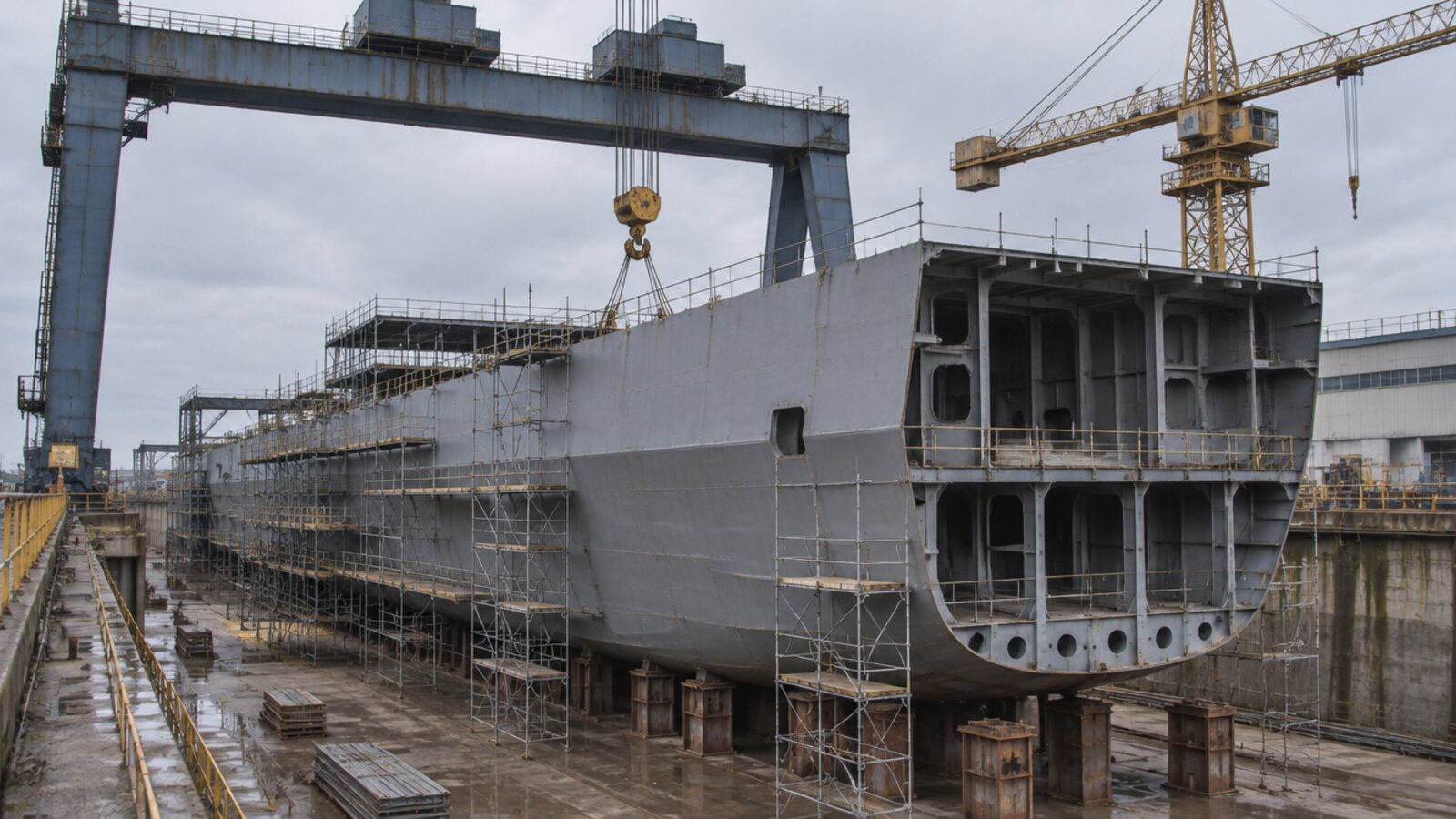
Trident Warrior was part of a busy year. Solideon was already working under a $1.25 million AFWERX contract with the U.S. Air Force for a single-pallet manufacturing cell. A month after the exercise, it launched Solideon Defense in Norfolk, Virginia, with shipbuilder Fairlead, to produce submarine hull sections and large defense hardware.
Distributed manufacturing is moving from concept to practice across the services. Exercises like Trident Warrior show what it takes to connect machines, people and designs over thousands of miles, and companies like Solideon are building the hardware and software that make the network possible.
The idea is simple even if the logistics are not. The part should be made where it is needed, not where the factory happens to be.