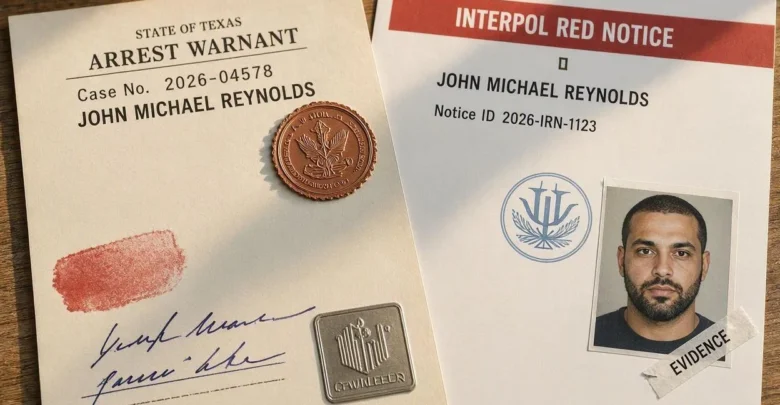
A requesting country begins with its own arrest warrant or court order, after which INTERPOL may review and circulate identifying information that helps police agencies elsewhere locate the person and consider provisional detention under their national laws.
WASHINGTON, DC, September 25, 2026: An arrest warrant issued by a national court normally operates through that country’s own legal system, but an INTERPOL Red Notice can distribute the resulting wanted-person information across an international police network reaching jurisdictions far beyond the original courthouse.
The process does not turn the national warrant into a universally enforceable global arrest order, because INTERPOL facilitates international cooperation while each member country retains authority to decide whether its laws permit identification, surveillance, immigration action, provisional detention, or extradition.
A Red Notice instead functions as a structured request telling foreign law-enforcement authorities that an identified person is wanted for prosecution or to serve a sentence and that the requesting country seeks location and possible provisional arrest pending formal surrender proceedings.
This legal architecture explains how a case that begins with one prosecutor, investigator, or judge can gain international reach without transferring the prosecution to INTERPOL or eliminating the independent safeguards each country applies when it encounters the wanted person.
The Process Begins Inside One National Legal System
Before international circulation is requested, investigators and prosecutors ordinarily develop a domestic criminal case according to their own laws, present allegations or evidence to a competent authority, and obtain an arrest warrant, judicial decision, or enforceable conviction requiring the person’s custody.
The precise procedure varies across legal systems: some warrants follow judicial findings based on sworn evidence, others arise after formal charges, and post-conviction requests may rely on judgments ordering imprisonment after trial or lawful proceedings conducted without the defendant’s presence.
That domestic warrant remains the legal foundation belonging to the requesting country, whose police, prosecutors, and courts continue controlling the underlying investigation, criminal accusations, evidentiary record, trial, conviction, sentence, and any available national appeals.
INTERPOL does not create the original criminal charge, determine probable cause under the requesting country’s law, conduct the prosecution, or substitute its judgment for the court that issued the national warrant or custodial order.
Crossing a Border Creates an Enforcement Problem
A national warrant may allow police to arrest the wanted person inside the issuing country, but officers generally cannot enter another sovereign state and exercise their domestic powers without permission, cooperation, or legal authority granted by that foreign jurisdiction.
When investigators believe the person has fled, resides abroad, travels internationally, uses multiple identities, or may cross borders unexpectedly, they need a lawful way to alert foreign authorities and request assistance before a fleeting location opportunity disappears.
Traditional bilateral communication can remain important, especially when officials know the person’s exact location, but an international alert can distribute identifying and case information more broadly to police agencies that may encounter the person during travel or routine enforcement activity.
The Red Notice system provides that communication structure, allowing the local warrant to support an international request without pretending that one country’s police authority automatically follows the person into every other sovereign nation.
The National Central Bureau Provides the Gateway
Member countries ordinarily communicate with INTERPOL through their National Central Bureaus, which connect domestic law-enforcement agencies with the organization’s General Secretariat and with authorized police counterparts operating across the secure international network worldwide.
Investigators or prosecutors seeking a Red Notice generally provide their national channel with sufficient identity, warrant, offense, and case information to meet domestic requirements before transmission for INTERPOL consideration.
The requesting authorities must identify the person accurately enough for foreign police to distinguish that individual from unrelated travelers, particularly when common names, inconsistent transliterations, multiple citizenships, aliases, or incomplete biographical information create substantial identification risks.
The National Central Bureau is not merely forwarding publicity material, because the requested circulation enters a sensitive law-enforcement environment that can produce questioning, border interruption, immigration consequences, asset inquiries, reputational harm, and potential provisional arrest.
The Request Requires Identity and Case Information
A proposed notice can contain the person’s name, aliases, date and place of birth, nationality, sex, physical description, photographs, fingerprints, identity-document information, known languages, and other details that help police establish whether an encountered individual matches the subject.
Case information may describe the alleged offense, maximum or imposed penalty, relevant warrant or court order, issuing authority, procedural status, and concise factual summary explaining the conduct for which the person is wanted by the requesting jurisdiction.
Accurate data is critical because a global alert based upon weak identifiers can affect an innocent person who shares similar biographical information, while incomplete legal material can prevent INTERPOL or receiving countries from understanding whether the request satisfies applicable requirements.
The requesting country remains responsible for the quality, lawfulness, and continuing accuracy of information it supplies, including updates when a warrant is withdrawn, charges change, a sentence is completed, or a court decision alters the basis for international circulation.
INTERPOL Reviews the Request Before Publication
A national warrant does not automatically produce a Red Notice, because INTERPOL reviews proposed notices for compliance with its Constitution, data-processing rules, minimum information requirements, and restrictions protecting the integrity and neutrality of its police-cooperation system.
The organization’s official notice compliance and review process explains that it returns denied requests with reasons and may ask recipient countries to update national databases when previously circulated information is later found noncompliant.
The review can examine whether the request concerns an ordinary-law crime of sufficient seriousness, contains adequate judicial and identifying information, respects data-quality requirements, and avoids prohibited intervention in matters of a predominantly political, military, religious, or racial character.
Additional concerns can include refugee protections, human-rights implications, private disputes, administrative matters, conflicting international obligations, or the risk that international police systems are being used for improper purposes inconsistent with INTERPOL’s governing framework.
A Local Warrant Can Fail the International Review
A valid domestic warrant answers a question under the requesting country’s legal system, but it does not conclusively establish that the proposed international circulation complies with the separate standards governing INTERPOL notices and police data.
This distinction matters in politically sensitive cases because conduct one government treats as criminal may be closely connected to opposition activity, constitutional conflict, military affairs, religious disputes, racial persecution, refugee status, or another protected category.
In April 2025, Reuters reported that INTERPOL declined a Bosnian request concerning Milorad Dodik after authorities had sought international circulation connected with a national case carrying significant continuing domestic political and constitutional controversy.
That example does not decide how other requests should be treated, but it shows that a domestic court process and warrant can exist while INTERPOL independently determines that its international system should not circulate the proposed Red Notice.
Approval Turns the Request Into an International Police Alert
When a request satisfies applicable requirements, INTERPOL can publish the Red Notice within its systems, making identifying and wanted-person information available through authorized police channels used by member countries and appropriately connected national authorities.
The resulting alert tells police that another jurisdiction wants the individual under an identified warrant or judicial order and requests location and provisional arrest pending extradition, surrender, or a legally comparable process.
Most notices remain restricted to law-enforcement access, while selected extracts may appear publicly when publication is authorized and considered helpful for locating the person or obtaining information from communities, witnesses, victims, or other members of the public.
The notice’s international reach can therefore be extensive even when no public webpage appears, because border police, national investigators, immigration services, specialized units, or other authorized agencies may encounter the data through official systems unavailable to private users.
The Notice Does Not Export the Issuing Country’s Police Powers
INTERPOL has no multinational arrest force that travels between countries to seize wanted people, and its General Secretariat does not command national police officers to execute foreign warrants as though jurisdictional borders did not exist.
Every receiving country determines what legal significance to assign the notice, whether additional evidence or diplomatic communication is required, which agency reviews a match, and whether provisional arrest can occur under national law and an applicable extradition treaty.
One jurisdiction may treat the notice and supporting warrant as sufficient for urgent detention, another may require a domestic judicial warrant, and another may only notify the requesting country while awaiting a formal provisional-arrest application through designated channels.
The Red Notice consequently globalizes awareness and cooperation rather than legal authority, placing the local case before foreign police while preserving national sovereignty over arrests, detention conditions, immigration decisions, judicial proceedings, and eventual surrender.
Passport Checks Can Reveal the Alert
Border systems may compare a traveler’s name, date of birth, nationality, passport number, facial image, fingerprints, or other identifiers with domestic and international police information, creating a potential match during departure, transit, or arrival.
The Red Notice is not necessarily stored inside the passport chip, because the passport generally provides identity and document information that an external border system can use to search or compare records held in separate law-enforcement databases.
When a possible match appears, officers may direct the traveler to secondary inspection, examine documents, ask questions, compare photographs or biometrics, contact a National Central Bureau, and determine whether the notice remains active and applies to the person present.
A database response begins an operational and legal assessment rather than establishing guilt or arrest authority, since officers must resolve identity and consult applicable national procedures before imposing extended detention upon the traveler.
Police Encounters Away From Borders Can Also Produce Matches
International circulation can become relevant during traffic stops, hotel incidents, licensing procedures, visa appointments, criminal investigations, employment-related security checks, identity verification, or other encounters where authorized officials query connected national or international databases.
A local officer receiving an alert may contact a central police unit or national INTERPOL bureau for guidance, allowing specialists to confirm the notice, communicate with the requesting country, and decide whether to begin domestic arrest procedures.
The person may have lived openly for years without arrest because authorities lacked accurate location information, did not check identity, required additional documents, or operated in a country whose laws did not permit detention solely on the notice.
Later travel or routine police contact can change that situation quickly when identity, technical access, supporting documentation, local law, and operational timing align within a jurisdiction prepared to consider the requested provisional action.
Identification Must Be Confirmed Before Prolonged Action
Names alone are unreliable because unrelated people can share them, alphabets produce multiple transliterations, dates may be recorded differently, documents can be stolen, and aliases can create confusing links between genuine identities and inaccurate police information.
Authorities may therefore compare photographs, fingerprints, birth records, nationality, passport history, physical characteristics, family information, visa files, previous border encounters, and other reliable identifiers before deciding that the person encountered is the subject of the notice.
A traveler disputing the match should provide accurate information and seek qualified legal assistance without using false documents or misleading explanations, because deceptive conduct can create new criminal or immigration exposure independent of the original international alert.
Where mistaken identity persists, counsel may present certified records and pursue formal correction procedures so the same inaccurate match does not repeatedly generate questioning, travel disruption, immigration consequences, or detention across several countries.
Provisional Arrest Creates Time for Extradition Papers
If the receiving country’s law permits action, authorities may provisionally arrest the person to prevent departure while the requesting government assembles, authenticates, translates, and transmits a complete extradition request within the deadline established by treaty or statute.
This urgent detention does not determine guilt or guarantee surrender, because it temporarily preserves jurisdiction while courts, prosecutors, central authorities, and executive officials examine whether the foreign request meets the receiving country’s legal requirements.
An explanation of international extradition procedures shows how the requesting government may need to provide warrants, charging or conviction records, identity evidence, statutory provisions, factual materials, translations, certifications, and applicable assurances through formal diplomatic channels.
Failure to supply sufficient documents within the governing period may require release from provisional custody, although release does not necessarily cancel the Red Notice, invalidate the domestic warrant, or prevent a renewed request where national law permits.
Extradition Remains a Separate Legal Proceeding
Once the complete request arrives, courts or designated authorities may examine treaty coverage, identity, dual criminality, evidentiary sufficiency, limitation periods, nationality restrictions, specialty protections, previous judgments, political-offense rules, procedural fairness, and applicable human-rights concerns.
Legal systems allocate responsibility differently because some provide extensive judicial examination, others limit courts to specified statutory issues, and many require a later ministerial or executive decision after judicial certification of extradition eligibility.
Appeals, constitutional applications, asylum proceedings, humanitarian representations, or international remedies may substantially delay or prevent physical transfer, demonstrating why successful publication and provisional arrest do not predetermine the requested country’s final surrender decision.
The prosecution remains local to the requesting country throughout this process, while the requested country decides whether it will cooperate by arresting and transferring the person under its own treaty obligations, legislation, constitutional protections, and international commitments.
Immigration Consequences May Arise Without Extradition
A receiving country may decline to arrest solely upon a Red Notice yet consider the underlying information when deciding whether a noncitizen should enter, retain a visa, preserve residency, remain in immigration detention, or face administrative removal.
Immigration law concerns authorization to enter or remain, whereas extradition concerns formal surrender for prosecution or punishment, creating legally distinct procedures even when the same international alert influences both governmental assessments during a border encounter.
A person might consequently be refused admission, returned to the departure country, subjected to restrictive reporting conditions, or detained under immigration authority without entering conventional extradition proceedings based upon the outstanding foreign warrant.
Courts may scrutinize those actions where administrative removal appears designed to bypass extradition protections, particularly when transfer could expose the person to prohibited treatment, political persecution, denial of fair proceedings, or another legally recognized risk.
The United States Requires Independent Domestic Authority
In the United States, a foreign Red Notice does not ordinarily provide sufficient independent authority for arrest, so prosecutors generally require a proper foreign request and a warrant issued through the American extradition process before custodial arrest occurs.
American authorities may still use the information to verify identity, notify relevant agencies, examine immigration issues, locate a person, preserve investigative information, or execute a separate United States warrant already supported by domestic law.
Other member countries may assign different legal consequences to the same notice under their statutes and treaty practices, so no reliable worldwide list can guarantee that a wanted person will always be arrested or always remain free.
Country-specific analysis must consider the place of departure, transit, arrival, and residence, together with citizenship, immigration status, treaty relationships, underlying offenses, procedural history, supporting documents, applicable defenses, and local standards governing provisional arrest.
Red Notices Can Be Corrected or Deleted
The subject of a notice may challenge INTERPOL data through the Commission for the Control of INTERPOL’s Files, an independent body handling eligible requests for access, correction, or deletion under the organization’s rules and data-protection framework.
Possible grounds can include mistaken identity, inaccurate facts, outdated warrants, political motivation, refugee status, insufficient connection with serious ordinary crime, procedural defects, human-rights concerns, or failure to update information after national proceedings changed.
An INTERPOL challenge remains separate from contesting the original warrant in the requesting country and defending detention or extradition in the requested country, meaning coordinated proceedings across several legal forums may become necessary.
Deleting a Red Notice does not automatically cancel the underlying national warrant, just as overturning or withdrawing the domestic warrant may require additional communication before international and national databases accurately reflect the changed legal position.
A Global Alert Can Produce Consequences Beyond Arrest
Even without extradition detention, international wanted-person information can contribute to visa refusals, immigration scrutiny, banking reviews, business disruption, reputational damage, enhanced border questioning, travel interruption, and investigative attention from national authorities or foreign partners.
These consequences explain why accuracy, proportionality, continuing review, and accessible correction mechanisms matter, because restricted police data can affect important aspects of a person’s life without producing a public notice or immediate opportunity to contest the allegations.
At the same time, legitimate notices help investigators locate people accused or convicted of serious ordinary crimes, preserve opportunities for lawful extradition, protect communities, and prevent international borders from automatically ending national criminal accountability.
The central policy challenge is preserving effective cooperation while preventing political misuse, mistaken identity, outdated circulation, inadequate documentation, or disproportionate consequences inconsistent with INTERPOL’s constitutional neutrality and member countries’ legal protections.
Lawful Preparation Requires Formal Remedies
Someone who believes an unresolved warrant or Red Notice may exist should obtain qualified legal advice, identify the relevant proceedings, preserve authentic records, and use recognized judicial, immigration, extradition, or INTERPOL review procedures before international travel.
An examination of how authorities find international fugitives explains why warrants, financial activity, travel records, communications evidence, identity documents, aliases, known associates, and international police cooperation may converge when investigators develop location information.
Lawful preparation does not include false passports, fabricated identities, deceptive applications, concealed travel arrangements, or misleading statements to officials, because those actions can create additional offenses and undermine credibility during later legal proceedings.
Instead, counsel can assemble certified court materials, identity evidence, immigration records, emergency contacts, consular information, medication documentation, and local representation while evaluating whether the domestic warrant, international notice, or anticipated extradition request can be challenged.
From One Court Order to Worldwide Police Awareness
The process begins when a national authority issues a warrant or custodial order, continues as the requesting country prepares identifying and case information, and moves through its National Central Bureau to INTERPOL’s compliance review system.
If approved, the Red Notice makes the wanted-person request accessible through international police channels, allowing authorized agencies elsewhere to identify the individual and consider action whenever travel, residence, investigation, or routine official contact reveals a location.
The receiving country then applies its own law, which may require identity confirmation, national consultation, additional warrant materials, judicial authorization, immigration review, provisional detention, and a later formal extradition request supported by certified evidence or assurances.
The Red Notice therefore turns a local warrant into a global alert by expanding awareness and cooperation, not by creating universal jurisdiction, transferring guilt, or compelling automatic arrest beyond the borders of the country that began the criminal case.